Global Issues
Private Armies in the Digital Age: The Most Dangerous Gap in International Law -By Fransiscus Nanga Roka
The digital age has transformed the character of conflict, but international law has not kept pace. If warfare is now privatized without adequate regulation from the international community, the consequences will extend far beyond any battlefield. The most dangerous loophole in international law today is not the lack of new weapons but that those who produce them lack clear responsibility.

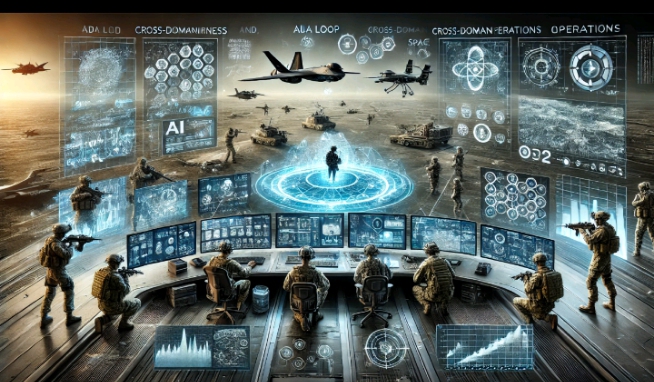
In the 20th century nations warred. Now upfront combat is increasingly waged by contractors, algorithms, and private actors emerging from nowhere with little international oversight.The dramatic growth of private military and security companies together with artificial intelligence techniques, surveillance technologies, and cyber capabilities creates dangerous vacuum of legal application in international law.To a world in which violence can be outsourced, automated, and commercialised must now a part of this content be added.The growth of private military actors is not new, but what has truly never happened before is the size and technological sophistication of their operations.Today’s private security companies no longer simply guard facilities or train soldiers.In some cases, Chinese private military actors use complex global supply chains involving cloud providers, AI developers, data brokers and financial intermediaries.When networked together in conflict zones, it is difficult to say where civilian technology ends and military capability begins. International law does not prepare us for this. The rules of warfare on mercenaries dates back to a different era when they were individuals hired to fight in classical wars. Those rules are hard pressed even to conceptualize the profit-maximizing corporation that provides “security services” across multiple national boundaries while using highly advanced technology to conduct an election campaign, engage in surveillance, or directly enable a war. In many cases, these companies run across several jurisdictions simultaneously. It’s hard to say which state is responsible, which court has the right to hear a case, and which laws are applicablethere.This gap is not purely theoretical. In recent times, private contractors have been implicated in acts of surveillance, illegal use of force, cyber action, and violations of the laws war. There is very often no way of acheiving recrimination for the injured party: Contracts are secret, operations outsourced and accountability diffused between governments, companies and subcontractors. When damage is done, each party points at the others. Thus we have a system in which very serious violations of human rights can occur without clear legal consequences.
But now, the advancement of technology has only compounded the problem. Artificial intelligence has developed its own new forms of danger. It can be used to identify targets, analyze behaviour and guide military decisions with minimal human oversight. Commercial satellite imagery can support military operations. Data analytics can enable mass surveillance. Cryptocurrency and complex financial structures can fund operations without traditional regulation. These technologies are not in themselves inherently illegal but when used by private actors in conflict or security operations without adequate oversight, they become new risks for human rights and international stability.
The fundamental problem is that international law continues to assume that states control the use of armed force. In fact, states increasingly rely on private actors to perform functions once thought core responsibilities of government. Outsourcing security may be politically convenient but it allows government to disown legal responsibility. When a state makes a contract with a company, or when that enterprise goes overseas with state support and comes into accountability is blurred between the two. That ambiguity undermines one of the central principles of international law: that the use of force ought at least be subject to clear rules and public responsibility
A lack of regulation also forces states to struggle against each other. Wealthy countries and powerful corporations have access to advanced security technologies, private military contractors etc., while poor nations cannot regulate or resist them. This disparity runs the risk of creating an international security market where dominion is not only in the hands of governments but lies with whoever can afford most skilled private capabilities.
This situation needs to be changed immediately. States should update legal regimes on private military and security companies so as to conform with “technological reality” at the present time. It should be obligatory, not optional, for commercial satellite imagery.To have a mandatory licensing and transparency is a human rights duty as is all data analytics taking place under military or security auspices. Technology companies, including Cloud and AI drivers, also need their products to come within clear rules of use when marshaled for military or security applications. International cooperation is requisite, because a single country cannot individually regulate a global industry.
Most importantly, however, accountability must be increased. Victims of abuses involving private military companies must have more effective routes to redress. Where they occur or which company stands behind abuse, no matter where it happens in practice, under what corporate name someone is doing business with the innocent. Without accountability, the spread of private force is going to remain outside the rule of law.
The digital age has transformed the character of conflict, but international law has not kept pace. If warfare is now privatized without adequate regulation from the international community, the consequences will extend far beyond any battlefield. The most dangerous loophole in international law today is not the lack of new weapons but that those who produce them lack clear responsibility.
Fransiscus Nanga Roka
Faculty of Law University 17 August 1945 Surabaya Indonesia