
Africa
Professor Ndifon’s Conviction: A Watershed Moment That Must End the Scourge of ‘Sex for Grades’ in Nigerian Universities -By Jeff Okoroafor
The jailing of a law professor is a powerful signal, but it will be meaningless without a systemic overhaul to dismantle the culture of impunity that has long allowed predators to thrive in our halls of learning.

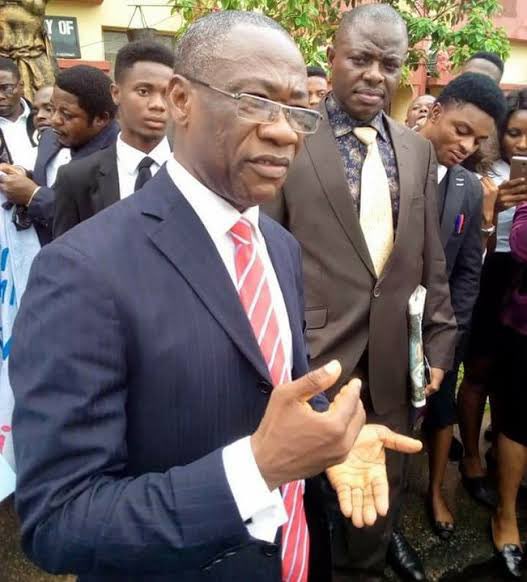
The conviction of Professor Cyril Ndifon, the suspended Dean of the Faculty of Law at the University of Calabar, is more than just a legal ruling; it is a profound moral reckoning. Sentenced to five years imprisonment for sexual harassment and abuse of office, Ndifon was rightly described by the court as a “sexual predator” and a “disgrace to the community of learned persons.” The Independent Corrupt Practices and Other Related Offences Commission (ICPC) has hailed this as a “watershed win.” They are correct, but only if this verdict becomes the beginning of a revolution, and not just a solitary headline.
For decades, the Nigerian university system has been plagued by an open secret: the rampant sexual exploitation of students by lecturers who wield academic power as a tool for predation. The case of Prof. Ndifon is not an anomaly; it is the tip of a grotesque iceberg. His conviction must now serve as an unambiguous deterrent to every lecturer who sees a student not as a mind to be nurtured, but as a body to be conquered.
The details of Ndifon’s case, as revealed in court, provide a chilling blueprint of predatory behaviour. He did not simply demand sex; he engineered a calculated campaign of manipulation. He groomed the victim, identified as Miss TKJ, by posing as a “father figure.” He then systematically escalated boundary violations, isolating and coercing her before sexually assaulting her in his office and vehicle. The sheer audacity of his actions is staggering: he continued to demand nude visuals from her while she was at a hospital attending to her sick mother, later sending a paltry N3,000 in a pathetic attempt to buy her silence.
This is not merely harassment; it is a profound psychological violation. It exploits the inherent power imbalance between a student, whose entire academic future hangs in the balance, and a lecturer, who controls the keys to that future. A lecturer’s duty is to educate, guide, and assess students by delivering lectures, developing course materials, and providing academic support. To pervert this sacred trust into a lever for sexual gratification is a despicable betrayal of the profession’s most fundamental ethics.
To believe Ndifon is a lone wolf is to ignore the cacophony of voices that have spoken out over the years. The “Sex for Grades” scandal is a systemic rot, documented in news reports, student whispers, and a few brave investigations.
1. The University of Lagos (UNILAG) Scandal (2019): A BBC Africa Eye undercover investigation went viral, showing two professors, Prof. Boniface Igbeneghu of UNILAG and Prof. Samuel Oladipo of the University of Ghana, openly soliciting sex from undercover journalists posing as students. The footage was damning, leading to suspensions and investigations, but the public never saw a conviction of the magnitude of Ndifon’s.
2. The Obafemi Awolowo University (OAU) Saga: The university has been rocked by multiple allegations. Most notably, in 2018, a final year student publicly accused a professor of demanding sex to change a failing grade. The case sparked massive protests, but again, the legal outcome for the lecturer did not match the gravity of the public outcry.
3. Innumerable Unreported Cases: For every case that makes the news, a hundred are buried in shame and fear. Students, particularly female students, are often forced to choose between their dignity and their degree. The fear of victimization, failed courses, or extended academic years silences countless victims, allowing predators to operate with impunity.
These examples reveal a culture where such behaviour has been normalized, where complaints are swept under the rug by complicit departmental heads and weak administrative structures, and where the lecturer is often presumed innocent while the student is presumed to be “asking for it.”
The ICPC and the judiciary have done their part in this case. But for this “watershed” moment to truly cleanse the system, a multi-pronged approach is now non-negotiable.
1. Mandatory & Enforced Institutional Policies: Every tertiary institution must have a clear, independent, and well-publicized sexual harassment policy. This policy must outline reporting procedures, guarantee protection for whistleblowers, and mandate swift, transparent investigations. The current internal panels are often seen as “old boys’ clubs” designed to protect the institution’s reputation, not the victim’s rights.
2. Zero-Tolerance and Lifetime Bans: The Academic Staff Union of Universities (ASUU) and university senates must publicly endorse a zero-tolerance stance. Any lecturer convicted of sexual misconduct should face a lifetime ban from teaching in any Nigerian tertiary institution. Their name should be on a register, ensuring they cannot simply move to another university to continue their abuse.
3. Psychological Support and Empowerment for Students: Universities must establish well-funded and confidential counseling units and legal aid services for students. Students need to know that they have a safe place to report without fear of retribution.
4. A Cultural Shift in Power Dynamics: The feudal mindset that places lecturers as unassailable “lords of the manor” must be dismantled. Student assessment should be more transparent, with external moderation and anonymous marking where possible, to reduce the absolute power a single lecturer holds over a student’s fate.
The courage of Miss TKJ, whom the judge rightly called a “shining example,” has drawn a line in the sand. Professor Ndifon’s jail term is a loud, clear warning: the era of impunity is over.
This judgement must echo through every lecture hall, every faculty lounge, and every office where a lecturer contemplates exploiting their position. It is a message to the predators that the law can, and will, penetrate their sanctuaries of privilege. But more importantly, it is a message of hope to every vulnerable student that their voice can be heard, their dignity matters, and that the price for its violation will no longer be paid by them, but by their tormentors.
The sanctity of education has been defended in one court case. The battle to reclaim it for the entire system has just begun.

Jeff Okoroafor
Jeff Okoroafor is a social accountability advocate and a political commentator focused on governance, accountability, and social justice in West Africa.





















You must be logged in to post a comment Login