
Africa
Rather Than Selling To NNPCL, Why Can’t Dangote Refineries Sell PMS Directly To Marketers?, by Isaac Asabor

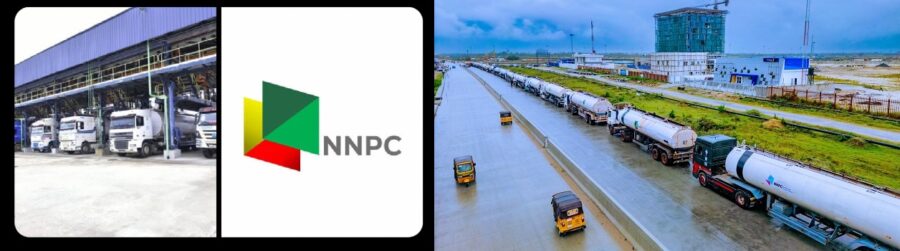
As Nigeria enters a new phase in its oil refining journey, the question on many lips is: why can’t Dangote Refinery, Africa’s largest oil refinery, sell its Petroleum Motor Spirit (PMS) directly to marketers instead of going through the Nigerian National Petroleum Company Limited (NNPCL)? Given the anticipation and promises surrounding the Dangote Refinery’s potential to end decades of fuel scarcity; this question is both timely and significant.
When Aliko Dangote launched his massive 650,000 barrels-per-day refinery, it was hailed as a game changer. For decades, Nigeria has been plagued by fuel shortages, price volatility, and a heavy dependence on imported refined petroleum products. The Dangote Refinery was seen as the solution to Nigeria’s long-standing energy crisis, a promise of self-sufficiency in refining petroleum products locally.
Yet, despite the huge expectations, Nigerians are beginning to question why Dangote, with all the capacity to meet the country’s fuel needs, is not selling directly to marketers who could potentially deliver the product faster and more efficiently to the end-users.
The NNPCL has been a dominant force in the country’s oil and gas industry for decades. From exploration to refining (though inefficient), distribution, and regulation, NNPCL’s tentacles are widespread. Traditionally, NNPCL imports a significant portion of Nigeria’s refined products and distributes them through a complex supply chain involving government-set prices, subsidies, and logistics.
Given its history of control and regulation in the oil sector, NNPCL has become the middleman in the distribution of fuel, including the product that would eventually come from the Dangote Refinery. Currently, NNPCL holds a 20% stake in the Dangote Refinery, further cementing its influence in the distribution of the refinery’s output.
But the burning question is: “Does NNPCL need to be in the middle of this transaction?” “Again, Why Should Dangote Sell Directly to Marketers?”
In a market where demand for fuel consistently outstrips supply, it would seem logical for Dangote to sell directly to marketers. Here are some reasons why this direct sale approach could be beneficial:
One of the most significant benefits of direct sales is the potential for a more efficient supply chain. By removing NNPCL as an intermediary, the process of moving refined products from Dangote’s refinery to retail stations could be faster, reducing delays and bottlenecks that have historically contributed to fuel scarcity.
In a similar vein, allowing Dangote to sell directly to marketers could foster healthy competition in the fuel market. Marketers would have greater flexibility to source products and offer competitive prices, benefiting consumers. This would also potentially end NNPCL’s pricing monopoly, which has often led to market distortions.
Also, direct sales could help introduce more transparent pricing in the fuel market. Without NNPCL’s involvement in setting prices, there could be more clarity on how prices are determined, allowing consumers to benefit from market forces rather than the opacity of government-set prices.
Again, the direct purchase of refined products from Dangote would mean fewer layers in the supply chain, ensuring a more consistent supply of fuel. This could go a long way in avoiding the cyclical fuel scarcity that has plagued Nigeria for years.
Several factors might explain why Dangote is not selling directly to marketers yet: NNPCL’s 20% ownership in the Dangote Refinery is a key reason. As a significant stakeholder, NNPCL has a vested interest in controlling distribution. This stake ensures that NNPCL maintains influence over the refinery’s output, preventing direct sales to marketers without their involvement.
In fact, the Nigerian government, through NNPCL, has maintained control over the downstream sector for years. Allowing direct sales could mean relinquishing control over PMS pricing, distribution, and potentially reducing the government’s ability to intervene in the market for political reasons, such as keeping fuel prices artificially low during election periods.
Still in a similar vein, for decades, NNPCL has acted as the sole importer and distributor of fuel in Nigeria. The entire downstream sector has been designed around this framework. A sudden shift to direct sales would require significant changes in logistics, supply chain management, and infrastructure, something that may not be immediately feasible.
Without a doubt, while the removal of fuel subsidies has been on the table for some time, it is still a politically sensitive issue. If Dangote were to sell directly to marketers, it could open the door to market-driven pricing, potentially raising fuel prices, which could lead to public outcry. NNPCL’s involvement could serve as a buffer in managing pricing and controlling market shocks.
For the Dangote Refinery to fulfill its potential in revolutionizing Nigeria’s fuel supply, it might be time for NNPCL to step back and allow a more liberalized market where Dangote can sell directly to marketers. This would promote competition, improve efficiency, and, most importantly, provide Nigerians with the affordable and accessible fuel supply they have long been denied.
While NNPCL’s involvement has its merits in terms of national oversight, the private sector, led by Dangote, should be given the opportunity to drive the future of Nigeria’s energy supply. The government should embrace policies that reduce its monopoly on the sector and open the doors to a market-driven economy that benefits consumers.
In a country that has suffered decades of fuel-related hardship, now is the time for innovative solutions, and direct sales from Dangote to marketers might just be the step in the right direction.
Against the foregoing backdrop, the question, “Why Can’t Dangote Refineries Sell PMS Directly To Marketers Instead of NNPCL?”, which is invariably the headline of this piece would continually be asked until the price of PMS becomes affordable to Nigerians.

























You must be logged in to post a comment Login