Africa
Recalling Lessons From One-Party States Nigeria Must Never Ignore -By Isaac Asabor
Let those who speak of one-party rule as a solution remember this: it is not unity they are promoting, but uniformity by coercion. And in a nation as pluralistic and complex as Nigeria, that path leads only to disaster.


Across history and continents, one-party systems have posed as answers to national unity, stability, and ideological purity. However, beneath the surface of this apparent simplicity lies a political structure that has proven time and again to be corrosive to the essence of democracy. From Asia to Africa, Eastern Europe to Latin America, the evidence is abundant and sobering: one-party rule stifles dissent, nurtures corruption, entrenches authoritarianism, and ultimately disconnects governance from the will of the people. As Nigeria navigates its democratic evolution, it must draw urgent lessons from these global experiences, and never entertain the temptation of a one-party state.
For instance, the Communist Party of China (CPC) has been in power since 1949. Though the country has seen astronomical economic growth, it has come at the cost of human rights and political freedoms. There is no room for opposition, freedom of the press is virtually non-existent, and dissent is treated as a national security threat. The Tiananmen Square massacre remains a chilling symbol of what one-party rule does to voices of resistance.
In a similar vein, under the Kim dynasty, the Workers’ Party of Korea has maintained an iron grip over every facet of life in North Korea. The results are visible: widespread famine, economic collapse, and zero civil liberties. The system thrives on fear and misinformation, with no avenue for political redress or accountability.
Also in similar vein, after gaining independence, Zimbabwe’s ZANU-PF led by now late Robert Mugabe transitioned from revolutionary heroism to tyrannical rule. Elections became a ritual of deceit, opposition was violently repressed, and the economy tanked under corruption and mismanagement. One-party dominance reduced the once-promising nation to a cautionary tale.
In fact, Since Fidel Castro’s 1959 revolution, the Communist Party of Cuba has monopolized political power. Decades of economic hardship, emigration crises, and political persecution followed. Even in post-Castro Cuba, the lack of alternative political voices continues to erode public trust and international credibility.
Drawing lesson from Eritrea, under President Isaias Afwerki and the People’s Front for Democracy and Justice (PFDJ), Eritrea has had no national elections since independence in 1993. Press freedom is non-existent, indefinite military service is mandatory, and political opposition is outlawed. The result? Mass exodus and a society living in fear.
Drawing lesson from Russia, Vladimir Putin’ has perfected the illusion of multiparty democracy. But in reality, opposition parties are either banned, intimidated, or co-opted. The ruling United Russia party dominates not only the ballot but also the narrative. Political opponents are jailed, exiled, or worse, eliminated.
In a similar, in Venezuela, Hugo Chávez’s United Socialist Party started with popular support, but over time, it hollowed out democratic institutions. Successor Nicolás Maduro has further consolidated power by undermining the judiciary, crushing protests, and criminalizing dissent. The result? Hyperinflation, mass migration, and a collapsing health system.
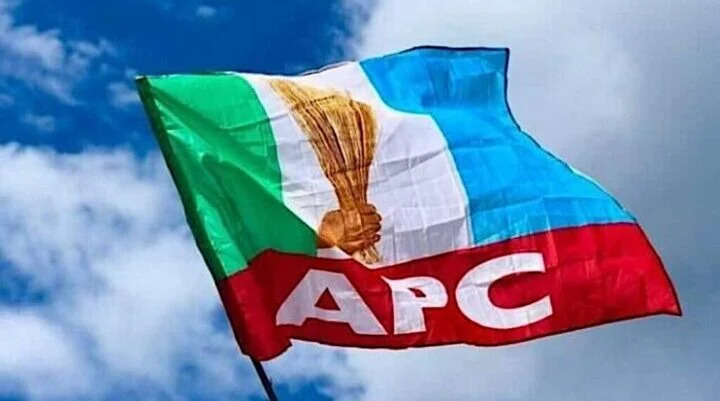
Given the foregoing cited examples, the reasons why Nigeria must never tread the same path cannot be farfetched. Nigeria, with its turbulent history of military coups, ethnic divides, and fragile democratic institutions, must take heed. The clamour by certain political actors, especially those basking in the current dominance of the All Progressives Congress (APC), for a de facto one-party system is nothing short of dangerous. Such rhetoric, if not confronted, could push Nigeria further away from democratic consolidation.
Nigeria’s democracy, for all its flaws, remains vibrant largely because of the presence of opposition parties, critical media, and civil society. These institutions act as checks against excesses, demand accountability, and create space for alternative ideas. Once that diversity is killed, either through state capture, political coercion, or electoral manipulation, the consequences will be dire.
A one-party Nigeria would be a breeding ground for unchecked corruption. Without opposition, there is no incentive for performance. Leaders become complacent, bureaucracies become bloated, and the citizens’ voices become irrelevant. Worse still, ethnic and regional tensions could boil over, as the perception of exclusion from power fuels agitation and even violence.
We must not forget that Nigeria once tasted the bitterness of absolute rule during military regimes. The suppression of dissent, arbitrary arrests, lack of press freedom, and economic mismanagement were all symptoms of centralized, unaccountable power. A one-party state would be no different, it would be tyranny in civilian clothing.
The danger is not always overt. It begins with the ruling party swallowing up smaller ones through intimidation, co-option, or ‘alliances’. It progresses to tampering with electoral laws, manipulating the judiciary, and muzzling independent media. Before long, elections become mere formalities.
Some may argue that a one-party system would bring political stability. But stability without freedom is a prison. Stability without accountability is fertile ground for kleptocracy. As seen in countries like Ethiopia under the TPLF or Angola under MPLA, long-term one-party rule doesn’t create genuine stability, it breeds systemic rot.
Moreover, young democracies like Nigeria need more competition, not less. Vibrant multiparty systems allow for ideas to be debated, policies to be scrutinized, and leaders to be voted in, or out, based on merit. The moment that competition dies, so too does democracy.
History has already shown us the result of one-party dominance: from the forced smiles of North Korean children to the disillusioned youth of Venezuela, from the desperate Eritrean refugees to the censored journalists in Russia. These are not distant tales, they are warnings.
Nigeria must never flirt with the idea of a single-party state. The cost is too high, and the risk to national unity, too grave. Our democracy may be imperfect, but it is ours to protect and nurture. That can only happen when diverse voices are not just tolerated, but empowered.
Let those who speak of one-party rule as a solution remember this: it is not unity they are promoting, but uniformity by coercion. And in a nation as pluralistic and complex as Nigeria, that path leads only to disaster.
Democracy dies in silence, but it also dies in the noise of a single voice drowning out all others. Nigeria must never go deaf to this lesson.