Africa
Reflections On Joe Igbokwe’s Metamorphosis From Staunch Tinubu’s Supporter To Vocal Critic, by Isaac Asabor

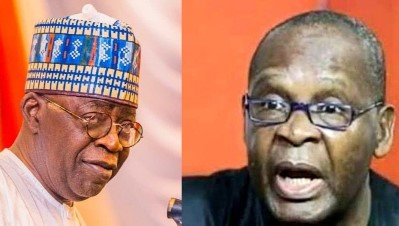
In the complex and often bewildering terrain of Nigerian politics, few personalities have oscillated between extremes as much as Joe Igbokwe. A man once regarded as one of the most steadfast defenders of Asiwaju Bola Ahmed Tinubu, Igbokwe’s metamorphosis into one of his harshest critics has raised eyebrows and sparked debates. His journey offers a fascinating case study of political loyalty, personal ambition, and the frailty of alliances forged in the crucible of Nigerian politics.
Joe Igbokwe’s name became synonymous with unflinching loyalty to Tinubu. As the Publicity Secretary of the Lagos State chapter of the All Progressives Congress (APC), Igbokwe was among the most vocal advocates of Tinubu’s political ideologies and leadership style. He championed Tinubu’s legacy as a transformative governor of Lagos State and later as a kingmaker whose influence extended across Nigeria.
For years, Igbokwe’s rhetoric served as a shield for Tinubu against critics, portraying the APC leader as the solution to Nigeria’s myriad problems. His fiery defenses often dominated headlines, reinforcing his status as Tinubu’s loyal ally. However, political relationships, especially in a volatile environment like Nigeria’s, often come with an expiry date.
The turning point in Joe Igbokwe’s relationship with Tinubu seemed to coincide with the latter’s rise to the presidency in 2023. Expectations for political appointments, rewards, and the fulfillment of campaign promises gave way to disillusionment when Igbokwe ostensibly perceived himself as being sidelined from Tinubu’s inner circle. This discontent began to reflect in his public statements.
As economic hardship deepened across the country under Tinubu’s administration, Igbokwe’s displeasure became more evident. Headlines like “Why Is Our Currency Weak?’ Tinubu’s Supporter, Igbokwe, Rants Again Amid Hardship” captured his growing dissatisfaction. In this instance, Igbokwe voiced the concerns of millions of Nigerians grappling with the plummeting naira and rising inflation. His critiques extended beyond the economy to policies he believed were exacerbating the country’s struggles.
Another headline, “Hardship: Those who’ll rescue Nigeria not yet born – Joe Igbokwe mocks Tinubu govt” further exemplified his growing disillusionment. In a rare moment of stark candor, Igbokwe seemed to admit despair over Nigeria’s future under Tinubu’s leadership. For a man who once hailed Tinubu as the messiah of Nigerian politics, such statements marked a dramatic shift in perspective.
One of his most biting criticisms as headlined in one of the newspapers came in the form of a plea: “Joe Igbokwe begs Tinubu to lower electricity tariff after spending ₦20k in a day.” Here, Igbokwe transitioned from critic to advocate for change, highlighting the unbearable cost of living faced by average Nigerians, including himself. His frustration with the electricity tariff struck a chord with citizens who have long lamented the inefficiency and expense of Nigeria’s power sector.
Recently, headlines like “Seyi Tinubu not fit to rule Lagos – Joe Igbokwe” signaled a shift in his tone. The once-loyal supporter was now questioning Tinubu’s leadership and the influence of his family in Lagos politics. This criticism of Seyi Tinubu, the president’s son and a prominent figure in Lagos politics, struck a nerve, as it touched on the nepotism that many Nigerians perceive as pervasive in their political system.
In fact, not a few Nigerians, particularly Lagosians, have been taken aback by Joe Igbokwe’s sudden turn against the administration of President Bola Ahmed Tinubu. Known for his unwavering loyalty to Tinubu over the years, Igbokwe’s recent criticism of the government has left many bewildered. His sharp comments on the administration’s policies, which he once fervently defended, have sparked widespread discussions across social and traditional media. For a man who stood as one of Tinubu’s staunchest supporters, this shift feels almost surreal, prompting questions about what might have triggered his apparent change of heart. Many Nigerians are grappling with disbelief, wondering if his dissatisfaction stems from personal grievances or a genuine concern for the nation.
The suddenness of Igbokwe’s apparent disloyalty has left both his admirers and critics speculating. His criticism is perceived by some as a betrayal of the loyalty that defined his public persona, while others argue it could signal an awakening to the realities of governance. However, the dramatic nature of his departure from Tinubu’s camp has raised eyebrows, as it contrasts sharply with his past vehement defense of the same administration. Whether his actions are borne out of principle or strategy, Nigerians remain divided, with many questioning what this development means for Tinubu’s broader political base and the loyalty of his allies.
Against the foregoing backdrop, the familiar question on the lips of not a few political observers sounds like, “What drives the Shift?” In answering the foregoing question, it is expedient to guesstimate that several factors could explain Igbokwe’s transformation from staunch supporter to ardent critic.
First is that his criticism could have arisen from unmet expectations. This is as loyalty in Nigerian politics is often transactional. Igbokwe’s criticism could stem from the perception that his loyalty to Tinubu was not adequately rewarded with political appointments or recognition.
In a similar vein, it could have arisen from genuine disappointment, even as his comments might also reflect genuine frustration with the Tinubu administration’s inability to address pressing issues such as economic instability and rising hardship.
Also, it could have emanated from political relevance. Simply put, by publicly criticizing Tinubu, Igbokwe could be attempting to carve out a new political identity or relevance, especially in a political climate where dissenting voices often attract attention.
However, the school of thought conjecturing that personal resentment might have been right as it is common in Nigerian politics that personal grievances and perceived slights can evolve into public feuds. Igbokwe may feel betrayed by the very system he once defended so ardently.
In fact, the political establishment has not taken kindly to Igbokwe’s newfound stance. Tinubu’s loyalists have dismissed his criticisms as the rants of a disgruntled politician, while opposition voices have amplified his statements to underscore the alleged failings of the administration.
Public reactions have been equally divided. For some Nigerians, Igbokwe’s outbursts reflect the frustrations of many who feel let down by the Tinubu administration. Others, however, see his criticisms as insincere and opportunistic, questioning why he defended the same policies and leadership style when it suited his interests.
Joe Igbokwe’s shift from loyal supporter to vocal critic highlights several truths about Nigerian politics. First, it underscores the transactional nature of political loyalty, where support is often contingent on personal gain. Second, it reveals the fragile nature of political alliances, which can crumble when individual ambitions are thwarted. Lastly, it highlights the gap between the expectations of political allies and the realities of governance, particularly in a country as complex as Nigeria.
The story of Joe Igbokwe is one of political loyalty tested by the harsh realities of power dynamics. His transformation from Tinubu’s staunch advocate to one of his most vocal critics is not just about one man’s political journey; it is a reflection of the broader issues at play in Nigeria’s political landscape.
For Tinubu, the lesson is clear: loyalty, no matter how fierce, cannot be taken for granted. For Igbokwe, his new role as a critic may bring opportunities for reinvention, but it also comes with challenges, as he must navigate the skepticism of those who see his shift as a betrayal rather than a principled stance.
In the end, Joe Igbokwe’s metamorphosis is a cautionary tale for politicians and supporters alike, reminding us that in the unpredictable world of Nigerian politics, yesterday’s allies can easily become today’s adversaries.