
Africa
Reimagining Federal University Education in Nigeria: The Need for Bold Reforms -By Leonard Karshima Shilgba
Vice-Chancellors must emerge from credible processes insulated from external interference, and governing councils must be allowed to function independently. Previous views on, and demonstrated knowledge of university education management and fruitful performance in running university education enterprises should be included as bases for the selection of a Vice Chancellor of any federal university in Nigeria, not where they have come from or who they know (and may control them once they are appointed). No nation will outgrow the quality of its universities, and no university outperforms the quality of its leadership.

Nigeria’s federal university system is at a perilous crossroads. Beneath the surface of swelling student populations, convocation speeches, and shiny accreditation plaques lies a festering reality: our universities are slowly dying—not from a lack of talent or potential, but from the weight of structural contradictions, policy inertia, and a suffocating regulatory regime. It is a death not sudden, but slow, bureaucratic, and disturbingly normalized.
At the heart of this malaise is the National Universities Commission (NUC)—a regulatory body that should be the engine of innovation and quality, but has instead evolved into an overbearing gatekeeper. The recent introduction of the Core Curriculum and Minimum Academic Standards (CCMAS) in 2023, replacing the outdated Benchmark Minimum Academic Standards (BMAS) of 2007, was touted as reform. Yet the top-down rigidity persists. Nigerian universities continue to operate under a curriculum system so micromanaged that even trivial matters—like course codes, titles, or credit units—are fixed by the NUC. The fear of “NUC will not permit this” echoes routinely at university Senate meetings, stifling innovation and initiative.
Take for instance the academic sleight of hand: where four robust mathematics courses (Algebra, Trigonometry, Geometry, and Vectors and Dynamics) offered individually in the 1990s were first merged into two 3-credit unit courses under BMAS, and now reduced to two 2-credit unit courses under CCMAS—without changing the course content. This isn’t reform. It is dilution disguised as standardization.
Funding, the lifeblood of any university system, is another structural tragedy. Federal universities are barred from charging tuition fees, yet expected to run modern, globally competitive programs while federal grants are inadequate, irregular, or delayed. Meanwhile, the same NUC that statutorily receives federal funds to support these institutions demands payment for mandatory resource verification for each program and accreditation processes. In effect, those federal universities are forced to pay from their lean resources to be assessed by the very agency meant to support them.
Worse still, these so-called “ritual visits” expose glaring gaps in infrastructure—outdated lab equipment, underfunded libraries, insufficient ICT resources, and an appalling staff-to-student ratio. All of these fall below the NUC’s lofty “minimum” standards—standards that the Federal Government, through the NUC, is statutorily obligated to fund. It raises a troubling question: has the government knowingly allowed the system to break down, or is it simply unaware?
Then there’s the credibility crisis in accreditation exercises. The NUC enlists senior academics—some of whom lobby to be included—to form its assessment panels. It is not uncommon for a panelist to assess a university where a close colleague teaches. “This is my university o. Make sure we pass,” a professor may say jokingly—and the visiting assessor obliges. It’s an open secret that accreditation panels often lack objectivity, with peer camaraderie and self-interest taking precedence over quality assurance. Can we truly expect fairness when competitors or friends assess each other in a broken ecosystem?
Leadership, too, suffers. The process of selecting Vice-Chancellors in federal universities is riddled with political interference. In too many cases, governing councils are undermined, and leadership appointments are influenced by forces outside the university. Visionary leadership—so vital to institutional excellence—has been replaced by docility and appeasement.
In my 2015 article, Re-engineering Nigeria’s Education Sector, I proposed a comprehensive overhaul of the accreditation process and advocated for systemic reform. Sadly, the entrenched culture of “we’ve always done it this way” has prevailed, stalling progress and entrenching mediocrity.
Another crisis—less visible, but no less damaging—is the mandatory retirement of professors at 70. At this age, professors—many still intellectually vigorous and physically capable—are required to exit federal universities. What follows is a quiet talent drain. These scholars, still rich in experience and knowledge, are quickly snapped up by private universities, while federal institutions suffer acute shortages, especially in specialized fields. Who loses? The public university system.
We need a more pragmatic approach. Let professors who wish to continue after 70 do so—perhaps as emeritus or contract staff (not the current “maximum four Renewable Annual Contracts” arrangement)—while the government discontinues contributions to their Retirement Savings Accounts. Let us recognize that academics are not traditional civil servants; their peak years often extend into their seventies. In a country where we lament the shortage of qualified professors, it is self-defeating to discard the few we have simply to fulfill a bureaucratic rule. Why cut off your nose to spite your face?
What, then, must be done?
We need a tri-pronged reform agenda grounded in:
1. Transparent and merit-based leadership selection: Vice-Chancellors must emerge from credible processes insulated from external interference, and governing councils must be allowed to function independently. Previous views on, and demonstrated knowledge of university education management and fruitful performance in running university education enterprises should be included as bases for the selection of a Vice Chancellor of any federal university in Nigeria, not where they have come from or who they know (and may control them once they are appointed). No nation will outgrow the quality of its universities, and no university outperforms the quality of its leadership.
2. Sustainable funding models: If federal universities are not allowed to charge tuition, then the government must fully fund them. Alternatively, let universities have financial autonomy to raise and manage resources transparently and accountably without government meddling. The Federal Government should not tie the hands of its universities while demanding they clap while tapping with the feet. I ask, does the Federal Government truly believe that the education loans that NELFUND gives to students can adequately fund the education they are supposed to get? I don’t think so, but must we continue with the things that we know won’t work? What did the Oronsanye committee report indicate was the cost of training, for instance, a “science student” in a Nigerian University more than 10 years ago? Multiply that by 10, and you will get an average amount that NELFUND should be paying universities every year as “Education loans” to its beneficiaries. For those who don’t know or have forgotten, in the Oronsanye committee report, submitted in 2012 to the Federal Government, it was stated that it cost N525,000 and N450,000 a year to train, respectively, a “Science student” and an “Arts student” in a Nigerian university. Considering the exchange rate of about N160 to a US dollar in 2012, these amounts translate to $3, 280 and $2, 8100, respectively. Thus, at the current exchange rate of about N1,540 to one US dollar, NELFUND should be paying universities at least between N4, 350,000 and N5, 050,000 a year per beneficiary!
3. A redefined quality assurance process: NUC should evolve into a facilitator of best practices, not a regulator obsessed with minutiae. Accreditation panels should include independent experts with no direct ties to the institutions they evaluate. In fact, licensed professional bodies and not-for-profit career groups should superintend programs accreditation in cognate academic disciplines.
Ultimately, the goal should be to build a university system where innovation thrives, academic integrity is protected, and excellence is the norm—not the exception.
Nigeria’s universities are still home to brilliant minds and committed educators. But they cannot succeed in spite of the system. They need a system that works for them—not against them.
I call on the Minister of Education and President Tinubu to give consideration to those views. May education, particularly university education, flourish under the Renewed Hope Agenda.
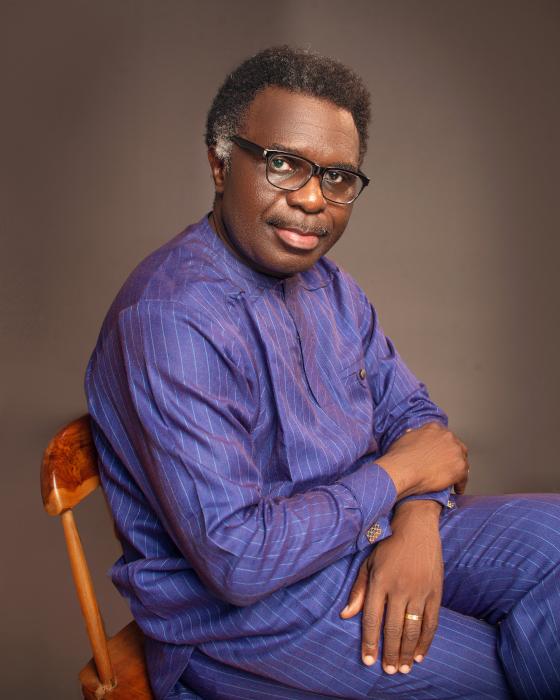
Leonard Karshima Shilgba is a professor, education advocate, and author of Re-engineering Nigeria’s Education Sector (2015). He has spent over two decades in Nigeria’s university system, championing reform in funding, quality assurance, and university governance.
























You must be logged in to post a comment Login