
Africa
Rejoinder: General Musa Is Not The Problem, He’s The Solution -By Suleiman Abubakar
Critics sometimes forget that the military operates without fanfare. It does not hold press briefings after every successful raid or rescue operation. Yet under General Musa’s watch, inter-agency cooperation has improved significantly. Joint operations have become more efficient. Intelligence sharing has become sharper. These are not slogans, they are tangible improvements, even if they don’t always trend on social media.

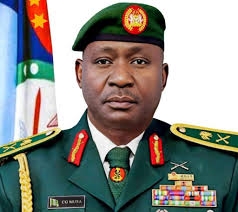
I recently came across an opinion piece that, whether by intention or oversight, seemed to question the leadership of Nigeria’s Chief of Defence Staff (CDS), General Christopher Gwabin Musa. It suggested that engaging with religious leaders or considering dialogue as part of our national security approach is somehow a compromise of our sovereignty.
As someone who has closely followed the evolution of Nigeria’s security landscape, I feel compelled to respond, not with outrage, but with context, clarity, and most importantly, truth.
NIGERIA’S SECURITY CHALLENGES ARE NOT SIMPLE
Let’s not pretend: our country’s security situation is among the most complex in the world. From communities displaced by bandits to farmers too frightened to access their own lands, and children abducted from schools, the pain is real and widespread. It is a mistake to assume that force alone can resolve such deep-rooted issues.
This is why I believe General Musa’s leadership deserves understanding, not criticism. He didn’t create the conflict, he inherited it. And he’s navigating a terrain where the enemies often blend into the civilian population, where violence is driven by poverty, ideology, and local grievances. His strategy of coupling military might with dialogue isn’t a sign of weakness; it is a display of strategic maturity.
ARE DIALOGUE AND COMMUNITY ENGAGEMENT NOW A CRIME?
One of the criticisms I found troubling was the suggestion that engaging religious or traditional leaders in the search for peace undermines state authority. This is an unfortunate distortion of reality.
In many rural communities, traditional rulers and local clerics remain the most trusted voices. When these leaders speak, they do so from a place of moral authority and cultural connection. Leveraging their influence to calm tensions or facilitate negotiations is not surrender, it’s smart governance.
The CDS is not surrendering Nigeria to anyone. He is using every available tool, military and non-military, to stabilize a fragile situation. If dialogue can save lives and open doors to disarmament, why mock it? Why dismiss it?
THE MILITARY’S SACRIFICE SPEAKS FOR ITSELF
Critics sometimes forget that the military operates without fanfare. It does not hold press briefings after every successful raid or rescue operation. Yet under General Musa’s watch, inter-agency cooperation has improved significantly. Joint operations have become more efficient. Intelligence sharing has become sharper. These are not slogans, they are tangible improvements, even if they don’t always trend on social media.
Thousands of troops continue to risk their lives daily, many of them paying the ultimate price. Their sacrifices are not diminished by the pursuit of peace, they are honored by it.
LET US JUDGE BY IMPACT, NOT JUST IDEOLOGY
Speak to residents in communities that were once under siege, many will tell you things are changing. Slowly, but visibly. Roads once impassable are opening again. Markets are coming back to life. Schools are functioning. Hope is returning.
These outcomes didn’t come from rigidity. They came from a balanced approach that blends strength with sensitivity, strategy with empathy.
GENERAL MUSA DESERVES SUPPORT, NOT SCORN
Leadership is never easy, and security leadership in a country as diverse and volatile as Nigeria is even harder. General Musa is not a perfect man, but he is a capable and courageous one. He brings something rare to the table: a combination of operational experience and emotional intelligence. He understands that you don’t only win peace with bullets; sometimes, you win it by restoring trust.
This is not the time to undermine our security leadership with half-truths or insinuations. It is time to rally around those making sincere efforts to bring peace. Nigeria is hard to govern, and even harder to defend. But it is still ours to protect and rebuild.
Instead of casting stones, let us ask: What can I do to support peace in my own corner of Nigeria? The answer may begin with perspective, and with truth.
Suleiman Abubakar is a concerned Nigerian, a father, and a believer in balanced solutions to complex national challenges. He writes from Kaduna.

Continue Reading

























You must be logged in to post a comment Login