
Opinion
RFK Jr. And Nigerian Politicians: Masters Of Double Talk And Insincerity, by Isaac Asabor

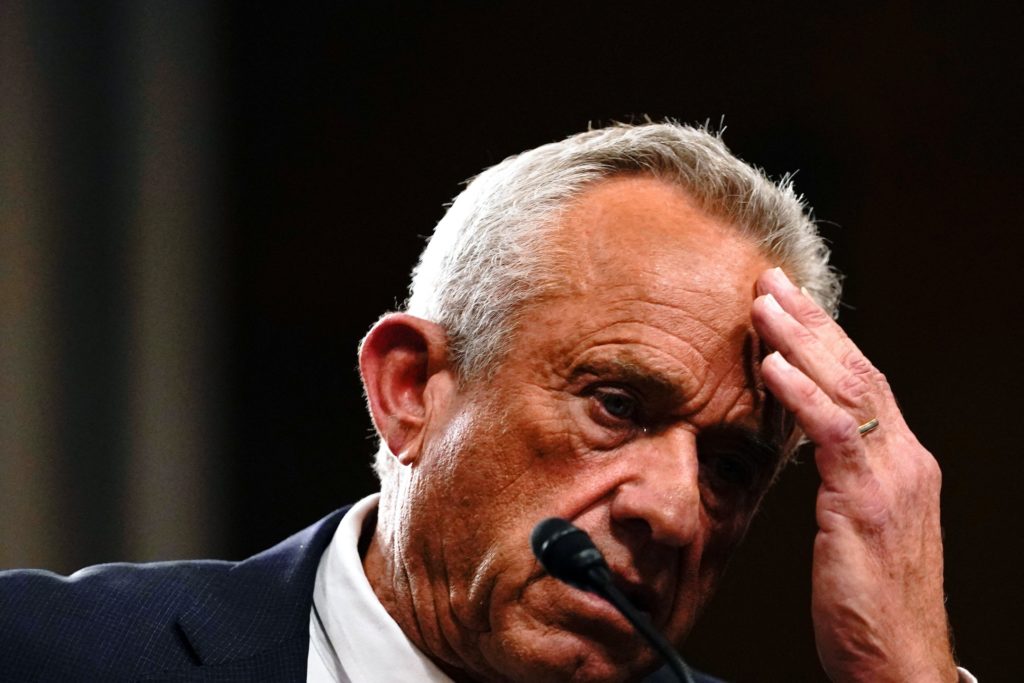
In the world of politics, there is an unspoken art of saying one thing and meaning another. It is a craft honed by many, but few have perfected it as well as Robert F. Kennedy Jr. and Nigerian politicians. At the heart of their rhetoric lies a commonality—an uncanny ability to deny past statements, shift positions to suit present interests, and exploit the public’s short memory.
Kennedy’s recent confirmation hearing as President Donald Trump’s nominee for Health Secretary has once again exposed this trait, much like the insincerities Nigerians have come to expect from their political leaders. While RFK Jr. struggled to clarify his stance on vaccines, abortion, and public health policies, Nigerian politicians continue to dance around crucial economic and governance issues, leaving citizens in a constant state of uncertainty.
Without a doubt, Kennedy’s flip-flop is a page from the Nigerian political playbook. This is as his history of contradicting himself on vaccines is well-documented. At his Senate Finance Committee hearing, he insisted he is not anti-vaccine, despite years of promoting conspiracy theories and discrediting vaccinations. His past remarks on COVID-19 shots being a “crime against humanity” and his endorsement of the debunked theory that vaccines cause autism stand in stark contrast to his recent statements.
This mirrors the behavior of Nigerian politicians who frequently make populist promises only to later deny them. Consider President Bola Ahmed Tinubu’s pre-election assurances that his administration would alleviate economic hardship. Shortly after assuming office, his government removed fuel subsidies without a concrete palliative plan, leading to skyrocketing costs and inflation. When confronted, officials oscillate between blaming past administrations and claiming that subsidy removal is in the people’s best interest, despite widespread suffering.
In fact, amid his screening session, Kennedy kept changing positions to suit political convenience. His inconsistency extends beyond vaccines. His shifting stance on abortion was another focal point of his hearing. Once a proponent of bodily autonomy, Kennedy’s views conveniently changed when Trump offered him the position of Health Secretary. His newfound rhetoric, describing abortion as a “tragedy,” seemed carefully crafted to align with Trump’s conservative base. This opportunism is eerily similar to what Nigerians experience with their leaders.
For instance, during campaigns, Nigerian politicians often promise to tackle corruption and uphold democratic principles. However, once in office, they either remain silent on corruption allegations or actively participate in the same vices they once condemned. Former President Muhammadu Buhari, who rode to power on an anti-corruption wave, saw his administration riddled with graft scandals, from the mismanagement of COVID-19 relief funds to allegations involving top government officials.
One of the most frustrating aspects of Kennedy’s testimony was his outright denial of statements that are well-documented. When asked about his claim that COVID-19 was engineered to target certain races, he denied implying deliberate targeting, despite video evidence. Similarly, when questioned about his assertion that Lyme disease might be a militarily engineered bioweapon, he reluctantly admitted, “I probably did say that.”
This brand of denial is a staple in Nigerian politics. Take, for example, the country’s inflation crisis. Government officials repeatedly claim that the economy is improving, despite overwhelming evidence to the contrary. The Central Bank and the Ministry of Finance consistently paint a picture of economic stability, even as food prices soar and unemployment rates reach record highs. When confronted, they either dismiss statistical data as “fake news” or shift blame to external factors like global economic conditions.
Another striking similarity between RFK Jr. and Nigerian politicians is their mastery of evasive responses. During his hearing, Kennedy dodged direct answers on Medicaid, Medicare, and mifepristone safety studies. Rather than addressing concerns head-on, he relied on ambiguous statements and calls for “further research.”
This tactic is a favorite among Nigerian government officials. When pressed on the distribution of palliatives meant for the poor, officials often claim they are “reviewing the situation” or “conducting assessments”, a euphemism for avoiding accountability. The EndSARS protests of 2020 revealed how hoarded palliatives meant for COVID-19 relief were kept in warehouses, while government representatives continuously claimed the distribution process was underway.
The damage caused by leaders who refuse to stand by their words is immeasurable. Kennedy’s inconsistency on vaccines, for example, fuels public distrust in science and healthcare policies, a dangerous precedent at a time when misinformation is rampant. Similarly, Nigerian politicians’ insincerity erodes faith in governance, leading to political apathy and civil unrest.
In both cases, the victims are ordinary citizens who rely on their leaders to make informed, ethical decisions. Just as Kennedy’s past anti-vaccine rhetoric has real-world consequences for public health, Nigerian politicians’ deceit affects everything from economic policies to national stability. The lack of trust in leadership fosters a cycle where citizens grow increasingly disillusioned and disengaged, allowing politicians to continue their deceptive practices unchallenged.
In fact, RFK Jr.’s performance at his confirmation hearing serves as a global case study on political insincerity, one that Nigerians can easily relate to. Whether in the U.S. or Nigeria, leaders who flip-flop on critical issues, deny their own statements, and evade direct questions undermine democracy and public trust.
As Kennedy faces further scrutiny in his next hearing, Nigerian citizens must also demand accountability from their leaders. The lessons from Kennedy’s hearing should serve as a reminder that political insincerity knows no borders, and only an informed and vigilant populace can hold their leaders to higher standards.


























You must be logged in to post a comment Login