Global Issues
Russia’s Rospotrebnadzor to help DRC, Uganda contain Ebola outbreak—MFA -By Kestér Kenn Klomegâh
The virus was first discovered in 1976, with outbreaks reported in Sudan, Gabon, the Republic of the Congo, Angola and Cote d’Ivoire. Later the Ebola epidemics in West Africa in 2014-2016 took the lives of more than 11,300 people, with more than 28,600 contracting the disease. The most lethal outcomes were reported in Guinea, Sierra Leone and Liberia.

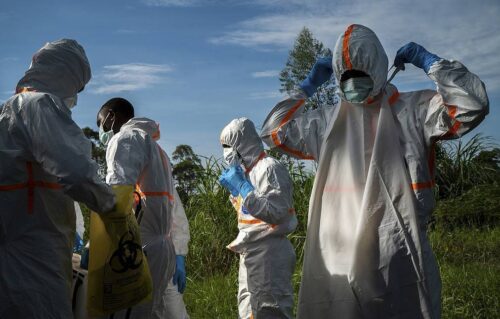
With rising Ebola virus cases in the Democratic Republic of the Congo since its outbreak in mid-May 2026, Russia is showing its multidimensional support including testing capacity, medical and humanitarian support, that could reduce the disease transmission and further outbreak in the affected regions.
Russian Foreign Ministry’s Spokeswoman, Maria Zakharova, has said Russia would assist the authorities of the Democratic Republic of the Congo (DRC) and Uganda in swiftly controlling the ongoing Ebola outbreak. “We hope that the Democratic Republic of the Congo and Uganda, with the support of partner nations and international organisations, will be able to contain the outbreak promptly. Russia is committed to providing all necessary aid and facilitating efforts in every possible way,” Zakharova told a weekly news briefing.
She further explained that, at Uganda’s request, a team of specialists from Russia’s consumer rights watchdog Rospotrebnadzor had arrived in Uganda on May 25 to conduct epidemiological investigations and support local partners in outbreak containment. “We will employ Russian-developed diagnostic tests for this purpose,” she added.
Highlighting Russia’s longstanding assistance, Zakharova noted that Uganda has benefited significantly from Rospotrebnadzor’s support recently, including the donation of two mobile laboratories in 2024-2025 to bolster its scientific, laboratory, and human resource capacities. Over 80 Ugandan specialists have also received training since 2023 in areas such as pathogen monitoring, disinfection, laboratory diagnostics, and biosafety. Additionally, in February 2025, Rospotrebnadzor experts assisted Uganda in combating this fever.
Zakharova, however, reassured that Russia would make an invaluable contribution, and continue providing comprehensive support. Russia’s support extends to the DRC as well, with two mobile laboratories donated in 2020 to enhance testing and response capabilities.
Nevertheless, Africa is expected to show growth in demand from Russian tourists following the summer season. Russians are not canceling trips to African countries because of the Ebola outbreak, as it has not affected popular tourist destinations, Russian Union of Travel Industry board member and Space Travel CEO, Artur Muradyan, said at a press conference.
“We see that another Ebola outbreak is developing in Africa. Fortunately, these are absolutely not tourist countries. The Russian tourists travel to are South Africa, Kenya, Ethiopia, and Tanzania. There are no outbreaks there, and we have not recorded any travel cancellations,” he said.
WHO Demands Swift Response
The current Ebola outbreak in Congo’s Ituri Province is spreading at an unprecedented rate and the response is, seemingly, lagging behind. “Never before has an Ebola outbreak recorded so many cases so soon after its declaration,” the World Health Organisation Director-General, Tedros Adhanom Ghebreyesus, said after visiting the region. While appealing for financial support from the international community, WHO estimated Ebola outbreak in DRC could cost Africa $3.6 bln.
UNDP’s Disease Assessment
The Ebola outbreak could cause economic losses for African countries of up to $3.6 billion and threaten more than 300,000 jobs on the continent, according to Damien Mama, UN Development Program (UNDP) Resident Representative and Acting Humanitarian Coordinator for the DRC.
“It could amount to up to 3.6 billion US dollars in economic losses and put more than 300,000 jobs at risk,” he said at a briefing in Geneva. According to a socio-economic assessment presented by UNDP, “the outbreak would push close to an additional 1 million people into poverty in a country like DRC, where six out of 10 people live under the poverty line.”
Developing Cases of Ebola
Confirmed Ebola cases currently stand at 1,528, with daily cases being added to the tally, which the World Health Organisation and the Africa Centres for Disease Control and Prevention (Africa CDC) described as a health threat to neighboring countries in the eastern and central African region. It has affected three Congolese provinces. Ebola cases and deaths have already been reported from neighboring Uganda.
WHO describes Ebola virus disease (formerly known as Ebola hemorrhagic fever) as “a severe, often fatal illness in humans,” with the average case fatality rate of around 32.2%. Symptoms include sudden onset of fever, intense weakness, muscle pain, headache and sore throat. This is followed by vomiting, diarrhea, rash, impaired kidney and liver function and in some cases, both internal and external bleeding. The infection is transmitted by direct contact with the blood, body fluids and tissues of infected animals or people.
People are infectious as long as their blood and secretions contain the virus. The incubation period is between two and 21 days. During an outbreak, those at higher risk of infection are health workers, family members and others in close contact with sick people and deceased patients.
The virus was first discovered in 1976, with outbreaks reported in Sudan, Gabon, the Republic of the Congo, Angola and Cote d’Ivoire. Later the Ebola epidemics in West Africa in 2014-2016 took the lives of more than 11,300 people, with more than 28,600 contracting the disease. The most lethal outcomes were reported in Guinea, Sierra Leone and Liberia.