
Africa
SADC Holds its Annual Summit: Reviews Existing Challenges and Future Pathways, by Kestér Kenn Klomegâh

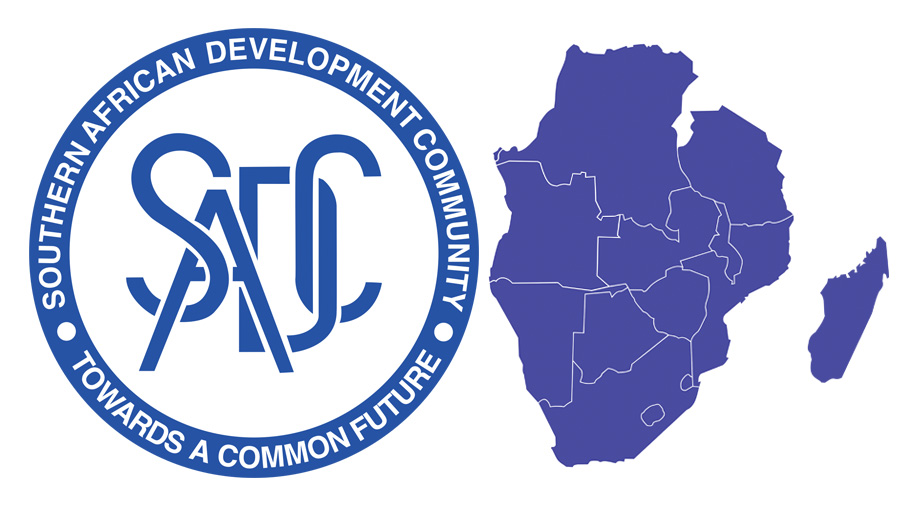
Under the theme – “Promoting Innovation to unlock opportunities for sustained economic growth and development towards an industrialized SADC” – Southern African Development Community (SADC), comprising 16 southern African states, August 17 gathered to review their collective outstanding development roadblocks, and as traditionally expected, thoroughly discussed another set of measures to be implemented in the next few years.
Southern Africa, and as pertains to the rest of Africa, has been confronted with numerous development challenges. continent is facing major challenges, especially financing, security, soaring debt levels and climate change. These decades-old development setbacks have been complicated primarily due to gross lack of good governance, ineffective approach, illicit outflow of capital from the continent, instability and different kinds of ethnic conflicts, and largely their own failure to look for inside solutions to ensure significant success and economic progress.
Today, the sovereign debt in Africa is currently estimated over $1 trillion, causing severe fiscal crisis, with more than one (1) in three (3) countries in or at high risk of debt distress. This is also happening when long-term concessional finance, official development assistance and foreign direct investments are declining.
In addition, climate change is eroding five (5) per cent of GDP on average annually. These impacts are quite evident in the SADC region. That is why we are working on an African position on the reform of the global financial architecture so that Africa’s needs are taken into account at next month’s Summit of the Future and at the Fourth Financing for Development Conference that will take place next year, in Spain.
There are no clear solutions. Southern African states have no choice but to look inward for homegrown solutions including domestic resource mobilization and innovative financing for climate to sustain development.
And SADC can be a leader on this imperative. And SADC can be a leader on this imperative. The region is home to most of the world’s gold, copper, cobalt, lithium, chromium, graphite, platinum and possesses significant livestock and agricultural endowments.
Four key areas offer SADC innovative and scalable solutions. One of them is the development of regional value chains and this is possible in the whole of SADC.
Regional agglomeration remains a ticket to sustainable industrialization because fragmented approaches will not generate the jobs that are needed, nor will it reduce poverty and inequality.
Indeed, following recent visits to Botswana, Namibia and Ethiopia to study the beef and leather value chains, it has been concluded that all of SADC offers enormous potential to increase the export markets within these sectors.
That is why SADC partnered with the Arab Bank for Economic Development in Africa (BADEA), who have now approved grant financing for a feasibility study in the beef sector for Botswana that will be conducted by ECA, working closely with the SADC secretariat and partners.
Southern African states suffer from energy deficits. Therefore, the approach to energy solutions from a regional perspective is highly recommended. For example, SADC is using only one per cent of its solar and wind energy potential. This means that SADC can be a continental energy provider with the development of this value chain.
The second area of opportunity is food security. There is no reason why Africa should import food to the tune of $120 billion per year when SADC can be Africa’s breadbasket. This is also why embarking on the establishment of the Zambia-Zimbabwe Common Agro Industrial Park, again working with BADEA, who have also approved grant financing for a study to move forward with this initiative. This is not just critical for SADC, but for the whole continent.
Thirdly is minerals development. The continent’s critical minerals can deliver fair and inclusive prosperity. The fundamentals for this agenda are stronger than anywhere else in the world. But the window of opportunity is closing.
Appreciably using the study on the DRC-Zambia electric battery initiative as a proof of concept that can and should drive mineral beneficiation, and working on a road map to translate this into a reality that will allow expansion to other minerals, such as diamond.
Finally, SADC must leverage on technology. The work with Botswana on the Lobu Small Stock Farm shows the benefits of using smart agriculture technologies for climate change adaptation.
With the right investments, we can scale-up innovations like this, and not just in the agricultural sector, but in health, education, finance and transport, amongst others.
It is commendable that the United Nations Economic Commission for Africa (ECA) is now developing a platform that showcases innovations across Africa, which can be accessed by all countries. This was one of the requests by member States at the last Conference of Finance Ministers in March, this year, chaired by the Minister of Finance of Zimbabwe.
These notwithstanding, significant investments and critical infrastructure development is needed to unlock these opportunities. Governments alone cannot do this. The private sector can play its part with the right incentives and de-risking mechanisms.
For instance, the United Nations Economic Commission for Africa (ECA) can work closely with the African Development Bank (AfDB) and regional partners to enhance de-risking mechanisms that promote successful public-private sector partnerships.
As the situation stands, it is necessary to emphasize that the impetus for rapid industrialization is not simply a question of convenience. It is a matter of absolute necessity. Home-grown solutions can help them address today’s complex challenges. It is time to act collectively as a regional bloc to address existing development problems.
The Southern African Development Community (SADC), which has its headquarters in Gaborone, Botswana, is a sub-regional body of 16 Southern African countries. SADC was established on 17 August 1992 in Windhoek, Namibia, and collectively adopted the SADC Treaty. The main objectives of SADC are development, peace and security, and economic growth, to alleviate poverty, enhance the standard and quality of life of the peoples of Southern Africa.





















You must be logged in to post a comment Login