
Opinion
Senator Akpabio, Stop Mocking the Poor, Please!, by Isaac Asabor

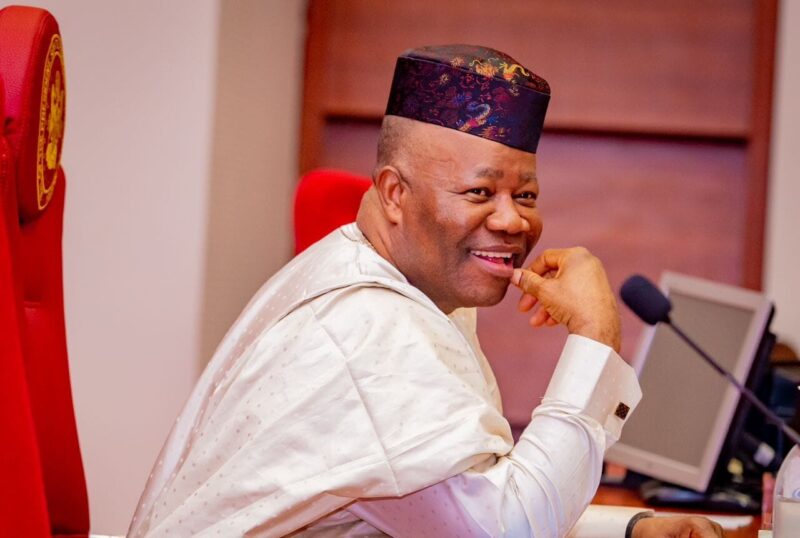
In recent times, the Nigerian political landscape has witnessed its fair share of controversies, but none as glaring as the incident involving Senate President Godswill Akpabio. His sarcastic remark during a plenary session, where he presented the motion “Let the poor breathe,” has sparked outrage and raised questions about leadership accountability.
During a session aimed at preventing the Nigerian Electricity Regulatory Commission (NERC) and distribution companies (DisCos) from increasing electricity tariffs, Senator Akpabio humorously presented the motion moved by Senator Akintunde Abiodun. The Senate erupted in laughter, but this seemingly harmless moment had deeper implications for the struggling masses.
The video of Akpabio chuckling while saying, “Let the poor breathe,” quickly went viral on social media. Many interpreted it as a mockery of the very people he is meant to serve. The phrase, once intended to reject tariff hikes, became a symbol of insensitivity and detachment from the realities faced by ordinary Nigerians.
As citizens, we deserve leaders who empathize with our struggles. The phrase “Let the poor breathe” should serve as a wake-up call for all public officials. Our leaders must recognize that their decisions directly impact the lives of millions. It is time to move beyond rhetoric and prioritize policies that genuinely benefit the people.
Therefore, given the fact that in holding leaders accountable that the media plays a crucial role, it is germane to urge Senator Akpabio to stop mocking the poor. In fact, it is expedient in this context to urge him to focus on policies that uplift our nation rather than trivializing the challenges faced by ordinary Nigerians. As citizens, we must actively participate in shaping government policies and demand transparency and accountability. Only then can we truly breathe freely.
As if the foregoing is not enough, Senate President Godswill Akpabio has again, for the wrong reason, made headline news as he says “Those who want to protest can go ahead, but let us be there eating”.
Akpabio spoke at an event organized by the Niger Delta Development Commission (NDDC) on Tuesday in Rivers state, as he ostensibly mocked the organizers of the planned nationwide protest against ballooning inflation, and Nigeria’s worst cost of living crisis in decades slated to kick-off from August 1, 2024 to August 10, 2024.
Given the foregoing backdrop, it is expedient to opine that in a nation where economic disparities persist and millions struggle to make ends meet, that it is disheartening to witness a public figure mock the very people he is voted to serve. In fact, Senator Godswill Akpabio’s sarcastic remark, “Let the poor breathe”, and now the most recent where he was reported to have said, “Those who want to protest can go ahead, but let us be there eating “during plenary sessions has ignited outrage and raised questions about leadership accountability. In this context, this writer delves into why such behavior is unacceptable and the impact it has on ordinary Nigerians”.
In fact, to graphically paint the enormity of the mockery, particularly on the collective psyche of the poor, it is not out of place to say that leadership comes with responsibilities beyond legislative duties. In fact, it requires empathy, understanding, and a commitment to uplifting the marginalized. When a senator mocks the poor, just as Akpabio has done, it erodes public trust and perpetuates the notion that politicians are out of touch with reality. The phrase “Let the poor breathe” should serve as a reminder that our leaders must prioritize policies that alleviate suffering rather than trivialize it.
You may have wondered in this context on why this writer is so concerned about what the Senator said. To answer the foregoing question, it is pragmatic to say that as journalists that we play a critical role in holding leaders accountable as our profession is not about sensationalism or fear-mongering, instead we are trusted friends of the people, amplifying their voices and shedding light on issues that matter. This is as our duty is to bridge the gap between the powerful and the powerless.
Senator Akpabio, it is time to reconsider your words and actions. The poor deserve respect, not mockery. Let us collectively advocate for policies that uplift our nation, ensuring that every citizen can truly breathe freely. As journalists, we stand firm in our commitment to truth, justice, and compassion.
In fact, in the vast tapestry of Nigerian politics, there exists a crucial thread, one that binds the nation’s fate to the well-being of its most vulnerable citizens. This thread is woven from empathy, compassion, and a relentless commitment to lifting the downtrodden. It bears the weight of hope, and it is time to strengthen it: Nigeria needs politicians who carry the betterment of the poor in their hearts at all times.
The reason for the foregoing view cannot be farfetched in this context as Nigeria’s story is one of stark contrasts. Amidst opulence and grandeur, millions struggle to secure their next meal. Poverty gnaws at the edges of society, leaving scars on the faces of children who dream of education, healthcare, and a brighter future. These are the forgotten voices, the ones drowned out by political rhetoric and power struggles.
Imagine a politician who walks the dusty streets of rural villages, not for a photo op, but to listen, to hear the stories of those who lack access to clean water, education, and basic healthcare. Such leaders recognize that their mandate extends beyond ballot boxes; it encompasses the hearts and hopes of the impoverished.
It is germane at this juncture to opine that the kind of political leaders Nigerians need are compassionate politicians who prioritize policies that uplift the poor, not the political leaders who mock those who voted them to office. The political leaders who have what it takes to champion affordable healthcare, quality education, and social safety nets. Those who cam fight against corruption, and those who can ensure that resources meant for development reach the grassroots. Those who their decisions are not driven by personal gain but by a burning desire to alleviate suffering.
These politicians bridge the gap between the privileged and the marginalized. They understand that governance is not a distant affair, but a daily struggle for survival. Political leaders who advocate for fair wages, housing, and sustainable livelihoods. Their offices are open to all, not just the elite, and they are not in any way predisposed to satirically be mocking the poor with caustic comments.
In fact, in a nation where fear often shadows political discourse, compassionate leaders emerge as trusted friends. They do not wield power like a baton; instead, they extend a hand. Citizens confide in them, knowing that their concerns will be heard, not silenced.
Against the backdrop of the foregoing view, it is expedient to urge Senator Akpabio to stop mocking the Poor.

















You must be logged in to post a comment Login