
Africa
Senator Kingibe’s Critique of Wike as Emblematic of Institutional Decay and Autocratic Governance: EFCC or ICPC Should at Least Call in the Minister -By John Egbeazien Oshodi
If these televised allegations—land allocations to family members, massive title fee reductions, and questionable financial decisions—go unexamined, then the failure is not Kingibe’s or Wike’s. The failure belongs to the very institutions created to protect the public interest. It belongs to the presidency if it looks away. It belongs to the EFCC and ICPC if they sit idle.

In any functioning democracy, live televised allegations of land fraud, nepotism, and fiscal abuse by a sitting federal minister would trigger immediate institutional response. Investigations would commence. Subpoenas would be issued. Press conferences would be held. The public would be informed at every stage. But in Nigeria, the pattern is different. Accusations come, documents are waved, the public gasps—and then the system retreats into silence, hoping outrage will dissolve into forgetfulness.
Senator Ireti Kingibe’s damning revelations about Nyesom Wike, the Minister of the Federal Capital Territory (FCT), are not abstract criticisms—they are specific, verifiable, and consequential. And yet, no knock on the door. No invitation for questioning. No institutional discomfort. In fact, there is only more silence. And that silence speaks volumes—not just about Wike, but about the fragility of Nigerian democracy itself.
Land for Sons, ₦200 Million Reduced to ₦2 Million—Within 48 Hours
On live television, Kingibe accused Wike of awarding plots of Abuja land to his own sons, while reducing official land title fees from ₦200 million to a mere ₦2 million—all within 48 hours. This isn’t hearsay. It’s not gossip. It is a sitting senator offering to present documentary evidence to support her claims. In a serious republic, such allegations would trigger the immediate involvement of not just anti-corruption bodies, but also legislative and judicial oversight.
The psychological message behind such actions is deeply corrosive: it tells ordinary Nigerians that merit no longer matters, that state resources are not public but inherited, that the laws written in books are not meant for the powerful. This is how institutional despair spreads—when citizens realize that they live in a country where theft is punished, unless you steal big enough, or from high enough.
What Nigerian Leaders Fail to Understand: The World Is Watching
President Tinubu. The EFCC Chairman. The ICPC Chairman. All must understand: this is not the Nigeria of 1990. Today’s Nigeria is watched by a global audience—investors, foreign governments, development partners, rights organizations, and even everyday diaspora citizens. A televised national scandal, such as the one presented by Senator Kingibe, is not just a domestic story—it is an international warning sign.
When anti-corruption institutions ignore such allegations, foreign embassies take note. The international private sector—those considering FDI in Nigeria—begin to recalculate risks. Diplomats report back home. The World Bank watches. Credit rating agencies revise political risk indices. The silence of Nigerian institutions, in the face of hard public accusations, is not just bad for justice—it’s bad for business.
In developed democracies like the United States, United Kingdom, France, Germany, or Canada, if a lawmaker went on live TV with verifiable documents showing that a federal cabinet member gave state land to their children and defrauded the government of millions in fees, it would immediately become a national scandal. Investigations would begin the next day. Public hearings would be scheduled. The minister would either resign or be suspended pending inquiry. And the Prime Minister or President would issue a statement to maintain public trust.
When Public Office Becomes Personal Estate
If true, Wike’s behavior is not merely inappropriate—it is a desecration of the very idea of public service. Land is not just geography—it is wealth, inheritance, and legacy. For the sons of a minister to be awarded land from public allocation raises serious ethical questions. Was there a bidding process? Was the allocation part of a legal program? Was there any transparency at all?
Reducing land title fees from ₦200 million to ₦2 million is not a clerical error—it is a deliberate undervaluation of national assets. In financial terms, that is the equivalent of robbing the treasury and rerouting public value to private hands. And it is not theoretical—these are actionable economic crimes.
If Wike were an official in South Korea, Germany, or Canada, such moves would trigger media investigations, parliamentary scrutiny, party backlash, and likely prosecution. Even in post-apartheid South Africa, recent years have shown high-level resignations and investigations over far less.
The Psychology of Public Silence and Institutional Collapse
The danger here is not just what Wike allegedly did. It is how the public is being conditioned to react—or not react—to televised corruption. The more Nigerians watch high-ranking officials commit acts of abuse and walk free, the more they internalize the uselessness of rules. In psychology, this is known as learned helplessness—when people stop fighting because they’ve been taught that the system does not respond.
Silence breeds cynicism. Cynicism breeds disengagement. And disengagement destroys democracies from within. Because what dies is not just law—it is hope.
Where Is the EFCC? Where Is the ICPC?
These are not vague claims. They are precise, documentable allegations about public land being turned into private property and state funds being discarded in plain sight. If the EFCC and ICPC cannot even call the Minister in for questioning, then what, exactly, is their purpose?
Their silence is a form of institutional betrayal. These agencies were not created to sit out the big cases and chase after cyberfraud teenagers. Their mandate includes abuse of office, misappropriation of public resources, and unethical allocation of government property. This is their jurisdiction. And yet, they retreat.
Even if Wike is innocent, he should want to clear his name. In democracies, public figures do not fear scrutiny—they welcome it to protect their legacy.
What Would Happen in Real Democracies?
In democratic nations, here’s what would already have happened:
Immediate press coverage across national dailies.
A call for the Minister’s resignation or suspension pending investigation.
Opposition parties would demand a public hearing.
The anti-corruption commission would issue a press release announcing a probe.
The president would be forced to publicly comment to reassure the public.
Whistleblower protections would be granted to anyone holding further evidence.
In short: democracy would show its teeth.
But in Nigeria, silence has become the shield of the powerful, and impunity the gift of proximity.
Final Reflection: The True Cost of Looking Away
Senator Ireti Kingibe has spoken. She has gone public. She has offered documents. The ball is no longer in her court—it is now firmly in the hands of the EFCC, the ICPC, and ultimately, President Bola Ahmed Tinubu.
But let it be clear: this commentary is not about Senator Kingibe. And it is not an attack on Minister Nyesom Wike. I do not know either of them personally. This is not political or personal. It is about something much deeper—the health of our institutions, and the credibility of the Nigerian state.
The concern here is selective investigation—the dangerous pattern where anti-corruption efforts are swift when the accused is weak or unpopular, but go silent when the individual is powerful or well-connected. That silence is what corrodes public trust. That silence is what gives rise to impunity.
If these televised allegations—land allocations to family members, massive title fee reductions, and questionable financial decisions—go unexamined, then the failure is not Kingibe’s or Wike’s. The failure belongs to the very institutions created to protect the public interest. It belongs to the presidency if it looks away. It belongs to the EFCC and ICPC if they sit idle.
Because if no one moves, if nothing happens, if no questions are asked—then let us admit it plainly: the republic is no longer a democracy. It has become a performance. And we, the people, are not participants—we are spectators, watching our own betrayal.
Power must not shield misconduct. Proximity must not erase accountability. Friendship with the President must not grant immunity from scrutiny.
This is not about personalities. It is about principles. It is about fairness, transparency, and the survival of public trust.
If we remain silent now, we may soon find that it is not only our land that was stolen—but our future too.
Let the institutions speak—before the silence becomes irreversible.
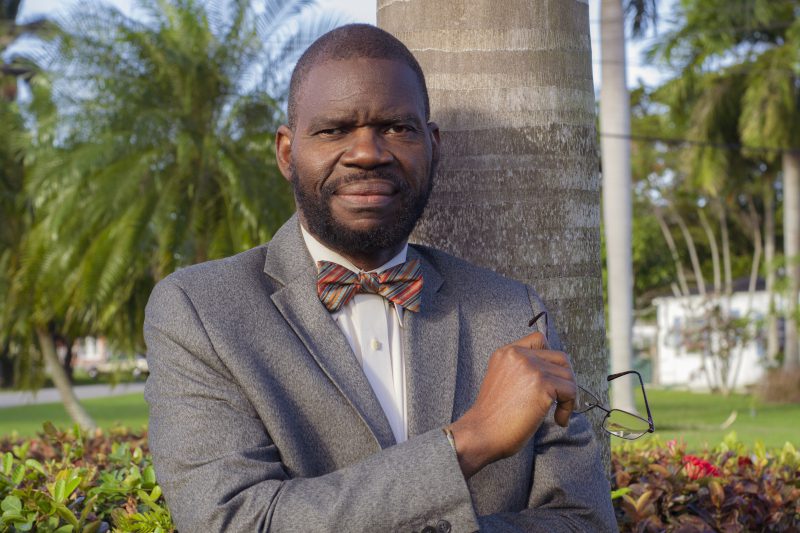
Professor John Egbeazien Oshodi is an American psychologist, educator, and author with deep expertise in forensic, legal, and clinical psychology, cross-cultural psychology, and police and prison science. Born in Uromi, Edo State, Nigeria, and the son of a 37-year veteran of the Nigeria Police Force, his early immersion in law enforcement laid the foundation for a lifelong commitment to justice, institutional transformation, and psychological empowerment.
In 2011, he introduced state-of-the-art forensic psychology to Nigeria through the National Universities Commission and Nasarawa State University, where he served as Associate Professor of Psychology. Over the decades, he has taught at Florida Memorial University, Florida International University, Broward College (as Assistant Professor and Interim Associate Dean), Nova Southeastern University, and Lynn University. He currently teaches at Walden University and holds virtual academic roles with Weldios University and ISCOM University.
In the U.S., Prof. Oshodi serves as a government consultant in forensic-clinical psychology and leads professional and research initiatives through the Oshodi Foundation, the Center for Psychological and Forensic Services. He is the originator of Psychoafricalysis, a culturally anchored psychological model that integrates African sociocultural realities, historical memory, and symbolic-spiritual consciousness—offering a transformative alternative to dominant Western psychological paradigms.
A proud Black Republican, Professor Oshodi is a strong advocate for ethical leadership, institutional accountability, and renewed bonds between Africa and its global diaspora—working across borders to inspire psychological resilience, systemic reform, and forward-looking public dialogue.























You must be logged in to post a comment Login