
Africa
Why £3,500 A Night, While Nigerians Can’t Afford “Agbo”? -By Isaac Asabor
Let us build hospitals, not waste on hospital bills abroad. Let us save lives, not egos. And let every leader who flies abroad for treatment be reminded: you cannot truly escape the sickness of a nation you helped to infect.

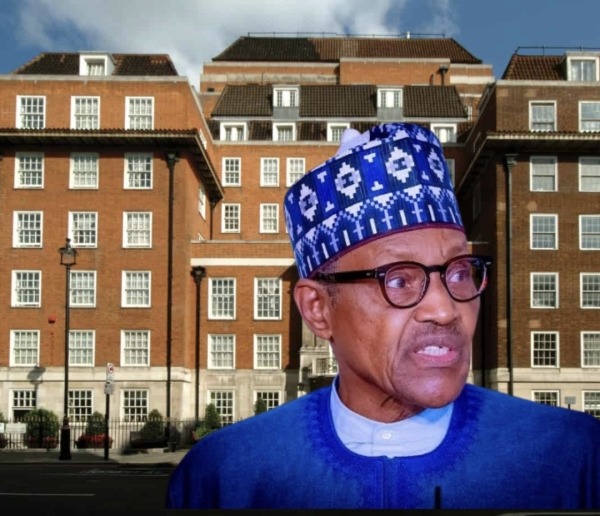
There is a burning question that deserves national introspection: “Why should a Nigerian leader be treated abroad at £3,500 per night, while the citizens he governed can’t even afford ‘Agbo’, the cheapest form of health relief on the streets of Nigeria?” This is not just a question of fiscal irresponsibility, it is the epitome of leadership failure.
The recent revelation that the late President Muhammadu Buhari allegedly spent a jaw-dropping £3,500 (over ₦6.7 million) per night during medical treatment at a London clinic reopens a festering wound in Nigeria’s soul. It is a reminder that we are governed by leaders who have no faith in the same public systems they expect citizens to endure. And nothing screams hypocrisy louder than a president who oversees a decaying health system but chooses to heal in foreign luxury.
For the average Nigerian, a visit to the hospital is a financial nightmare. Most public hospitals are underfunded, overcrowded, and lacking in basic medical supplies. For many citizens, the only accessible healthcare is “Agbo”, a street-sold herbal mixture brewed in aluminum pots, sold in old water bottles, and taken on faith more than science.
In a country where millions survive on less than $2 a day, “Agbo” has become the poor man’s panacea for everything from malaria to diabetes. Yet, while citizens are forced to gulp down this unregulated brew as a last resort, those elected to serve them hop on private jets for first-class medical care in London, Dubai, and India.
To put it bluntly: £3,500 per night for one man’s treatment in a foreign hospital is immoral in a country where pregnant women still die on hospital floors due to lack of beds or doctors. If this figure is true, then the late Buhari’s London visits likely cost Nigeria hundreds of millions of naira, money that could have built and equipped several modern hospitals across the six geopolitical zones.
This is not just about Buhari. He was neither the first nor the only Nigerian leader to prefer healing abroad. Before him, President Umaru Musa Yar’Adua was flown abroad on extended medical trips. Many state governors routinely check into European hospitals for the flimsiest of ailments, sometimes just to “rest”. Some even go as far as giving birth abroad just to secure foreign passports and citizenship for their children.
How did we get here? Nigeria has consistently underfunded its healthcare system for decades. In 2001, African Union countries, including Nigeria, agreed in the Abuja Declaration to allocate at least 15% of their annual budgets to health. Over 20 years later, Nigeria has barely scratched that target. The country rarely goes above 5–6% in health allocation, even during public health crises.
In 2020, at the height of the COVID-19 pandemic, Nigeria allocated just 4.14% of its national budget to healthcare. Meanwhile, medical tourism drained an estimated $1 billion from the economy that same year, mostly for the political class. This contradiction is not just tragic; it is criminal negligence masked as political tradition.
You would expect that after spending years in office, Nigerian leaders would leave behind world-class hospitals as legacies. Instead, they leave behind debt, broken systems, and faded signposts of poorly funded health projects.
Look around: from the University College Hospital in Ibadan to the National Hospital in Abuja, and from state-owned general hospitals to community clinics, what you see is decay, peeling walls, malfunctioning equipment, unpaid staff, and a constant stream of patients turned away due to lack of capacity.
One would imagine that a leader like Buhari, after several medical pilgrimages to the UK, would have invested in a befitting presidential hospital or cancer centre in Nigeria. But no. He left office without fixing even the State House Clinic, which ironically was so bad that his own wife, Aisha Buhari, once called it out publicly for not having basic medical equipment.
When leaders spend millions of pounds on foreign treatment, it does not just insult the suffering masses, it shows that they never intended to fix the health system. Why would they? They don’t use it. And because they do not use it, they do not feel the pain of the poor woman in Abeokuta losing her child to a preventable infection. They do not hear the cries of a man in Jos unable to afford kidney dialysis. They are insulated from the rot they oversee.
Their children are born abroad. They do checkups abroad. Even their final breath, more often than not, is taken in a foreign hospital bed surrounded by foreign nurses.
It is high time Nigeria enacted a law barring elected public officials from seeking medical treatment abroad, except in the rarest and most exceptional cases. This law should include the president, governors, ministers, lawmakers, and their immediate families. If the system is good enough for the people, then it must be good enough for the leaders.
Let them feel the heat. Let them wait in line at general hospitals. Let them experience what they have forced millions to endure. Only then will they be motivated to fix the system. After all, necessity is the mother of invention.
Additionally, the health budget must be increased to at least 15% of the national allocation, and must come with strict accountability frameworks. Medical infrastructure must be prioritized, not for decoration, but for delivery. Doctors and nurses must be paid on time and adequately equipped to handle emergencies.
Let us not forget that the same leaders who claim Nigeria cannot afford to build world-class hospitals are the ones flying first class to the UK and booking rooms in hospitals that charge £3,500 per night. If we can afford that for one man, we can afford to fix a system for millions.
This is not a matter of capacity. It is a matter of will. Ghana, Rwanda, and even some smaller African nations are developing reputable medical centres that are beginning to attract medical tourists. Why can’t Nigeria do the same?
The truth is bitter but must be swallowed: Nigerian leaders have failed the people in the health sector. They are quick to seek the best for themselves while offering the worst to their citizens. A nation where leaders heal abroad while the people cannot afford “Agbo” is not just a failed state, it is a failed conscience.
The time to reverse this shameful trend is now. No more excuses. No more foreign hospitals. No more hiding behind state privilege while Nigerians bury loved ones due to a lack of basic care.
Let us build hospitals, not waste on hospital bills abroad. Let us save lives, not egos. And let every leader who flies abroad for treatment be reminded: you cannot truly escape the sickness of a nation you helped to infect.

























You must be logged in to post a comment Login