Africa
Senator Natasha Returns to the Red Chambers as Queen of the Senate: How Senator Godswill Akpabio Turned a Stubborn, Determined, and Democratic Biracial Woman into the Queen of the Nigerian Senate -By Professor John Egbeazien Oshodi
That small refusal reframed the entire conflict. She wasn’t protecting furniture; she was defending the non-negotiable right of women to occupy democratic space without being shuffled to the margins. A “seat” became a symbol. Symbols outlive orders.


The Return of the Queen
The pain: A chamber that locked a woman out is now forced to watch her walk back in. The carpet is the same red; the air is not. Six months of isolation is a long time in a public life. It corrodes trust. It brands the target. It sends a message: “We can shut you down.” That message lands not only on one person, but on every girl watching.
The joy: And yet, here she is—composed, measured, unbroken. Return is a quiet form of victory; it says, “you tried to edit me out, but the sentence was unfinished.” Her entry restores more than access; it restores the idea that institutions are not gods. They can be challenged, corrected, and—when necessary—shamed back to their senses.
The Wound of a Nation, the Resilience of One Woman
The pain: Nigeria’s deeper injury is not procedural—it is psychological. We normalize the sidelining of women, call it culture, then punish those who refuse it. The trauma accumulates: at homes, in schools, in offices, in courts, in chambers.
The joy: Resilience is contagious. One woman’s refusal becomes a national case study in self-respect. She is proof that a country can begin to heal when someone refuses to be the newest scar.
From a Seat to a Struggle
The pain: A seat reassignment turned into a public humiliation. Command. Resistance. Expulsion. It exposed a masculinity that treats disagreement as disloyalty and visibility as insubordination.
The joy: That small refusal reframed the entire conflict. She wasn’t protecting furniture; she was defending the non-negotiable right of women to occupy democratic space without being shuffled to the margins. A “seat” became a symbol. Symbols outlive orders.
The Pattern of Institutional Abuse
The pain:
• Suspension & sealed doors: Erasure by padlock—an assault on legitimacy.
• Failed recall: Weaponizing process to annul the will of her constituents.
• Smears & paid disinformation: Turning lies into tools, hoping mud will do what law could not.
• Airport harassment: State authority used as a leash.
• Home invasion reports: Fear crossing the threshold into private life.
• Lawfare & delay: Justice converted into exhaustion.
• Teargas at the gates: Citizens punished for hope.
The joy: Every tactic backfired. The padlock became a photograph; the recall, a rallying cry; the smear, a boomerang; the harassment, a headline; the delay, a lesson in perseverance; the teargas, a baptism of solidarity. Repression tried to shrink her; it enlarged the public that stood with her.
The Words That Could Not Be Twisted
The pain: Misquotations are another form of silencing: change a woman’s words and you change the public’s perception.
The joy: Her statement was precise—and therefore powerful: “a National Assembly being run by such dictatorship.” Not a personal insult, but a systemic diagnosis. Systems can be reformed; insults only escalate. She chose the path that heals.
Akpabio and the Senate: Fragile Power, Exposed Masculinity
The pain: Defensive power punishes what it fears. Postponing plenary to avoid an uncomfortable return was not order; it was panic. Male solidarity without moral spine is just a louder kind of fear.
The joy: Fear exposed is fear weakened. By ducking, the chamber conceded what Nigerians already felt: one woman’s courage carries more gravity than a chorus of titles.
Therapeutic Lessons for a Broken Democracy
1) Trauma repeats until faced
Pain: Without accountability, institutions reenact their abuses.
Joy: Naming harm is the first intervention; reforms can follow.
2) Projection of fear onto women
Pain: Labeling her “rebellious” hid the chamber’s own rebellion against fairness.
Joy: Accurate diagnosis liberates both the target and the offenders—from lies.
3) Apology as healing
Pain: Pride mistakes apology for weakness.
Joy: In therapy and in states, apology is repair. An honest “we were wrong” detoxifies the room.
4) The body carries pain
Pain: Teargas, bruises, breathlessness—citizens’ bodies kept the ledger.
Joy: Public memory is now intact. Pain remembered prevents repetition.
Counsel to Akpabio: Stop Wounding Yourself
The pain: Continuing this conflict corrodes your name, your sleep, and your legacy. The allegation she raised against you has not evaporated because papers moved or cases slowed—it lives in the public record and mind.
The joy: You still have a choice that preserves dignity: restraint. Let her speak; let the chamber breathe. A leader who knows when to be still is a leader who can still be trusted—by history, if not by headlines.
A Nation Watched by the World
The pain: While the UN discussed democracy and protection of women, Nigeria broadcast images of women coughing at the gates of Parliament. Contradiction travels fast.
The joy: Visibility is pressure; pressure is progress. When shame crosses borders, reform crosses floors.
The Birth of a Queen
The pain: She did not seek a crown; the chamber built one out of its mistakes.
The joy: Queens are forged, not appointed—by conviction, by scars worn with grace, by the refusal to trade truth for comfort. Whether or not she owns the title, her conduct fits the role.
A Final Word to Mr. Akpabio: The Sexual Allegation Remains—So Does the Cost
The pain: Evasion is not exoneration. Delays drain the last reserves of benefit of doubt. History doesn’t archive adjournments; it archives conduct toward the vulnerable.
The joy: A transparent, credible process offers something no court can fabricate: moral relief. Choose clarity—if not for politics, then for health.
Epilogue: The Irony of Power
The pain: Attempts to bury a woman’s voice often bury the reputations of those holding the shovels.
The joy (with a smile): Don’t be stunned if future billboards read, “Natasha 2031 — The People’s President.” If that day arrives, her origin story will include every attempt to silence her. And you will have a line in the credits: “unintended producer.”
Closing Reflection: Democracy as Therapy
The pain: A republic that confuses control for leadership is unwell.
The joy: Therapy works. So does democracy—when truth is told, apologies are made, and courage is honored.
On October 7, one simple act can begin institutional healing: when she enters, the chamber stands.
Four Joyfully Practical Commitments
1. For the Senate leadership (Day One):
• Restore all committee access and full speaking rights.
• Publicly affirm zero tolerance for retaliation or isolation.
• Announce an independent gender-sensitivity and workplace-conduct review.
2. For the Judiciary and Police:
• Publish transparent timelines for all related proceedings.
• End performative adjournments; prioritize justice over optics.
3. For the Media:
• Print prompt corrections when women’s quotes are distorted or misframed.
• Center women’s actual words; stop editorializing their tone or “attitude.”
4. For Girls and Women Watching:
• Keep receipts—of slights, of courage, of progress.
• Claim your seat in classrooms, councils, and chambers.
• Understand: dignity spoken aloud is a public service.
And to the Senate’s elder women—the three senior female senators who sat quietly while one of their own was humiliated—this silence must end. Your apology to Senator Natasha will not diminish you; it will dignify you.
Mr. Akpabio, we know you will not apologize today. But one day—perhaps long after you leave that red chair—you will feel its necessity.
Bottom line: Let the pain teach. Let the joy lead. Let the Senate rise.
This writer does not know any of the individuals personally; the concern here is justice, integrity, and the conscience of governance.
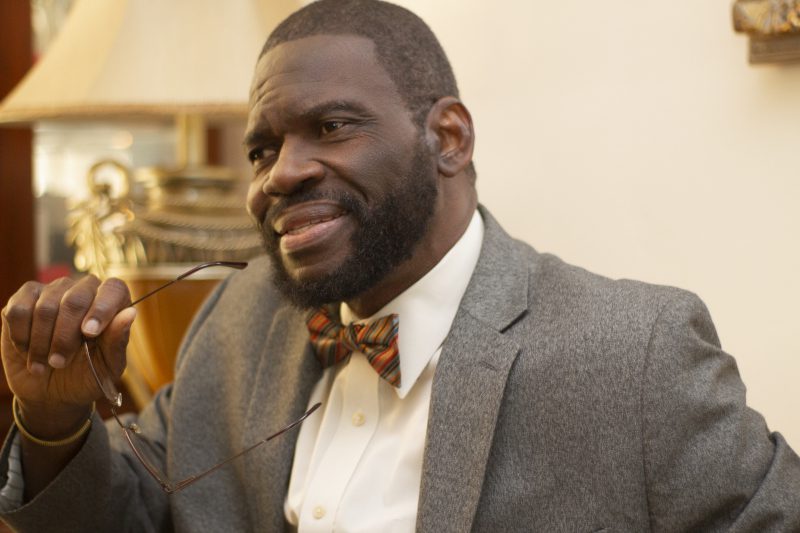
Professor John Egbeazien Oshodi, Clinical/Forensic Psychologist
About the Author
Prof. John Egbeazien Oshodi is an American psychologist, educator, and public affairs analyst specializing in forensic, legal, clinical, and cross-cultural psychology. Born in Uromi, Edo State, Nigeria, and son of a 37-year veteran of the Nigeria Police Force, he has dedicated his career to linking psychology with justice, education, and governance. In 2011, he introduced advanced forensic psychology to Nigeria through the National Universities Commission and Nasarawa State University, where he served as Associate Professor of Psychology.
He is currently contributing faculty in the Doctorate in Clinical and School Psychology at Nova Southeastern University; PhD Clinical Psychology, BS Psychology, and BS Tempo Criminal Justice programs at Walden University; Professor of Leadership Studies/Management and Social Sciences (Virtual Faculty) at ISCOM University, Benin Republic; and virtual faculty at Weldios University. He also serves as President and Chief Psychologist at the Oshodi Foundation, Center for Psychological and Forensic Services, United States.
Prof. Oshodi is a Black Republican with interests in individual responsibility, community self-reliance, and institutional democracy. He is the founder of Psychoafricalysis (Psychoafricalytic Psychology), a culturally grounded framework centering African sociocultural realities, historical memory, and future-oriented identity. He has authored over 500 articles, multiple books, and numerous peer-reviewed journal articles spanning Africentric psychological theory, higher education reform, forensic and correctional psychology, African democracy, and decolonized therapeutic models.