Africa
Strategic Loyalty: How Nigerian Presidents Use the COAS Role as “Their Eyes” with Regional Allies, While Granting Ceremonial CDS Positions Outside Their Ethnicity, by John Egbeazien Oshodi

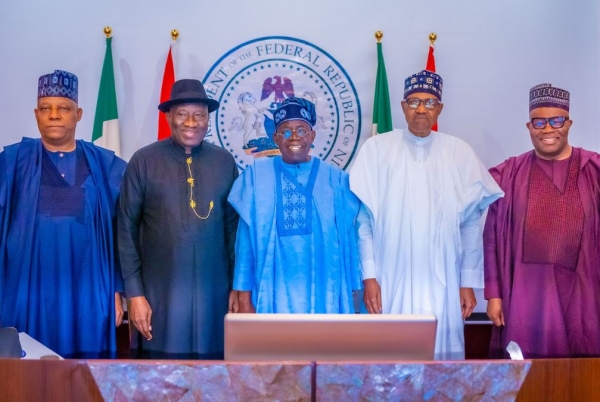
In Nigeria, military appointments often reveal a strategic allocation of roles along ethnic and regional lines, where loyalty to the president’s base is paramount. The position of Chief of Defence Staff (CDS), largely seen as ceremonial, is generally assigned to an individual outside the president’s ethnic and regional group, creating a public impression of inclusivity. However, the role of Chief of Army Staff (COAS)—widely regarded as the true powerhouse within the military—typically aligns with the president’s ethnic or regional area, serving as a calculated safeguard for his administration. While this writer makes no allegations of overt collusion, the quiet assumption of protection is unmistakable in these appointments. This deliberate alignment underscores a distinctive Nigerian reality: to the civilian president, the COAS is seen as “You are my eye”—the trusted guardian of the administration’s stability and the ultimate shield against potential internal threats. Given Africa’s history of coups, this tacit expectation casts the COAS as a crucial protector, positioning them as an essential bulwark for the president’s tenure.
Under President Goodluck Jonathan, this strategy was clearly evident. Jonathan appointed Vice Admiral Ola Ibrahim from North-Central Nigeria as CDS, signaling an attempt at provincial representation. However, he entrusted the COAS role to southern officers like Lt. General Azubuike Ihejirika and later General Kenneth Minimah, both trusted figures from his base in the South or non- northern areas. Through this alignment, Jonathan created a buffer of security, ensuring that the COAS, who was “his eye,” held substantial power to protect the administration from any threats or instability.
Similarly, President Buhari’s administration maintained a consistent northern presence in the COAS role, with appointments of Generals Tukur Buratai, Ibrahim Attahiru, and Farouk Yahaya. The CDS position, meanwhile, went to General Abayomi Gabriel Olonisakin and then to his successor, Lucky Irabor equally from the South, presenting a regional balance on the surface. But the primary power remained with a northern COAS, affirming Buhari’s implicit assurance of a loyal, protective command. In the eyes of Buhari, the COAS was indeed “his eye,” safeguarding his leadership and aligned with his regional base.
Today, under President Tinubu, this trend persists. Both Lt. General Taoreed Abiodun Lagbaja, the current COAS who is apparently on medical leave due to illness, and Acting COAS Major General Olufemi Oluyede are Yoruba officers, while CDS is held by General Christopher Gwabin Musa from the North. By positioning the COAS role within his ethnic circle, Tinubu seems to affirm the same underlying principle: “You are my eye,” assigning the COAS as his core line of defense, ensuring a powerful loyalty in the military ranks.
This psychologist looks forward to a future where Nigeria adopts a more independent and realistic approach, prioritizing qualifications, merit, and professionalism over ethnic or regional affiliations in these appointments. In countries like the United States, military roles are assigned based on expertise and strategic fit rather than regional or ethnic considerations. This detachment from ethnic alignment allows leaders to create a cohesive military command, where every officer’s loyalty is to the country, not a regional or ethnic base. In Nigeria, such an approach could reduce internal ethnic tension, eliminate suspicion between military leaders, and foster genuine trust and cooperation across all ranks. A military structure built on meritocracy would reinforce professionalism, signaling to the public that the armed forces are led by the most capable individuals dedicated solely to national defense.
Psychologically, this shift would provide immense benefits. Appointments based on expertise rather than emotional or ethnic motives would build trust within the ranks, reduce the risk of tension or rivalry, and ultimately strengthen the unity of the Nigerian military. For citizens, seeing a merit-based command structure would bolster confidence in Nigeria’s democracy, moving the country away from a system where military roles reflect political safeguards. By detaching from the notion of “You are my eye,” and instead appointing leaders based on their commitment to national service, Nigeria could establish an institution that embodies the true values of democracy.
The day Nigeria embraces this approach will be a turning point in its democratic journey, signaling a commitment to impartial governance and professionalism in all branches of government. Until then, the persistence of ethnically aligned appointments perpetuates the perception of a divided military, one where internal dynamics reflect regional and ethnic loyalty over national duty. Shifting toward a model where merit and professionalism define the military hierarchy could finally eliminate these divides, fostering a unified military command built on competence, trust, and an unwavering commitment to Nigeria’s national security.

Professor John Egbeazien Oshodi, born in Uromi, Edo State, Nigeria, is an American-based police and prison scientist, forensic psychologist, public policy psychologist, and legal psychologist. He’s a government advisor on forensic-clinical psychological services in the USA and the founder of the Dr. John Egbeazien Oshodi Foundation for Psychological Health. With a significant role in introducing forensic psychology to Nigeria through N.U.C. and Nasarawa State University, he’s also a former Secretary-General of the Nigeria Psychological Association. He’s taught at esteemed institutions like Florida Memorial University, Florida International University, Nova Southeastern University, and more, and is currently an online faculty member at ISCOM University, Weldios University and Walden University.