
Africa
The Day Rivers Died: How Fubara’s Weakness Killed State Autonomy -By Jeff Okoroafor
The tragedy is not that Fubara was suspended, but that he lacks the courage to fight for reinstatement on principle. In his desperate scramble to keep his job, he has proven himself unworthy of the office. Rivers State needs leaders, not beggars – and Nigeria’s democracy needs defenders, not collaborators.

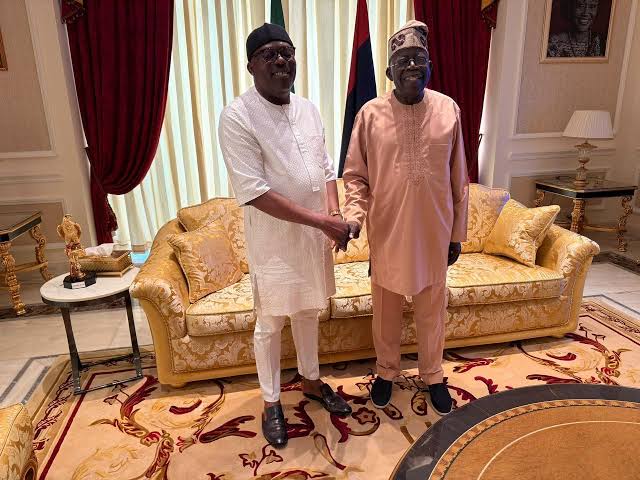
The political tragedy unfolding in Rivers State has reached its lowest point: Governor Siminalayi Fubara, supposedly the chief executive of Nigeria’s oil-rich powerhouse, has been reduced to begging President Bola Tinubu for reinstatement after being suspended from office. This is not just a personal failure—it is an unconscionable surrender of Rivers’ political dignity and a direct assault on constitutional democracy. A governor elected by millions now crawls to Abuja, confirming what many have long suspected: Fubara lacks the courage, strategic vision, and political will to defend either his mandate or the autonomy of Rivers State.
First, let us be clear: Nigeria’s constitution does not grant the president the power to suspend or remove a sitting governor. That authority resides solely with the state legislature through impeachment or with the judiciary in cases of gross misconduct. Tinubu’s purported suspension of Fubara—and Fubara’s subsequent groveling for reinstatement—represents an illegal federal power grab, one that Fubara is now legitimizing through his compliance.
This is not mere political maneuvering; it is a constitutional crisis. If a sitting governor can be removed by presidential fiat, then Nigeria’s federal structure is dead. Past governors facing political crises—from Peter Obi’s battles in Anambra to Rotimi Amaechi’s defiance during the Jonathan era—understood this. They fought through legal and political means, refusing to let Abuja dictate their fate. Fubara, by contrast, has chosen submission over resistance, setting a dangerous precedent that weakens not just Rivers but all Nigerian states.
Fubara’s capitulation reveals a leader fundamentally unfit for the office he seeks to reclaim. Rivers State, as the economic engine of Nigeria’s oil industry, possesses immense political and financial leverage that a courageous leader could have mobilized. The governor’s office comes with constitutional protections and political tools designed precisely to resist such federal overreach. Yet Fubara has demonstrated neither the political acumen to rally legislative allies nor the legal savvy to mount proper constitutional challenges. His immediate recourse to Tinubu exposes a shocking lack of strategic thinking – does he truly believe that a president who suspended him illegally will restore him with any real authority?
The historical context makes Fubara’s weakness even more glaring. Rivers State has produced formidable political figures who understood the weight of their mandate. From the early days of Alfred Diete-Spiff to the confrontational era of Rotimi Amaechi, Rivers governors have traditionally fought to maintain state autonomy against federal encroachment. Even Nyesom Wike, for all his later contradictions, built his political brand on defiant independence from Abuja’s control. That Fubara cannot muster even a fraction of this political courage speaks volumes about his leadership deficit.
Tinubu’s intervention is not an act of statesmanship but a calculated power play. The president recognizes Rivers’ crucial importance in Nigeria’s political and economic architecture. By establishing himself as the arbiter of who governs Rivers, Tinubu effectively neuters the state’s political independence while expanding federal control over Nigeria’s oil wealth. Fubara’s willing participation in this scheme makes him complicit in the erosion of state rights. Even if reinstated, he will govern as a puppet, his every move subject to Abuja’s approval.
The damage extends far beyond Fubara’s political future. Rivers people now face the grim reality that their votes can be nullified by presidential fiat. Nigeria’s federal system suffers another blow as the precedent is set that governors serve at the president’s pleasure rather than the people’s will. Other state executives will face similar pressures, knowing resistance has been weakened. Most tragically, this episode emboldens those who believe Nigeria’s democracy is merely ceremonial, with real power concentrated in Aso Rock rather than state houses.
True leadership would have demanded an immediate legal challenge at the Supreme Court, forcing a constitutional reckoning on the limits of presidential power. It would have required rallying Rivers’ civil society, political class, and business elite in defense of democratic norms. At minimum, it should have involved a public campaign to shame this assault on state sovereignty. Fubara has chosen none of these paths, revealing himself to be precisely the kind of weak executive that enables democratic backsliding.
As this sordid episode unfolds, one truth becomes undeniable: Rivers State deserves better. The people who braved rains and sun to cast their ballots deserve a leader who will defend their mandate, not trade it for personal survival. Nigeria’s democracy deserves guardians who will uphold constitutional principles, not undermine them for temporary advantage. History’s judgment will be harsh on Fubara – not merely for losing power, but for how willingly he sacrificed Rivers’ dignity to beg for its return.
The tragedy is not that Fubara was suspended, but that he lacks the courage to fight for reinstatement on principle. In his desperate scramble to keep his job, he has proven himself unworthy of the office. Rivers State needs leaders, not beggars – and Nigeria’s democracy needs defenders, not collaborators.

Jeff Okoroafor
Jeff Okoroafor is a social accountability advocate and a political commentator focused on governance, accountability, and social justice in West Africa.

























You must be logged in to post a comment Login