
Africa
The Freudian Slip That Exposed the Seat: Wike, Tinubu, and Rivers State -By John Egbeazien Oshodi
And to the world—the UN, the ICC, the superpowers—they say: if you care about democracy, this is your test. If you believe in justice, listen to Nigeria’s silence. If you value peace, watch Rivers closely. Because the people have spoken with their ballots. And now, they speak with their spirits. If ignored again, the next voice may not be protest. It may be the unraveling of a nation’s fragile peace.

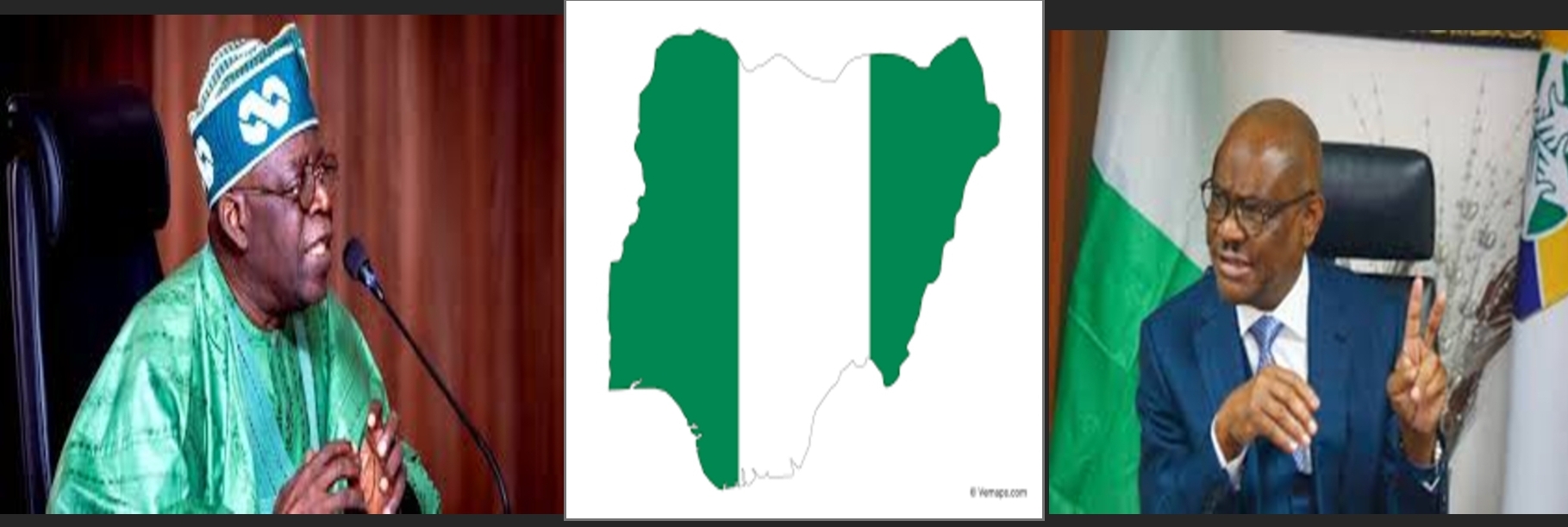
The Slip Heard Across a Nation
In psychoanalytic terms, a Freudian slip is never accidental. It is the unconscious leaking through the cracks of performance—the raw truth escaping the mouth before the mind can trap it. And on a national stage, in a country already choked by doubt and distortion, Nyesom Wike uttered what may now go down as the most revealing political confession in recent Nigerian history: “Who is Tinubu other than me?”
The sentence fell like a joke but landed like thunder. It was more than arrogance—it was an exposure. It was the unconscious voice of a man who, perhaps more than anyone else, has become emblematic of the deep rupture between democratic appearance and authoritarian reality. And in that moment, Wike did not just reveal how he sees himself—he exposed how power in Nigeria is truly perceived: as a game of control, not consent; of dominance, not mandate.
The Wrapping of the Presidency
From a psychological lens, this moment was not merely about politics. It was about suppressed identity, unchecked power, and the projection of ego onto a nation’s highest office. Wike’s statement was a slip, yes—but it was also a scream. A scream from a psyche so saturated with control that it no longer separates itself from the State. In that phrase, Tinubu was not insulted. He was eclipsed. The President was rendered a shadow—an extension of Wike’s political muscle and historical maneuvering. And the terrifying part? The silence that followed confirmed the possibility. Not a rebuttal from Aso Rock. Not a press statement from the Villa. Not even a whispered contradiction from those in Tinubu’s inner circle. Just silence—the kind that confirms suspicion.
Media as Courtiers, Not Critics
Wike’s statement, then, was not just a gaffe—it was a window into Nigeria’s power psychosis. And what made it worse was the atmosphere in which it was received: a media assembly that looked less like a press conference and more like a coronation. The journalists present did not challenge him—they lobbed softballs. They smiled. They chuckled. They nodded, not as watchdogs of democracy, but as spectators of theatre. There was no seriousness, no confrontation, no accountability—only the uncomfortable energy of people who seemed to know they were in the presence of someone they could not question. It was as though they had been given something—not just access, but instruction. And so, a man rewrote the hierarchy of Nigerian power, and the fourth estate took notes instead of asking questions.
A Subconscious Walkback in Real Time
Somewhere deep within, perhaps even Wike himself knew that his slip revealed too much. That is why, in the very same breath of arrogance, he quickly tried to shield himself with reassurance—by publicly declaring he would ‘make sure Tinubu wins again in 2027,’ even boasting that Tinubu would remain in office until 2031. It was not just strategic flattery—it was psychological defense. A subconscious attempt to patch the wound he had just torn open. He needed to show that his dominance was not betrayal, but partnership. That he still had Tinubu’s political back, even as he stepped on the President’s symbolic head. But the nation heard both messages. And it understood the contradiction. That contradiction has now become a national mirror: Are we being governed, or ruled? Is this a democracy, or a carefully staged theater of submission? Again, perhaps sensing he had gone too far, with his slip, tried to walk it back—but the damage was done. Nigerians heard the contradiction: a man asserting dominance while pretending to be loyal. And the people drew their conclusions. In this distorted republic, are we governed—or ruled?
And in that window, we saw everything: the fragile ego of godfatherism, the muted voice of elected leadership, and the raw scream of a nation searching for who actually holds the reins. And this is why the protests will continue. This is why the prayers will deepen. Because in a land where one man can say “Who is Tinubu other than me?” and walk away stronger, it is no longer enough to vote. It is time to call for judgment—not just legal, but ancestral. Not just electoral, but spiritual.
The Cry Beyond Politics
Because sometimes, the deepest truths come not from manifestos—but from slips. And in Wike’s slip, Nigeria saw the face behind the mask. Today, many Nigerians—especially the people of Rivers State—have drawn their own conclusions: that this one man is no longer just a minister, but a shadow ruler. That he is perceived to control not only the presidency, but also the judiciary and the legislature. And when that perception becomes lived reality, when justice feels rented and democracy feels stolen, the people no longer cry to Abuja—they cry to the heavens.
A Turn to Divine and Global Witnesses
In helpless tears, they have turned to President Tinubu not just for action, but for redemption. And when he does not speak, they turn further: to the Almighty, to the ancestral spirits, to the gods of the land, and finally to the watching eyes of the world. Because when democracy is kidnapped and power becomes personal, the people must call upon forces greater than the state—forces that do not blink, do not bargain, and do not forget.
These cries are not born out of religious fanaticism, but from psychological exhaustion and institutional betrayal. They represent the final effort of a people who have knocked on every door of democratic process—only to find them bolted shut by one man’s influence. The people of Rivers, like millions across the nation, now pray with tears not just for Fubara’s restoration, but for the resurrection of dignity, of truth, of constitutional order. They are turning to God not only for spiritual strength, but for judgment. They chant to the gods not for spectacle, but for balance. They cry to the ancestors not to preserve tradition, but to awaken a force that predates corrupt empires.
And to the world—the UN, the ICC, the superpowers—they say: if you care about democracy, this is your test. If you believe in justice, listen to Nigeria’s silence. If you value peace, watch Rivers closely. Because the people have spoken with their ballots. And now, they speak with their spirits. If ignored again, the next voice may not be protest. It may be the unraveling of a nation’s fragile peace.
Wike made that statement while Tinubu was in Abroad. And upon the President’s return, the country was buzzing with a single question: who is really in charge? Tinubu, trained in American political culture, understands the weight of silence and the cost of perception. Wike’s words, delivered without apology, redefined the national hierarchy—and Tinubu knew it.
But something may have shifted. Perhaps Tinubu, reflecting on the growing protests, chants, and prayers from women in mourning cloth, realized that Wike is no longer an asset but a burden. “Yes, you delivered Rivers,” Tinubu may have thought. “But now, you’ve become the distraction.” And maybe—just maybe—he has decided to act. To restore Governor Fubara. To end the games.
Again, in their despair, many citizens have turned beyond politics—to the divine. They call not just on Aso Rock, but on the gods, ancestors, and international observers. These cries are not superstition. They are the final acts of people who feel democracy has failed them.
If ignored again, what follows may not be protest. It may be the unraveling of Nigeria’s fragile peace. The presidency cannot afford to remain in shadow. Not anymore. Allah bless Mr. President, God bless Nigeria.
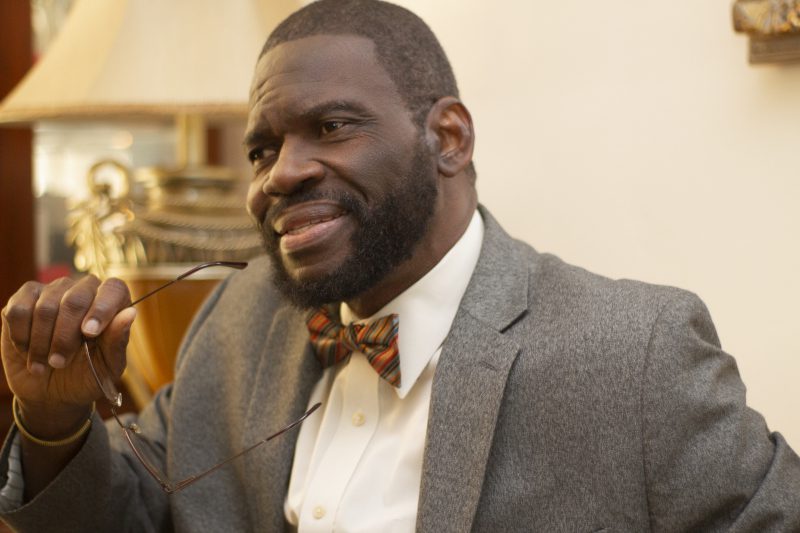
John Egbeazien Oshodi
This writer does not know any of the individuals involved; the focus is solely on upholding democracy, truth, and justice.
Oshodi Open Door Public Training (OOPDT), also known as Oshodi Open Door, is a public awareness initiative dedicated to promoting transparency, accountability, and integrity in Africa. Through educational articles and resources, OOPDT fosters informed discourse on governance, institutional reform, and psychological well-being. It also provides specialized Timely Response Solutions (TRS) training at minimal or no cost, ensuring swift and effective interventions for critical institutional and societal challenges. For more information, contact: jos5930458@aol.com.
Professor John Egbeazien Oshodi is an American psychologist, educator, and author specializing in forensic, legal, and clinical psychology, cross-cultural psychology, police and prison sciences, and community justice. Born in Uromi, Edo State, Nigeria, he is the son of a 37-year veteran of the Nigeria Police Force—an experience that shaped his enduring commitment to justice, security, and psychological reform.
A pioneer in the field, he introduced state-of-the-art forensic psychology to Nigeria in 2011 through the National Universities Commission and Nasarawa State University, where he served as Associate Professor in the Department of Psychology. His contributions extend beyond academia through the Oshodi Foundation and the Center for Psychological and Forensic Services, advancing mental health, behavioral reform, and institutional transformation.
Professor Oshodi has held faculty positions at Florida Memorial University, Florida International University, Broward College, where he also served as Assistant Professor and Interim Associate Dean, Nova Southeastern University, and Lynn University. He is currently a contributing faculty member at Walden University and a virtual professor with Weldios University and ISCOM University.
In the United States, he serves as a government consultant in forensic-clinical psychology, offering expertise in mental health, behavioral analysis, and institutional evaluation. He is also the founder of Psychoafricalysis, a theoretical framework that integrates African sociocultural dynamics into modern psychology.
A proud Black Republican, Professor Oshodi advocates for individual empowerment, ethical leadership, and institutional integrity. His work focuses on promoting functional governance and sustainable development across Africa.



















You must be logged in to post a comment Login