
National Issues
The Geometry of Abandonment: How Nigeria’s Broken Sovereignty Commodified the Border and the Body -By Victor Gabriel
The current insecurity is the structural blueprint of bad governance made visible. The bandits, the kidnappers, and the corrupt politicians are parts of the same ecosystem. One group loots the national treasury in the capital, while the other harvests the citizens’ lives in the forests.

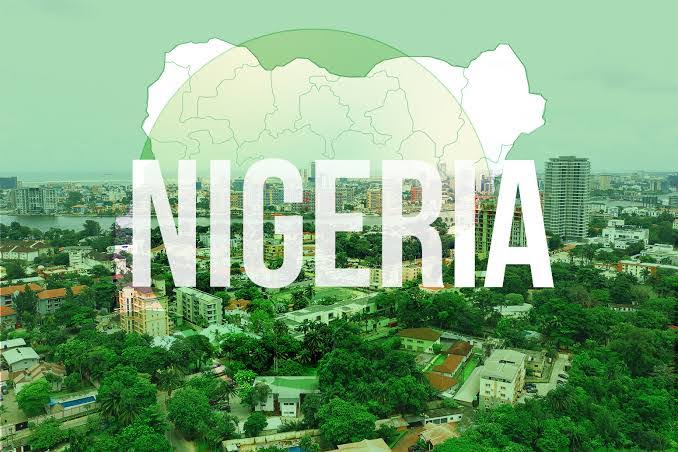
To write about bad governance in contemporary Nigeria is to steer clear of dry fiscal balance sheets and sterile political rhetoric. For the over 200 million citizens trapped within its borders, bad governance is not a conceptual failure of public policy; it is a physical, terrifying reality. It is the systematic retreat of the state from its own geography, leaving behind an existential vacuum. What the world observes from the outside as an uncontrollable surge in banditry, kidnapping, and bloody boundary disputes is, in truth, the direct, monstrous consequence of a governing elite that has decoupled itself from the territory it was sworn to protect.
The crisis in Nigeria today is a tragedy of space, sovereignty, and profound betrayal.
At the heart of Nigeria’s current insecurity lies the deliberate, historical abandonment of its borders. In a functional republic, a national border is a symbol of legal clarity, economic regulation, and physical protection. In Nigeria, the international and internal frontiers have been reduced to lawless twilight zones.
Bad governance manifests in the complete starvation of infrastructure, surveillance, and human development along these gateway communities. When the state treats its borders as peripheral voids rather than strategic shields, it creates a deadly playground for transnational criminal networks. The porous lines dividing Nigeria from its neighbors are no longer barriers; they are highly fluid conduits for the unchecked influx of small arms, light weapons, and foreign insurgent elements.
This is not an administrative oversight. It is a fatal abdication of sovereignty. The ruling class has consistently insulated itself within heavily fortified metropolitan enclaves, leaving the nation’s outer rims entirely exposed to the elements of terror.
This geometric decay does not stop at international lines; it bleeds heavily inward, fracturing the country along internal boundaries. Across various states, the failure of the government to act as an impartial, efficient, and technologically advanced arbiter of land has turned internal borders into active war zones.
As bad governance triggers macroeconomic collapse, inflation, and severe food insecurity, land is no longer just an ancestral heritage—it has become the final, desperate frontier for biological survival. Decades of administrative inertia by state boundary commissions have left domestic borders vague and contested. When communal or farmer-herder frictions arise over these blurred lines, the state is missing in action. Because citizens realize there is no reliable legal system or swift law enforcement to protect their inheritance, they are forced to look inward, financing ethnic militias and purchasing arms to defend their immediate spaces. Thus, every localized boundary clash in Nigeria is a violent, bleeding monument to a state that has forgotten how to govern its own land.
When a government completely surrenders control over its physical space and internal boundaries, the human body itself becomes the ultimate casualty. The terrifying epidemic of kidnapping for ransom in Nigeria is not merely a crime wave; it is an alternative, highly organized criminal economy that has filled the vacuum left by a failing formal economy.
Kidnapping has become a tragic substitute for governance. In the vast, ungoverned spaces—the forests of the Northwest, the abandoned highways, and the neglected rural farmlands—bandits and cartels have set up parallel tax regimes. They do what the state fails to do: they enforce authority, albeit through the barrel of a gun.
The emotional weight of this reality is crushing the Nigerian psyche. Citizens live in a state of perpetual hyper-vigilance and collective trauma. The home is no longer a sanctuary, schools have become hunting grounds, and interstate travel is a gamble with destiny. When a mother is forced to listen to her child’s screams over a cell phone while a bandit demands millions of Naira, it represents the ultimate breakdown of the social contract. The ransom paid by everyday Nigerians is a direct tax on survival, levied by criminal actors because the official government has failed to provide basic safety.
For too long, commentary on Nigeria has leaned on the lazy praise of “Nigerian resilience.” But this resilience is actually a symptom of profound political trauma. It is the exhausting, forced adaptability of a people who know that if they are captured, if their village is burned over a boundary dispute, or if their borders are overrun, no one is coming to save them.
The current insecurity is the structural blueprint of bad governance made visible. The bandits, the kidnappers, and the corrupt politicians are parts of the same ecosystem. One group loots the national treasury in the capital, while the other harvests the citizens’ lives in the forests.
In conclusion, Nigeria cannot solve its security crisis with kinetic military operations alone. You cannot defend a border that the state has emotionally and economically abandoned. You cannot protect human bodies when the economic policies of the state drive millions into criminal desperation. Until governance stops being an extractive mechanism for the elite and begins functioning as a protective shield for its boundaries and its people, the country will continue to bleed from these self-inflicted wounds.






















You must be logged in to post a comment Login