
Africa
The Kind of Revolution That Will Stop Tinubu -By SKC Ogbonnia
An ideal starting point is a social revolution led by the elites. A serious opposition should without any delay lead protests at the Aso-Rock to compel President Tinubu to not only sign the electoral reforms but also to create a clear level playing ground before any thought of 2027 elections. It is naïve to be hoping to defeat the president where his crack cronies control every facet of the essential institutions in the entire Nigerian democratic and security structures. It is also idiotic to give any room for Tinubu to rig the elections and turn around to expect justice from his rubber-stamp Judiciary.

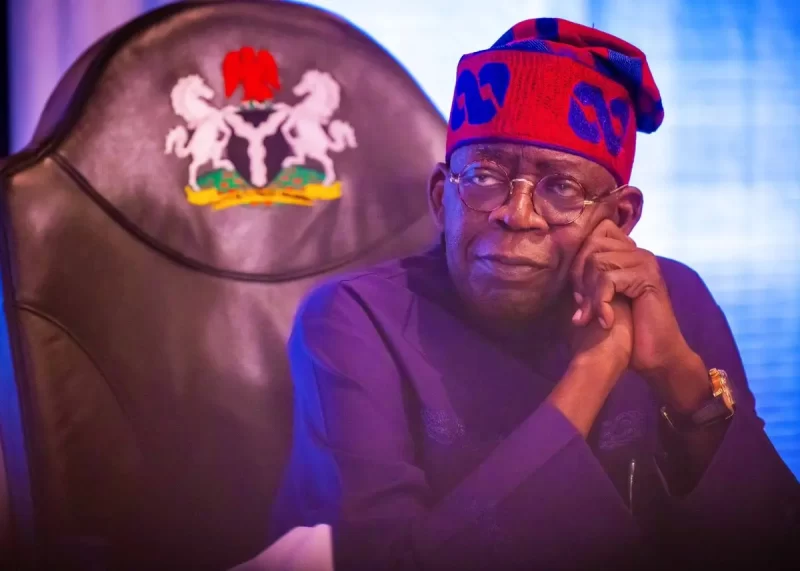
There have been various calls for a mass revolution in Nigeria in recent years due to a sense of resentment among the citizens concerning a shameless history of bad leadership. But who is ought to bell the cat?
To begin, these calls for revolution have come from two distinct groups: The powerful elite, and the masses.
The powerful elite: After the 2003 presidential elections, former Military Head of State, Muhammadu Buhari, called for a mass revolution and followed by leading a mass protest after being defeated by President Olusegun Obasanjo. He did so again in 2011; and went further to threaten a bloody upheaval in 2012. In one instance, he warned that, “If what happened in 2011 should again happen in 2015, by the grace of God, the dog and the baboon would all be soaked in blood.” In another instance, Buhari challenged fellow citizens to emulate the Arab Spring where “a series of anti-government protests, uprisings, and armed rebellions” were used to dethrone corrupt regimes in North Africa.
Buhari was not alone. Not long after the founding of the All-Progressive Congress (APC) in 2013, a sitting governor at the time, Chibuike Rotimi Amaechi, made veiled statements urging the youths to revolt. He charged that politicians steal public funds because the masses “don’t stone” them. In 2014, the then former Governor of Lagos State, now President Bola Ahmed Tinubu, vigorously canvassed revolution against the government of President Goodluck Ebele Jonathan. There were also revolutionary calls from many influential Nigerians.
These powerful elites were neither sanctioned nor jailed by the governments of the day. Instead, they were hailed by the opposition leaders and their followers. Clearly, this ceaseless clamour or propaganda played a significant role in wrestling power from the then ruling People’s Democratic Party (PDP) in 2015.
The masses: Several pro-masses activists have strongly advocated revolution in recent times. The most notable is the human rights activist and former presidential candidate, Omoyele Sowore, who campaigned under the slogan: Revolution Now. Interestingly, unlike the case of the powerful politicians, he was beaten up, detained, and charged with treasonable felony. In short, any organized outcry towards bad governance under President Tinubu, including the #EndBadGovernance Protests of 2024, was met with brutal force. Even the president of the country’s most powerful trade union, the Nigerian Labour Congress (NLC), Joe Ajaero, was beaten silly by the police for organizing a mere protest.
Today, with a soaring inflation, scorching economic hardship, excruciating hunger, widespread corruption, massive youth unemployment, severe insecurity, reign of terror, and a sense of hopelessness under President Tinubu, the calls for a mass revolution have only grown louder.
Chibuike Rotimi Amaechi, the former Rivers State Governor and a former Transport Minister, has been consistent and passionate on the matter under review. Few days after joining to launch a coalition of opposition parties to unseat President Tinubu, Amaechi admonished the citizens and wondered why they have remained too docile to revolt. The former Minister is right on the money. Yes, despite the history of bad leadership, the Nigerian masses appear to care less.
But an earlier statement from the former governor of Jigawa state, Sule Lamido, might have provided a logical answer. According to Lamido, Nigerians are “too poor to revolt.” In other words, the impoverished masses lack the capacity to execute a meaningful revolution against the Nigerian elites, who have a common bond to preserve the status quo. But the bottom truth is that the ordinary citizens are in fervent fear to revolt because previous attempts at mere protests were met with brutal force, while the elites looked the other way.
Therefore, even as it is vitally important to admit that a kind of revolution is necessary to defeat Tinubu and reset the Nigerian democracy for the greater good, a paradigm shift in perception and approach has become very imperative. The point here is that, instead of the ceaseless calls for a mass revolution, this time calls for the elites to demonstrate seriousness and commitment by taking the lead.
Unlike the masses, who are too poor and too weak, the opposition leaders are better equipped to revolt against a corrupt and ineffective Tinubu government. A revolution by the elites will have a stunning impact.
Imagine the optics and the weight, if those protesting on the streets are the likes of Amaechi himself; former Vice President Atiku Abubakar; former governor Peter Obi; former governor Nasir el-Rufai; former governor Raulf Aregbesola; former Secretary to the Government of the Federation, Babachir Lawal; former governor Sule Lamido; former Senate President David Mark; and former governor Sule Lamido, to name a few.!
The general perception of the Nigerian politician does not evoke trust. Thus, the situation today calls for leaders who are courageous and willing to make significant sacrifices, even if it takes risking their own lives for the common good. The Nigerian masses yearn for leaders who can emulate revolutionary change agents in history who gained power through activism, leading protests, like Nnamdi Azikiwe, Indira Ghandi, Nelson Mandela, among others.
The opposition leaders can equally take a cue from both Buhari and Tinubu who gained power by prosecuting their ambitions as do-or -die. Therefore, any plan to stop Tinubu and gain power cannot be a casual phenomenon. As Bola Tinubu would say, “At all cost, fight for it, grab it and run with it.”
An ideal starting point is a social revolution led by the elites. A serious opposition should without any delay lead protests at the Aso-Rock to compel President Tinubu to not only sign the electoral reforms but also to create a clear level playing ground before any thought of 2027 elections. It is naïve to be hoping to defeat the president where his crack cronies control every facet of the essential institutions in the entire Nigerian democratic and security structures. It is also idiotic to give any room for Tinubu to rig the elections and turn around to expect justice from his rubber-stamp Judiciary.
SKC Ogbonnia, former APC Presidential Aspirant, writes from Houston, TX.


















You must be logged in to post a comment Login