
Africa
The Nnamdi Kanu Conundrum: Why a Regime That Negotiates with Terrorists Fears a Dissident’s Voice -By Jeff Okoroafor
First, it would mean acknowledging that the grievances of the Igbo people are legitimate and require a political solution. The government prefers to frame the issue as one of criminality and treason to avoid this fundamental national conversation. Negotiating would mean admitting that the structure of Nigeria is flawed and requires restructuring, a concept the current and past centralized governments have violently resisted.

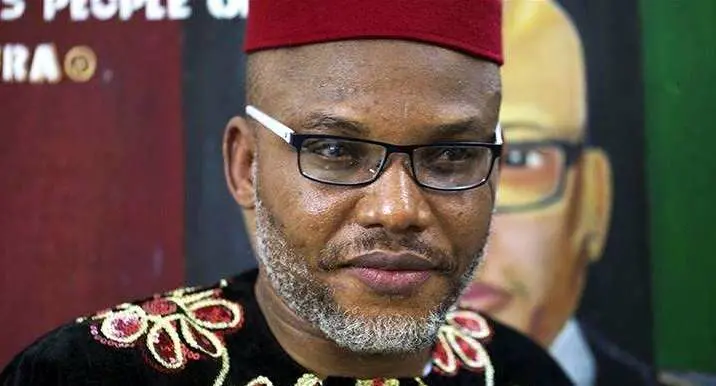
The recent ruling by the Federal High Court in Abuja, directing the Nigerian Medical Association (NMA) to assemble a panel to assess the health of the detained leader of the Indigenous People of Biafra (IPOB), Nnamdi Kanu, is a dramatic admission. It concedes that the state of his health is a serious, contested issue requiring external, expert verification. Yet, this legal theatre obscures a more profound and troubling question: why must a court order be necessary to ensure a detainee receives adequate medical care? And why does a government that openly negotiates with rampaging terrorists who have murdered thousands refuse to engage with or release a man whose primary weapon is his voice?
The answer lies not in the realm of law and order but in the deep-seated politics of fear, prejudice, and the unresolved “Igbo Question” in Nigeria. The hypocrisy of the Nigerian state in its approach to security threats is staggering. The Federal Government has, through official channels and back-channel dealings, negotiated with and granted amnesty to so-called “repentant” Boko Haram terrorists—individuals responsible for genocide in the Northeast, the kidnapping of schoolchildren, and the displacement of millions. It is currently engaged in a controversial “kinetic and non-kinetic” approach with bandits in the Northwest, who have turned villages into slaughterhouses and schools into abduction centers. These actors wield AK-47s and have carved out territories, directly challenging the state’s monopoly of violence.
Yet, for Nnamdi Kanu, a man whose agitation is rooted in political speech, the government’s response has been one of maximal force and judicial intransigence. He is held in solitary confinement, with the government consistently disobeying court orders—including a landmark ruling by the Court of Appeal that discharged him and declared his extraordinary rendition from Kenya illegal. This is not the behavior of a state confident in its legal standing. It is the posture of a regime terrified of the message and the messenger.
To understand the fear of Nnamdi Kanu, one must first understand the historical and systemic marginalization of the Igbo people in Nigeria. Since the end of the civil war in 1970, the policy of “No Victor, No Vanquished” has proven to be a hollow slogan. The Igbos have faced structural alienation embedded in the Nigerian fabric. They have been politically sidelined, with the presidency strategically zoned away from the Southeast, creating a palpable sense of disenfranchisement. The region suffers from profound infrastructural neglect, with federal roads among the most dilapidated and critical assets like seaports left to decay. Economically, the post-war “Abandoned Property” policy and deliberate under-investment have stifled the region’s once-vibrant economy. Nnamdi Kanu’s IPOB emerged from this fertile ground of perceived injustice. His rhetoric, though often inflammatory, gave voice to a generation of young Igbos who see no future in a Nigeria that systematically treats them as second-class citizens. He did not create the grievance; he merely amplified it.
The Nigerian state is not afraid of Nnamdi Kanu, the man; it is terrified of Nnamdi Kanu, the idea. Releasing him would force the Nigerian state to confront several uncomfortable truths it has long suppressed. First, it would mean acknowledging that the grievances of the Igbo people are legitimate and require a political solution. The government prefers to frame the issue as one of criminality and treason to avoid this fundamental national conversation. Negotiating would mean admitting that the structure of Nigeria is flawed and requires restructuring, a concept the current and past centralized governments have violently resisted.
Second, the government’s entire strategy is to maintain the illusion that the “Igbo problem” can be crushed by military might while violence in the North is solved with negotiation and amnesty. Releasing Kanu would shatter this narrative and empower other groups demanding self-determination or restructuring, proving that a non-violent, political-agitation pathway can yield results. This is a precedent the central government cannot afford to set.
Furthermore, even in detention, Kanu remains the most potent political symbol in the Southeast. His release would be seen not as an act of mercy but as a victory for the agitation. It would instantly reorient the political landscape in the region and potentially make him an unstoppable political force. The established political class, both in Abuja and in the Southeast, fears this disruption to their carefully managed order. Ultimately, Kanu’s case forces a mirror onto Nigeria’s flawed foundation. His continued detention is a convenient way to avoid the difficult but necessary national dialogue about equity, federalism, and the very basis of our union. It is easier to label him a terrorist and throw away the key than to address the reasons why millions are sympathetic to his cause.
In conclusion, the court-ordered medical panel is a small concession in a vast desert of injustice. It does nothing to address the fundamental issues at play. The refusal to release Nnamdi Kanu, while coddling mass murderers, reveals a state that is weak, insecure, and morally bankrupt. It prioritizes the illusion of power over the pursuit of justice and lasting peace. The Nigerian government must recognize that you cannot defeat an idea with a dungeon. The more it treats Kanu as a unique existential threat, the more it validates the very resentment he represents. The path to peace in the Southeast, and indeed in Nigeria, does not lie in allowing a man to deteriorate in a DSS cell. It lies in the courage to address why his message resonates. It lies in the strength to negotiate, to restructure, and to build a nation where no ethnic group feels the need to secede to be free, safe, and prosperous. Until then, the ghost of Nnamdi Kanu, whether in or out of detention, will continue to haunt the corridors of power in Abuja.

Jeff Okoroafor
Jeff Okoroafor is a social accountability advocate and a political commentator focused on governance, accountability, and social justice in West Africa.





















You must be logged in to post a comment Login