
National Issues
The PFIPC Dossier: Femi Falana, SAN, Calls for a Broader Investigation into the PFIPC Controversy -By Daniel Nduka Okonkwo
What Nigerians need now is not competing press statements but forensic transparency from both sides. The government must place before the Federal High Court in Abuja the evidence of forgery it says it possesses, and it should explain, office by office, how the administrative processes connected to the PFIPC unfolded if the agency had no lawful existence. Adeyemi, in turn, owes the public the founding instrument he claims exists, not merely the budgetary and banking traces left behind by decisions other people made.

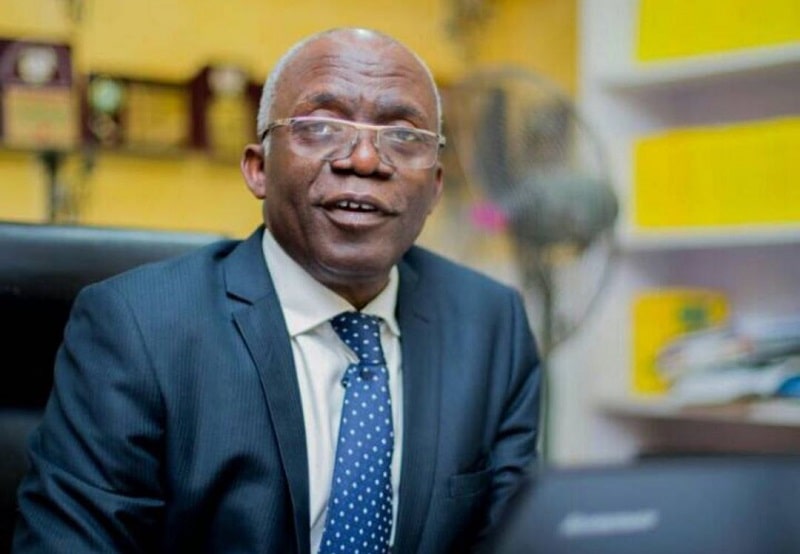
Exclusive: Human rights lawyer and Senior Advocate of Nigeria, Chief Femi Falana, speaks to Profiles International Human Rights Advocate on the PFIPC controversy.
A curious paradox sits at the heart of Nigeria’s latest governance controversy. According to records reviewed in the course of this investigation, a federal agency that the Presidency insists never existed somehow acquired a domain name ending in gov.ng, is reported to have occupied office space inside the Federal Secretariat Complex in Abuja, is said to have opened dollar and pound domiciliary accounts at the Central Bank of Nigeria, reportedly secured a Treasury Single Account, obtained recruitment approvals for over three hundred staff from the Office of the Head of Service, and appears in the 2026 Appropriation Act with a budget line of ₦1,302,978,784. If the Presidential Foreign Investment Promotion Council is fictitious, as the government maintains, Nigerians are entitled to ask how a fiction acquired the paperwork of what appears to have functioned as an arm of government.
The man at the centre of the controversy, Prince Adeniyi Adeyemi, has publicly presented an account that raises significant questions but has not been independently verified. In public statements, he has alleged that a request relating to 48 percent of the agency’s projected ₦27.4 billion take-off grant originated from the Office of the Chief of Staff, and that he paid ₦400 million of an alleged ₦600 million demanded through an intermediary in connection with his appointment as Director General. Those allegations have not been established in court.
The Presidency has maintained that the Presidential Foreign Investment Promotion Council did not exist, while no detailed public response addressing these specific monetary allegations appears to have been issued by the Presidency or by Femi Gbajabiamila. Adeyemi has also claimed that his legal difficulties began after he declined to make additional payments. However, he has not publicly produced evidence directly linking his arrest or prosecution to that claim.
These are serious allegations involving senior public officials. At present, they remain allegations made by an individual who is facing criminal charges and whose account should therefore be assessed carefully alongside all available evidence. They should neither be accepted as fact nor dismissed without appropriate investigation by the competent authorities.
That scrutiny cuts both ways. Adeyemi has not, on the public record, produced the original instrument establishing the PFIPC, whether an Act of the National Assembly or an executive gazette, the one document that would settle the legitimacy question outright. A man who insists he headed a genuine federal council should be first in line to produce his founding charter, rather than pointing only to accounts opened and budget lines inserted by other hands. If that charter exists, why has it not surfaced in a case that has drawn national attention? If it does not exist, what does that say about the paper trail he has built his defence on?
The Presidency’s position deserves equally careful examination. Presidential spokesperson Bayo Onanuga has said investigators concluded Adeyemi was an impostor, and the police say they recovered forged documents and traced thirty-four bank accounts linked to purported government agencies after his arrest on October 27, 2025. But a government asking to be believed on this point owes the public a fuller accounting than a press statement. It is not enough to call an agency fictitious while its name and a budget exceeding ₦1.3 billion appeared in the same Appropriation Act that funds the ministries, the ports, and the universities every Nigerian depends on. Budget lines do not write themselves. The inclusion of the PFIPC budget line in the appropriations process raises questions about how it passed through committee stages, budget defence sessions, and plenary approval despite the Presidency’s current position that the underlying agency had no legal basis. Official records also appear to indicate that auditors and accountants were deployed to the PFIPC through the Office of the Accountant General of the Federation, a circumstance that has not yet been publicly explained. Publicly available records also appear to indicate that domiciliary accounts and a Treasury Single Account were opened in the PFIPC’s name, raising questions about the documentation presented during the approval process.
Ordinarily, such administrative steps involve multiple layers of review and approval within the federal bureaucracy. If negligence explains this, the officials responsible should be identified and held accountable through due process. If something more deliberate explains it, that too should be established through the ongoing investigation, not through public speculation. These are not rhetorical questions. They are the questions a functioning democracy asks when a body it calls imaginary is discovered to have documentation suggesting it operated within government systems.
Civil society has already begun asking them. The Socio-Economic Rights and Accountability Project has formally asked legislative leaders to explain the integrity of the appropriations process that allowed the funds through, while BudgIT and other accountability groups have called for an independent panel of inquiry rather than a case that begins and ends with one accused man. Those calls reflect broader public concerns about institutional accountability. A prosecution that satisfies itself with convicting Adeyemi, while leaving unexplained the approvals, registrations, budget entries, and financial arrangements associated with the PFIPC, would leave important questions about institutional processes unanswered.
Those concerns have now found support from within Nigeria’s legal community. In an interview with Profiles International Human Rights Advocate, human rights lawyer and Senior Advocate of Nigeria, Femi Falana, argued that the controversy extends far beyond the criminal case involving Adeyemi and requires a broader institutional investigation. Asked whether there was any concern that the Presidency had publicly taken a position on the matter while a criminal prosecution was pending, and given reports that the Chief of Staff, Rt. Hon. Femi Gbajabiamila is expected to feature as a prosecution witness. Falana declined to address personalities directly, instead stressing that the establishment of what he called an illegal body would require a thorough investigation conducted by the police, and that the matter goes beyond the two individuals who are being mentioned.
On the budgetary allocations reportedly made to the council despite the Presidency’s position that it never legally existed, Falana questioned how such appropriations passed through Nigeria’s constitutional budget process in the first place. He asked how the sum of ₦1.3 billion found its way into the budget of the country, noting that the budget in question was presented by the President to the Joint Chambers of the National Assembly, passed by both chambers, and eventually signed into law by the President himself. He also pointed to other official administrative actions that, in his view, warrant independent scrutiny, including the opening of an account at the Central Bank, the deployment of staff to the organisation, and payments made to them through the Office of the Accountant General. For Falana, there is more to the whole matter than meets the eye, and that is precisely why a thorough investigation is required, so that the image of the country can be salvaged. In his words, the integrity of the government has been called into question, and the country has been exposed to what he described as deserved ridicule.
Falana concluded that the questions raised by the affair cannot be resolved through the criminal proceedings against Adeyemi alone. The case in court, he said, cannot answer many questions, and the government certainly owes the Nigerian people a more thorough explanation, whether through a judicial or an administrative inquiry. His comments neither determine the legal merits of the allegations against Adeyemi nor establish the existence or legality of the PFIPC. They do, however, reinforce the broader concern that the controversy raises institutional questions extending beyond the criminal liability of any single individual and deserving of independent examination through appropriate constitutional and administrative processes.
What Nigerians need now is not competing press statements but forensic transparency from both sides. The government must place before the Federal High Court in Abuja the evidence of forgery it says it possesses, and it should explain, office by office, how the administrative processes connected to the PFIPC unfolded if the agency had no lawful existence. Adeyemi, in turn, owes the public the founding instrument he claims exists, not merely the budgetary and banking traces left behind by decisions other people made. Until both sides produce documents rather than declarations, the PFIPC affair will remain what it currently is, a story less about whether Prince Adeniyi Adeyemi is a fraudster or a whistleblower, and more about a Nigerian state that has yet to fully explain how an agency it insists never existed came to leave such an extensive documentary trail within its own institutions.
Daniel Nduka Okonkwo is an investigative journalist, human rights advocate, and policy analyst based in Abuja, Nigeria. He is the publisher of Profiles International Human Rights Advocate, a platform focused on accountability journalism, governance reporting, and the documentation of human rights issues across Africa. His work examines the intersection of political power, institutional accountability, systemic failure, and the human impact of corruption, with particular focus on Nigeria and the wider African continent. Okonkwo’s reporting and analysis have been published in Sahara Reporters, African Defence Forum, Daily Trust, Vanguard, Daily Intel, Opinion Nigeria, African Angle, Local Newsbreak, and other international media outlets. His work is driven by a commitment to transparency, democratic governance, and justice. He also collaborates with Daniels Entertainment on human rights initiatives, extending his advocacy beyond traditional journalism into broader public engagement. He is based in Abuja, Nigeria, and can be reached at dan.okonkwo.73@gmail.com.























You must be logged in to post a comment Login