
Forgotten Dairies
What Okonkwo and Bwala Saw the Morning After Their Appointments -By Femi Aderibigbe
The obvious counter-argument is that the problem is bigger than Okonkwo or Bwala. Nigerian political parties have weak ideological identities. Political careers are often built on patronage rather than programmes, and cross-carpeting has been a feature of the country’s politics since the First Republic. Focusing only on individuals risks treating a systemic failure as a personal one.

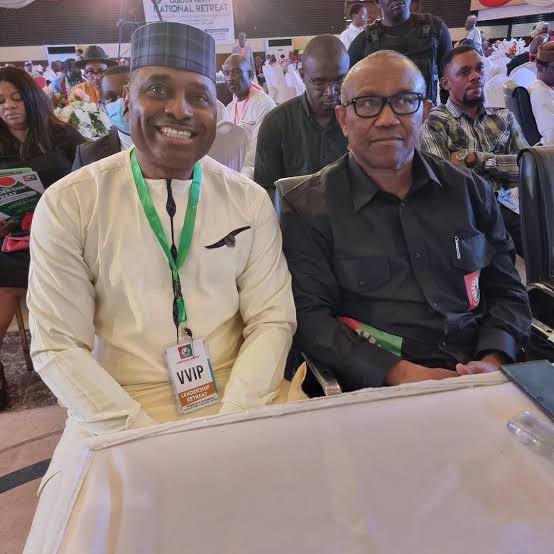
On 2 July 2026, a day after he was appointed spokesperson to Atiku Abubakar, the African Democratic Congress (ADC) presidential candidate for 2027, Kenneth Okonkwo sat in a Channels Television studio and described his new principal as “a talent discoverer” and a pleasant, patriotic statesman. In that same studio in October 2022, Okonkwo had called Atiku “unfit and a threat to our democracy” and demanded that the Independent National Electoral Commission (INEC) prosecute him under Section 97 of the Electoral Act. As recently as June 2026, weeks before accepting the role, he described the choice of Rotimi Amaechi as Atiku’s running mate as “crude marginalisation of the South-east” and vowed never to campaign for a ticket without a South-easterner on it.
Nothing about Atiku changed between those statements; what changed was Okonkwo’s employment.
The stakes here are not merely rhetorical, as Okonkwo currently faces a defamation suit filed by the presidential candidate of the Nigeria Democratic Congress (NDC), Peter Obi, in June 2026 at the Anambra State High Court in Onitsha, after Obi’s lawyers demanded a retraction, a public apology, and ₦5 billion in damages over Okonkwo’s live television claim that Obi and the NDC South-East caucus collected ₦10 million bribes from House of Representatives aspirants. The aspirant that Okonkwo named as his source, Obunike Ohaegbu, has publicly denied ever telling him any such thing. Whatever the court decides, the sequence illustrates the point: that when public statements become instruments of positioning rather than records of belief, the injured party’s only remedy is litigation, and the public’s only remedy is confusion.
Okonkwo is not an outlier, as Atiku’s former campaign spokesperson, Daniel Bwala, spent the 2023 election cycle publicly attacking Bola Tinubu’s fitness for office and condemning the All Progressives Congress’s same-faith ticket as a threat to national unity. In November 2024, President Tinubu appointed the same Bwala as Special Adviser on Policy Communication. Bwala now defends, with equal fluency, the administration he once prosecuted on television. Two spokespersons, two complete reversals, both timed precisely to appointment letters.
Naming the pattern correctly
Let us be precise about what is being criticised, because the distinction carries the whole argument. Changing one’s mind is not a moral failure. A public figure who says, “I held position X, here is the evidence that changed my assessment, and here is why I was wrong,” is modelling exactly the intellectual honesty democracy needs. For example, the politically revered Nnamdi Azikiwe revised positions across decades of public life and explained his reasoning each time.
What Okonkwo and Bwala performed is different in kind, not degree. It is reversal timed to compensation, delivered without any acknowledgment that the earlier position was mistaken, and often accompanied by a rewritten history in which the contradiction never happened. Okonkwo did not say his 2022 assessment of Atiku was wrong and explain what evidence corrected it. He simply replaced condemnation with praise the day his appointment took effect, and reframed his opposition to the Amaechi ticket as “a geopolitical expression” rather than the withdrawal of support he had actually announced. That is not reassessment; it is the rental of conviction.
Is this just defection culture?
The obvious counter-argument is that the problem is bigger than Okonkwo or Bwala. Nigerian political parties have weak ideological identities. Political careers are often built on patronage rather than programmes, and cross-carpeting has been a feature of the country’s politics since the First Republic. Focusing only on individuals risks treating a systemic failure as a personal one.
The structural explanation is correct as far as it goes, and any honest analysis must concede it. But it explains the incentives, not the costs, and it cannot tell citizens what to do. Institutions do not reform themselves; they reform when a critical mass of people decide certain conduct is shameful and act accordingly. The structural account and the moral account are not rivals. The first tells us why the market for hired conviction exists. The second tells us why we should refuse to be its customers. Weak party ideology explains why a politician can defect cheaply. It does not oblige a television audience to treat that politician’s next statement as evidence of anything.
An unresolved gap, eighteen months on
In January 2025, I argued in this commentary titled “The Ethical Imperative of Truth in Public Communication: A Call for Standards in Nigeria” that Nigeria lacked enforceable standards for truthfulness in public communication. That piece used the TuBaba endorsement controversy as its case study, documented the Nigerian Institute of Public Relations’ standards gap, and cited Edelman Trust Barometer findings on the fragility of Nigerian institutional trust. Eighteen months later, the gap is unchanged, but the stakes have escalated. The TuBaba episode involved a celebrity endorsement, while the Okonkwo and Bwala cases involve the official communication machinery of a sitting president and a leading opposition candidate, 18 months before a general election. The same unregulated market in credibility now operates at the level of national campaign infrastructure.
What it costs
Three costs deserve naming. First, young Nigerians entering communication, law, and politics are watching. The lesson on offer is that consistency is for people who cannot attract a buyer, and that the fastest route to a national platform is loud conviction followed by profitable reversal. Second, public statements lose evidentiary weight. If a spokesperson’s assessment of a candidate predictably inverts upon appointment, voters cannot use any spokesperson’s statements to evaluate any candidate. That degrades the information environment for the 2027 election itself.
Third, there is an equity dimension. The reversal economy repeatedly rewards the same category of people, prominent men whose every political inversion is forgiven and often followed by another appointment. Women in Nigerian public communication are rarely offered these national spokesperson roles at all, and the few who hold public-facing positions are judged far more harshly for any inconsistency. Consistency, it turns out, is demanded most of those given the least power, while flexibility is monetised by those given the most.
What should be done
The NIPR should issue an enforceable code provision requiring members serving in paid political communication roles to disclose that status in every media appearance, with suspension as the sanction for concealment, while the Advertising Regulatory Council of Nigeria (ARCON) should extend its verification requirements for advertising claims to paid political endorsements presented as independent commentary.
With respect to editorial protocol, every broadcast station in the country should disclose when a guest holds a paid political role at the point of introduction. When a guest contradicts a previous on-record statement, the earlier clip should be played, and the guest should be asked to explain the change. Channels Television already has Okonkwo’s 2022 interview in its own archive, but it aired his 2026 praise without showing it.
On their part, civil society organisations should stop outsourcing accountability to Twitter memory. Fact-checking platforms such as Dubawa, Africa Check, and FactCheckHub should build a public, searchable register of on-record political statements by campaign spokespersons, so that every reversal is documented, dated, and attached to the appointment that preceded it. Citizens can contribute by archiving clips at the moment of broadcast, not after the deletion.
Truth in public life will not police itself. If we do not make transactional reversal costly, we should stop being surprised that it is routine.
Femi Aderibigbe is a tech-savvy development practitioner with about 17 years of professional experience in public policy, strategic advocacy, proactive grant-making, government relations, civic ecosystem strengthening and development communication. He is the founder of ImpactHouse Centre for Development Communication, an organization committed to deepening public conversation and fostering citizen participation in governance. His work has been recognized globally for its impact on transparency and accountability in Africa.





















You must be logged in to post a comment Login