Forgotten Dairies
The Teacher Who Can’t Educate His Own Children -By Isah Sani
The consequences are neither abstract nor distant. They are lived daily by people like Mr. Zuma, who teaches tirelessly while remaining uncertain about the future of his own children. His experience reflects wider challenges of education, poverty, inequality, insecurity, and opportunity in Nigeria.

Every weekday before dawn, Mr. Zuma, a schoolteacher in Masaka, Nasarawa State, begins a journey that has become both routine and exhausting. Long before sunrise, he joins dozens of commuters heading into Abuja, moving through crowded bus stops and poorly lit roads where reports of phone theft, harassment, and armed robbery have become increasingly common. On some mornings, passengers hold their phones tightly and avoid unnecessary conversations, aware that a single moment of distraction can make them targets. Yet, despite the fear and uncertainty that shadow the daily commute, Mr. Zuma continues the journey because missing work is not an option.
After hours navigating traffic, he arrives at school often tired, sometimes hungry, having left home without breakfast and unsure what he will return to at night. On difficult days, he quietly borrows money to keep his children in school. Yet he still stands before his students, determined to teach.
At home, the questions are harder. “Daddy, when are we going to a better school?” one of his children once asked. He had no answer.
Despite his dedication, he struggles to provide the same quality education for his own children. Their school lacks basic resources, the learning environment is far from ideal, and what should be a pathway to opportunity feels increasingly uncertain. His experience reflects a contradiction that is all too common across Nigeria.
Mr. Zuma is not alone. Across the country, thousands of teachers face similar realities, committed to shaping the future while constrained by circumstances beyond their control. Their experiences reflect a broader national pattern.
Across Nigeria, policies are announced with ambition and promise, designed to improve education, strengthen the economy, and enhance welfare. Yet too often, the gap between intention and implementation is wide, and what citizens experience daily tells a different story.
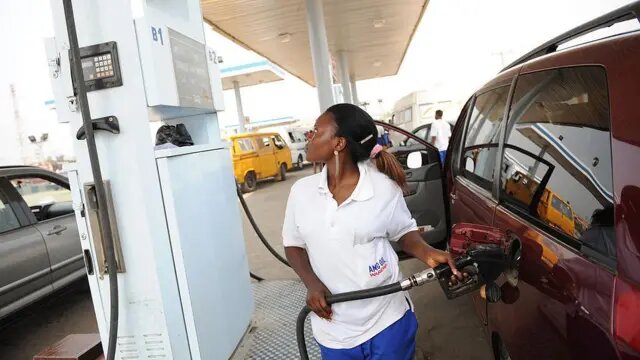
The removal of the fuel subsidy in May 2023 was presented as a step towards long-term economic stability. However, it has intensified cost-of-living pressures already facing many households. Prices have risen sharply, while transportation and basic living expenses continue to climb.
For families like Mr. Zuma’s, this translates into difficult daily choices: between transportation and school fees, between feeding the household and investing in the future. What should be a basic public good is becoming increasingly difficult to access.
By the time he returns home late in the evening, exhaustion has already set in. His wife stretches limited resources to meet endless demands: rent, food, water, school expenses, electricity bills, and transportation costs. There are no dramatic confrontations, only quiet sacrifices: reduced meals, delayed payments, and hope for relief that rarely comes. In this reality, dignity is preserved, but at a cost.
Nowhere is this pressure more visible than in education. Reforms continue to emphasize innovation, skills, and improved learning outcomes, yet many classrooms tell a different story. Funding remains inadequate, infrastructure is weak, and teachers are overstretched.
The scale of the challenge becomes clearer when you consider Nigeria’s basic education system. According to the Universal Basic Education Commission (UBEC), Nigeria has 79,775 public basic schools and 91,252 private schools. Together, they serve millions of learners, including 7.2 million children in Early Childhood Care Development and Education (ECCDE), 31.8 million pupils in primary schools, and over 8 million students in Junior Secondary Schools. There are also approximately 354,651 ECCDE teachers and 915,593 primary school teachers responsible for sustaining the system. These figures highlight the enormous responsibility placed on educators.
The consequences are visible in overcrowded classrooms where teacher–pupil ratios often exceed recommended standards of 1:35 at the primary level and 1:40 at the secondary level. Universities face similar pressures, with overcrowded lecture halls and overstretched facilities. Teaching materials are often inadequate, making meaningful learning increasingly difficult to sustain.
This reality becomes visible in everyday classrooms. During a recent visit to a primary school, I observed a Mathematics lesson on fractions taught entirely in the abstract, without visual aids, counters, or instructional materials that could help pupils connect the concept to real-life experience. Many learners appeared confused and disengaged. Yet at this level, mathematics can become engaging and less intimidating when supported with simple, practical teaching tools that encourage participation and understanding.
In rural communities, the situation is even more severe. Some schools operate with only a handful of teachers managing multiple classes simultaneously, often without adequate materials. Attendance fluctuates, learning outcomes suffer, and the gap widens not because solutions are unknown, but because implementation remains weak.
The pattern extends beyond education. Across sectors, projects are announced with fanfare, launched with optimism, and later abandoned. Structures are left unfinished, resources are expended, and outcomes remain unclear. Public trust weakens each time promises fail to materialize.
Even continuity is uncertain. With each new administration, existing initiatives are often replaced rather than strengthened. Progress slows, and the cycle begins again.
Real change will require more than ambitious announcements. It will require consistent implementation, adequate funding, and sustained support for teachers and public institutions. It will require building on existing reforms rather than discarding them, and prioritizing measurable outcomes over political optics.
Supporting teachers requires more than good intentions. It demands concrete action: improving teacher welfare and remuneration, investing in school infrastructure and instructional materials, strengthening oversight of education projects to ensure resources reach classrooms, and creating policies that reduce the burden of transportation and rising living costs on public sector workers. Such measures would not solve every challenge overnight, but they would demonstrate a commitment to supporting those entrusted with educating the next generation.
The consequences are neither abstract nor distant. They are lived daily by people like Mr. Zuma, who teaches tirelessly while remaining uncertain about the future of his own children. His experience reflects wider challenges of education, poverty, inequality, insecurity, and opportunity in Nigeria.
Mr. Zuma’s story is not just the story of one teacher. It is the story of a nation that depends on teachers to build its future while leaving many unable to secure the future of their own children. The true measure of an education system is not the policies announced or promises made, but the lives improved through consistent implementation. Until teachers are adequately supported, reform will remain aspiration rather than achievement. Nigeria does not lack talent, ideas, or ambition. What it needs is the political will to turn promises into results and to ensure that those who educate the nation are not left behind by it.