Africa
The Unspoken Truth: Buhari, Boko Haram, and the Cowardice of Political Correctness -By Jeff Okoroafor
Until Nigerians and their leaders find the courage to confront these uncomfortable truths head-on—to name names, to draw clear lines between political rhetoric and terrorist violence, and to call cowardice by its name—the nation will remain trapped in a cycle where the past is never truly past, and the ghosts of unaccounted-for tragedies continue to haunt our future.

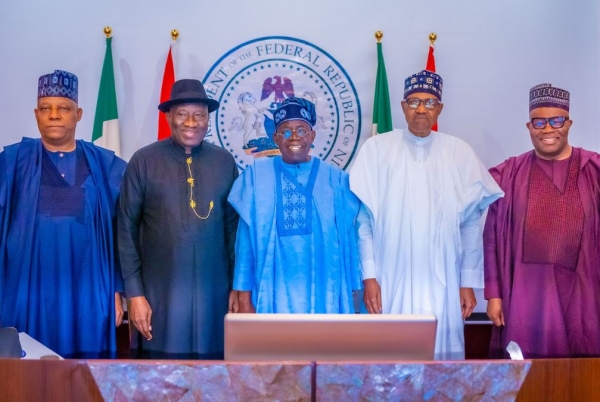
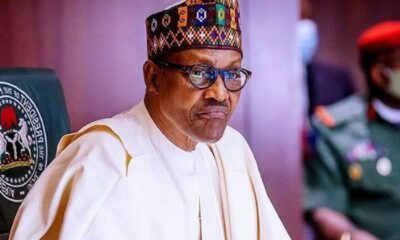
Former President Goodluck Jonathan’s recent, frantic clarification that he never linked Muhammadu Buhari to Boko Haram is a masterclass in political survival but a tragic failure of historical accountability. While his office is technically correct that he did not make a direct accusation in that singular speech, his clarification misses the forest for the trees. The truth is that a cloud of legitimate suspicion has always hung over Buhari’s relationship with the genesis and escalation of Boko Haram, built on a series of his own actions, statements, and perplexing political alliances. And Jonathan, by refusing to ever call a spade a spade, continues a pattern of cowardice that has cost Nigeria dearly.
To claim that Buhari was “linked” to Boko Haram is not to say he was a card-carrying member. Rather, it is to assert that his political brand, his rhetoric, and his inactions created a fertile ground for the group’s growth and shielded it from the full force of the state in its early days. The evidence is circumstantial but overwhelming in its cumulative effect.
First, we must consider Buhari’s role as the “Northern Cause” sympathizer. Long before Boko Haram’s most brutal phase, Buhari had established himself as a champion of a certain Northern grievance politics. Following the 2011 elections, which he lost to Jonathan, Buhari stated that “If what happened in 2011 should again happen in 2015, by the grace of God, the dog and the baboon would all be soaked in blood.” This was not an isolated comment. Such inflammatory rhetoric, from a figure of his stature, helped create an atmosphere of violent resentment in which extremist groups like Boko Haram could thrive. He was legitimizing the very sense of alienation and injustice that Boko Haram would later weaponize.
Second, the mediation request that Jonathan alluded to is, in fact, a significant smoking gun. The fact that Boko Haram, in its formative years, specifically requested Buhari as a mediator in talks with the government is profoundly telling. Terrorist groups do not choose just anyone; they choose individuals they perceive as sympathetic, influential within their potential support base, or at least neutral. This was a clear signal that the group saw Buhari as an acceptable arbiter, a man who understood their “cause” or commanded respect among the demographics they sought to radicalize.
Furthermore, we must examine the role of opposition politics and the framing of Boko Haram as a “Northern problem.” In the early 2010s, the opposition All Progressives Congress (APC), which Buhari would later lead, was accused by many, including then-National Security Advisor, Col. Sambo Dasuki (rtd), of treating Boko Haram as a political tool to be leveraged against the Jonathan government. The accusation was that they were reluctant to offer bipartisan support, seeing the insecurity as a means to weaken the sitting president. Buhari, as the opposition’s moral compass, never forcefully and consistently condemned the group in a way that detached it from broader Northern grievances. His strategic silence was often deafening and politically convenient.
Finally, the political point-scoring around the Chibok girls abduction remains a stain on his record. When over 200 schoolgirls were kidnapped in 2014, Buhari and his party were among the most prominent voices promoting the dangerous and cynical narrative that the kidnapping was a hoax staged by the Jonathan administration. This not only compounded the agony of the parents but actively sabotaged efforts to secure the girls’ release by creating public doubt and confusion. It was an act of political recklessness that demonstrated a willingness to downplay the terror of Boko Haram for electoral gain.
Goodluck Jonathan’s inability to directly name Buhari is part of a broader pattern of political timidity that defined his presidency. His statement is a microcosm of his leadership: all caution and no conviction. The most glaring example of this cowardice remains the saga of President Umaru Yar’Adua’s health. When Yar’Adua was on his deathbed in Saudi Arabia, a small cabal led by his wife, Turai Yar’Adua, and including the Attorney General, Michael Aondoakaa, hid the ailing president from the nation. They prevented Jonathan, then Vice-President, from assuming power as Acting President, creating a dangerous constitutional vacuum. To this day, Jonathan has never publicly and forcefully named and shamed the individuals who held the country hostage. Who was the specific aide who hid the letter? Who were the architects of that cabal? Jonathan knows, but he refuses to say. This is not diplomacy; it is a profound lack of courage. A leader with a spine would have used his post-presidency to set the record straight, to expose those who nearly plunged Nigeria into chaos. Instead, he chooses a path of comfortable silence, preserving his relationships with the political elite at the expense of the truth. This same weakness is evident in his handling of the Buhari-Boko Haram question. He tiptoes around the edges of a critical national conversation, hints at a dark truth, and then, at the first sign of controversy, retreats into a safe, sanitized, and ultimately meaningless clarification.
Nigeria’s political landscape is poisoned by unspoken truths. The alleged links between a major political figure like Muhammadu Buhari and a terrorist group that has killed tens of thousands is not a matter for subtle hints and subsequent retractions. It is a matter that demands a full, transparent, and fearless national inquiry. Goodluck Jonathan had the opportunity, both in office and now in retirement, to be a truth-teller. He failed. His recent statement confirms that he would rather be a polite guest at the table of power than a courageous voice for historical clarity. Until Nigerians and their leaders find the courage to confront these uncomfortable truths head-on—to name names, to draw clear lines between political rhetoric and terrorist violence, and to call cowardice by its name—the nation will remain trapped in a cycle where the past is never truly past, and the ghosts of unaccounted-for tragedies continue to haunt our future.

Jeff Okoroafor
Jeff Okoroafor is a social accountability advocate and a political commentator focused on governance, accountability, and social justice in West Africa.