
Africa
Time For The EFCC To Bite: The Need For Stronger Financial Crime Enforcement In Nigeria, by Isaac Asabor

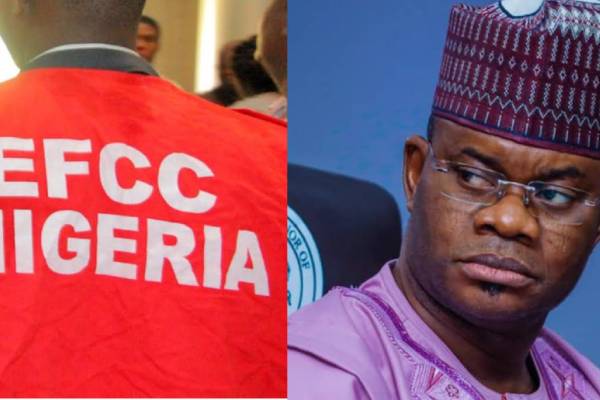
Financial crimes have long plagued Nigeria, crippling economic growth, deterring foreign investment, and undermining the rule of law. While Nigeria has established institutions such as the Economic and Financial Crimes Commission (EFCC) to tackle this pervasive issue, there is growing concern that these bodies are not living up to their potential. Nigerians are increasingly frustrated by what appears to be selective justice and the commission’s seeming reluctance to aggressively pursue and prosecute high-profile offenders. The EFCC must evolve from its current state of performance, and must refrain from barking than biting to truly become the financial crime watchdog that Nigeria so desperately needs.
There is no denying the fact that Nigeria’s economy has been suffering greatly from systemic corruption and financial misconduct. According to the Nigerian Extractive Industries Transparency Initiative (NEITI), Nigeria loses billions of dollars annually to financial crimes, such as money laundering, bribery, and embezzlement. These illicit activities are not limited to private individuals or obscure businessmen; they permeate every level of government and corporate operations.
Unfortunately, despite the EFCC’s mandate to combat these crimes, the results have been less than impressive. High-profile cases involving influential politicians and wealthy businessmen often get stalled or dismissed, giving the impression that Nigeria’s elite remain untouchable.
The EFCC’s credibility came under further scrutiny recently when Kogi State Governor Yahaya Bello was entangled in an alleged financial scandal. Bello, a key figure in Nigeria’s political landscape, has faced accusations of misappropriating billions of naira meant for infrastructural projects and civil servant salaries in Kogi State. Reports claim that funds earmarked for specific developmental purposes have been diverted, leaving many sectors in the state underfunded and workers unpaid.
The EFCC’s reputation for targeting small-time fraudsters while allowing major criminals to evade justice is a significant point of contention. Its pursuit of cybercrime fraudsters, often paraded in front of the media as “Yahoo boys”, has garnered some success in curbing online scams, but the larger issue of corporate and government corruption remains largely unaddressed.
Cases like Yahaya Bello’s highlight a larger issue: the commission’s perceived bias and its failure to deliver impartial justice. When investigations into prominent political figures, particularly those with influence within the ruling party, are stalled or quietly shelved, it sends a clear message that corruption is tolerated at the highest levels. This selective justice deepens public distrust in both the EFCC and the broader justice system.
Corruption has far-reaching consequences on Nigeria’s economy, particularly on its reputation in the global investment community. With a growing perception of Nigeria as a country where financial malfeasance goes unpunished, foreign direct investment (FDI) has declined significantly. Investors are wary of putting their money into a system where bribes, embezzlement, and illegal fund transfers could wipe out their gains.
A World Bank report estimated that financial corruption could cost Nigeria up to 37% of its GDP by 2030 if left unchecked. This means that the continued impunity for financial crimes not only impoverishes citizens but also limits the country’s potential for economic growth.
When government officials, such as Yahaya Bello, are accused of siphoning public funds or mismanaging national resources without facing swift consequences, it leads to infrastructural decay, unemployment, and inflation, leaving everyday Nigerians to bear the brunt of these consequences. Stronger financial crime enforcement is not only a matter of justice but also a vital tool in stabilizing the economy.
The EFCC has made some notable arrests, but the absence of consistent, high-impact prosecutions suggests much more needs to be done. Nigerians want to see high-profile convictions that reflect the gravity of financial crimes, not just temporary detainments that create buzz in the media but do little to actually hold perpetrators accountable.
A key issue has been the lack of coordination between the EFCC and the judiciary, where cases are often delayed due to technicalities or legal loopholes that powerful defendants exploit. Without serious judicial reform, the EFCC’s efforts are undermined, allowing criminals to evade justice. In cases like Bello’s, the judicial system must collaborate effectively to ensure that investigations are carried out thoroughly and without undue political influence.
For the EFCC to regain public trust and confidence, it must overhaul its operations and refocus on its core mission: to act as a non-partisan, independent agency, free from political influence. The Yahaya Bello scandal illustrates the urgent need for the EFCC to demonstrate that no one is above the law, no matter their political standing or affiliations.
The EFCC must also improve its investigative capabilities, particularly by adopting advanced technologies to track the movement of illicit funds both locally and internationally. Many financial criminals operate complex networks that span several countries, making it difficult to recover stolen assets. To overcome this challenge, the EFCC must collaborate more effectively with international law enforcement agencies such as Interpol, as well as financial crime units in Europe, the U.S., and the Middle East.
Furthermore, whistleblowers should be empowered and incentivized to provide information about corruption. The current whistleblower protection laws in Nigeria need to be enhanced to guarantee the safety and anonymity of individuals who come forward to expose corruption, as this could encourage more insiders to report financial crimes without fear of retaliation.
The EFCC’s strategy should also shift from simply reacting to financial crimes to a more proactive approach that focuses on prevention. This could include partnering with financial institutions, businesses, and civil society organizations to educate the public and promote ethical practices. Raising awareness about the dangers of corruption and fostering a culture of accountability are essential in curbing financial misconduct.
The establishment of a national database that tracks the financial activities of politically exposed persons and public officeholders could also serve as a deterrent. If individuals in positions of power know that their actions are under scrutiny, they may think twice before engaging in corrupt practices.
Nigeria’s financial institutions, political systems, and economy cannot survive under the weight of unchecked financial crimes. The EFCC must step up its game, prove its independence, and demonstrate that it can take down both the small-time fraudsters and the powerful elites siphoning the country’s wealth. This is not just about making arrests but ensuring swift and fair prosecutions that restore public trust in the system.
The case of Yahaya Bello is a watershed moment for the EFCC. How the commission handles this case could either reinforce its reputation as an independent crime-fighting institution or further damage its credibility as a selective, politically influenced entity. Nigerians are watching, and the EFCC must rise to the challenge and play its role as a true defender of Nigeria’s financial integrity.
It is time for Nigeria’s financial crime authority to bite and bite hard. Without decisive action, the country risks spiraling further into a cycle of corruption, poverty, and economic instability. The future of the nation’s economy and its global standing depend on it.























You must be logged in to post a comment Login