Forgotten Dairies
Tinubu And The U.S. Drug Allegations: The Files Are Coming – What Should Nigerians Expect -By Yasir Shehu
If the U.S. records are relevant to understanding the past of a sitting President or future presidential candidate, Nigerians have every legitimate reason to examine them.

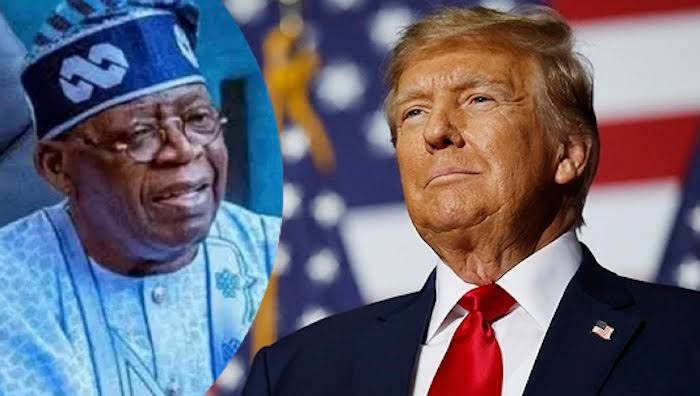
When the documents are available, Nigerians deserve the truth—not rumours, propaganda or political silence.
Nigeria is once again being confronted with questions about President Bola Ahmed Tinubu’s past in the United States.
But this time, the debate is moving beyond social media arguments and political accusations.
At the centre of the renewed controversy are old U.S. court records, a 1993 civil forfeiture involving $460,000 in an account held in Tinubu’s name, and an ongoing Freedom of Information Act (FOIA) battle over additional U.S. government records relating to historical investigations.
That development deserves public attention.
But it also demands something else: journalistic responsibility.
We must distinguish between what a court record establishes, what investigators alleged, what remains unknown and what has never resulted in a criminal conviction.
That distinction is not an attempt to protect anyone.
It is the foundation of credible journalism.
WHAT DOES THE 1993 COURT RECORD ACTUALLY SAY?
In 1993, the United States District Court for the Northern District of Illinois handled a civil forfeiture case involving funds in several bank accounts.
One of the accounts was at First Heritage Bank in the name of Bola Tinubu.
The court ultimately ordered the forfeiture of $460,000 from that account to the United States.
The October 1993 decree stated that the funds represented proceeds of narcotics trafficking or were involved in financial transactions violating U.S. money-laundering laws.
That is what the court record says.
It should neither be exaggerated nor concealed.
But there is another equally important fact:
The case was a civil forfeiture proceeding, not a criminal trial resulting in a conviction of Tinubu for drug trafficking.
Contemporary reporting and legal records have also noted that Tinubu was not indicted over the matter.
This distinction matters enormously.
A responsible journalist cannot transform a civil forfeiture order into a criminal conviction.
At the same time, the fact that there was no criminal conviction does not mean that Nigerians are forbidden from asking questions about what happened.
THE QUESTIONS THAT REMAIN
If $460,000 in an account held in Tinubu’s name was ultimately forfeited under a U.S. court order, Nigerians are entitled to ask:
Where did the money come from?
Why did U.S. authorities investigate the accounts?
What evidence did investigators have at the time?
Who else was investigated in connection with the matter?
What did the investigators conclude?
And perhaps the most important question today:
What do the additional U.S. government records contain?
Those are legitimate questions.
They are not, by themselves, proof of criminal guilt.
But neither should they be dismissed simply because the events occurred more than three decades ago.
THE OLD STORY HAS ENTERED A NEW CHAPTER
The controversy has now moved into a new phase through a Freedom of Information Act case in the United States.
American transparency activist Aaron Greenspan has been seeking records from U.S. government agencies, including the FBI and DEA, relating to historical investigations involving Tinubu and others.
The case has been before U.S. District Judge Beryl Howell, who has previously rejected attempts by agencies to rely on a so-called “Glomar response”—a mechanism through which an agency may refuse to confirm or deny whether particular records exist. Recent reporting says the court found that the agencies could no longer rely on that response in the circumstances of the case.
Now the dispute has reached another important stage.
The U.S. Department of Justice recently sought additional time in connection with the court’s orders concerning the records. Judge Howell granted only a limited extension, setting August 21, 2026 as a new deadline.
President Tinubu’s legal team subsequently joined the government’s request for additional time, according to recent reporting. The judge did not grant the full extension requested.
And there is an even newer development.
The FBI has asked the court for permission to submit confidential, ex parte and in camera explanations concerning why certain information has been withheld. The agency says some of the material falls under FOIA exemptions and argues that disclosure could reveal law-enforcement techniques or potentially endanger individuals.
This is important—but Nigerians must understand what it does not mean.
A request for more time does not prove wrongdoing.
A court dispute over access to records does not prove that allegations contained in those records are true.
And the existence of investigative files does not automatically establish criminal conduct.
The documents themselves must be examined.
WHY SHOULD NIGERIANS CARE?
Because Bola Ahmed Tinubu is not simply a private citizen.
He is the President of the Federal Republic of Nigeria.
Questions surrounding the background of a person occupying the highest political office in the country naturally have a significant public-interest dimension.
That does not remove his right to due process.
It does not remove the presumption that allegations must be proven.
But it does create a legitimate public interest in transparency.
If additional records are released, Nigerians should be allowed to see them within the limits of U.S. law.
Journalists should examine them.
Lawyers should interpret them.
Historians should provide context.
And the Nigerian public should be allowed to make informed judgments.
THE DANGER OF POLITICAL PROPAGANDA
Unfortunately, Nigerian politics often turns serious questions into partisan weapons.
Tinubu’s supporters may be tempted to dismiss the entire matter as political propaganda.
His opponents may be tempted to declare that every allegation is already proven.
Both approaches are dangerous.
Journalism must occupy a different ground.
The journalist’s questions should be simple:
Where is the document?
What exactly does it say?
What does it prove?
What does it not prove?
What remains an allegation?
What remains unknown?
That is how a mature democracy should handle politically sensitive information.
IF THE RECORDS CLEAR HIM, LET THEM CLEAR HIM
There is a straightforward way to end much of the speculation.
Let the evidence speak.
If the additional records contain information that clears President Tinubu of the allegations surrounding the historical investigations, Nigerians should know.
If the records provide explanations that answer longstanding questions, Nigerians should hear those explanations.
If some records cannot legally be released, the relevant authorities should explain the legal basis for withholding them.
And if the documents contain new information, the public deserves to know that as well.
The answer should come from evidence—not political loyalty.
THIS IS NOT A DECLARATION OF GUILT
Let me be completely clear.
This article is not declaring President Bola Ahmed Tinubu guilty of drug trafficking.
It is not claiming that he was criminally convicted of drug trafficking in the United States.
It is not asking Nigerians to accept unverified social-media allegations as facts.
It is asking for something much simpler:
TRANSPARENCY.
If historical U.S. government records exist and the law permits their release, let the public see them.
Let the documents be investigated.
Let the claims be tested.
Let President Tinubu and his representatives respond.
And then let the evidence guide the conclusion.
THE PRESIDENT DESERVES FAIRNESS. NIGERIANS DESERVE INFORMATION.
These two principles are not contradictory.
A president deserves a fair hearing.
But citizens also deserve credible information about matters that may be relevant to understanding the history and integrity of their political leaders.
A responsible society should never convict someone without evidence.
But it should also never be afraid to ask difficult questions.
Fairness does not mean silence.
Transparency does not mean conviction.
And asking questions does not automatically mean hatred.
WHAT SHOULD HAPPEN NOW?
The U.S. authorities should follow the law and comply with the court’s directives.
Where records can legally be released, they should be released.
Where information is legally protected, the reasons for withholding or redacting it should be properly established.
The Nigerian media should obtain the documents, examine them carefully and avoid simply repeating statements from political camps.
And Nigerians should resist the temptation to reach conclusions before reading the evidence.
Most importantly, political parties should stop treating every investigation as either a conspiracy or automatic proof of guilt.
Documents first. Politics later.
THE 2027 QUESTION
Nigeria is moving towards another general election.
By then, Nigerians will once again be asked to decide who deserves their votes and their trust.
That decision should not be based on tribe.
It should not be based on religion.
It should not be based solely on party slogans.
And it certainly should not be based on social-media propaganda.
It should be based on character, competence, record, integrity, accountability and evidence.
If the U.S. records are relevant to understanding the past of a sitting President or future presidential candidate, Nigerians have every legitimate reason to examine them.
And if those records ultimately clear Tinubu of the allegations being discussed, Nigerians should be honest enough to accept that conclusion.
That is what fairness means.
THE TABLE IS SET. LET THE RECORDS SPEAK.
For more than three decades, the $460,000 forfeiture has remained part of Nigeria’s political debate.
The 1993 U.S. court records are real.
The forfeiture is real.
The court’s language concerning narcotics proceeds and violations of U.S. financial laws is part of the historical record.
But the case was a civil forfeiture proceeding, not a criminal conviction of Tinubu for drug trafficking.
Now, decades later, additional U.S. government records are at the centre of a new legal battle.
So Nigerians should neither jump to conclusions nor look away.
Let the documents come.
Let journalists investigate them.
Let lawyers interpret them.
Let President Tinubu respond.
And let Nigerians decide what the evidence means.
Because ultimately, this is bigger than Bola Ahmed Tinubu.
It is about a fundamental question of democratic accountability:
Can Nigeria demand transparency from the people who seek—and hold—the highest office in the land?
If the answer is yes, then no politician should be above legitimate questions.
Not Tinubu.
Not Atiku.
Not Obi.
Not anyone.
The truth should have no political party.
The truth should have no tribe.
The truth should have no religion.
And the truth should not be afraid of the light.
Nigeria is watching.
The documents should speak.
And Nigerians should be ready to listen.
Yasir Shehu Adam (Dan Liman)
Journalist and Writer, Bauchi State