Africa
Tinubu Must Not Break Down: A Psychological, Prophetic, and Painful Analysis of a President Under Siege -By Psychologist John Egbeazien Oshodi
At this crossroads, the president must step back internally, reorganize his emotional landscape, and protect his psychological core. He must rest when necessary, delegate more boldly, reduce exposure to political drama, filter his inner circle, and rebuild trust only with those whose loyalty is beyond political convenience. He must recognize that not all supporters are sincere, not all enemies are harmful, and not all advisers are safe.

The Sudden Spiral: A Nation Entering a Dark Psychological Season
Nigeria has entered one of the most troubling moments in its recent history. The President’s declaration of a national emergency on security confirms what citizens already sensed: the country is under coordinated and unusual pressure. Within weeks, mass kidnappings, rural attacks, school abductions, church invasions, and suspicious troop movements have unfolded almost back-to-back. More than three hundred schoolchildren taken in Niger. Twenty-four girls abducted in Kebbi. Worshippers seized in Kwara. A pastor dragged from his altar.
And in one of the most unsettling signs of the nation’s fragility, a Brigadier-General – a symbol of senior command and battlefield authority – was ambushed and killed. When a high-ranking military officer becomes a casualty in peacetime, the message is grave: criminal networks are no longer afraid of the state.
These incidents are too frequent, too widespread, and too synchronized to treat as normal insecurity. They form a deliberate psychological shock to the nation.
The emergency declaration is more than administrative; it reflects how heavily these shocks are weighing on the presidency. No leader activates emergency measures unless the situation has crossed a line where ordinary institutions can no longer cope. It signals internal strain, a moment where the president feels surrounded by converging crises and diminishing operational predictability.
The timing is also telling. Just as American lawmakers and global observers intensified criticism over Christian killings and Nigeria’s human-rights record, the country suddenly descended into even deeper turmoil. For a psychologist, the pattern is unmistakable: a destabilization wave designed to weaken public confidence and psychologically isolate the president at a moment of international scrutiny.
Nigeria is not only battling criminals; it is facing psychological and symbolic warfare.
And with rising insecurity, global pressure, internal political fractures, and growing public concern over the president’s stamina, the national emergency declaration confirms a difficult truth: the presidency itself is under siege.
A President Under Psychological Siege
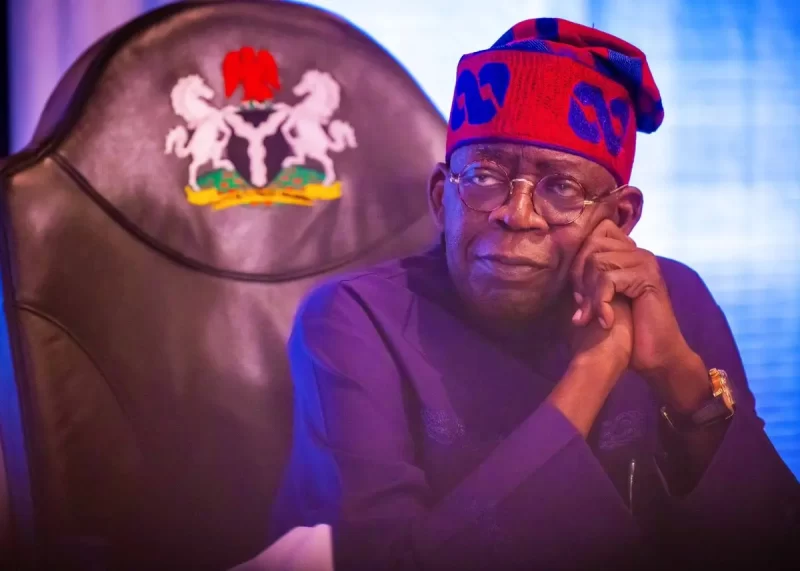
Political analysis alone cannot explain this moment. Psychological evaluation is necessary. President Bola Tinubu finds himself standing at the intersection of multiple storms: escalating violence, internal sabotage claims, troop withdrawal scandals, Senate unrest, hostile pressure groups, U.S. warnings, and increasingly vocal domestic critics calling for resignation. Whether one supports or opposes him, the psychological weight on the man holding Nigeria’s highest office is immense.
Public perception of his health complicates everything. Nigerians see his frequent medical trips abroad. They speculate about his stamina. They watch his posture, his voice, his face, his pace. In an era of insecurity and political tension, these perceptions amplify national anxiety. A president who appears tired becomes a symbol of a nation losing strength. And when the country senses fragility at the top, opportunistic forces become bold.
This moment is larger than governance. It is about an individual’s psychological endurance under extraordinary pressure. Tinubu must not collapse emotionally, mentally, or physically. The survival of the country now rests partly on his stability.
The Internal Earthquake: Wike, Shettima, and the Unsettling Politics Around the Presidency
No president can lead effectively while surrounded by internal turbulence. Around Tinubu stand key figures whose actions—whether deliberate, circumstantial, or simply misunderstood—create additional mental strain on the presidency. Nyesom Wike, the Minister of the Federal Capital Territory, praises the president loudly yet generates frequent national controversies. He collides with governors, security agencies, civil servants, and entire communities, creating a cycle of tension that repeatedly draws national attention and emotional energy away from more urgent crises. For a president already facing unprecedented insecurity, global scrutiny, and internal institutional fragility, Wike’s constant turbulence becomes an invisible psychological tax.
Tinubu cannot easily move him aside because of political debts, electoral alliances, and the sensitive history that ties both men. Yet as the nation enters a period where every distraction carries a cost, the president must quietly and strategically find a way to reduce the emotional, political, and symbolic weight Wike brings into the heart of his administration. In times like these, a leader cannot carry unnecessary storms. Tinubu has more than enough battles before him, and the psychological clarity required for national survival demands a calmer, more controlled inner circle.
Vice President Shettima presents a different psychological layer. Many Nigerians perceive a certain coldness or distance between him and the president. They do not observe the warmth, closeness, or unified partnership that citizens typically hope to see in moments of national crisis. This observation—fair or unfair—creates public anxiety, because Nigerians know that if anything happens to the president, the next leader constitutionally is Shettima. Coming from a region long associated with complex security histories, suspicion grows, even without evidence. People whisper. People worry. These quiet, unspoken fears add yet another emotional burden to Tinubu’s already heavy leadership load. This is not an attack on Shettima’s person or leadership, but an honest reflection of the psychological climate among citizens.
When the vice president’s office publicly aligned with Wike during his clash with a naval officer, many Nigerians interpreted it as a political signal rather than a legal clarification. Whether or not that interpretation was accurate, it widened public doubts about unity within the presidency. These perceptions matter. They deepen distrust. And distrust, at the top levels of government, becomes a psychological toxin that complicates decision-making and weakens national stability.
Sabotage or System Failure? The Rot Inside the Security Architecture
As kidnappings erupted across the country, the Senate held one of its most emotional debates in years. Senators admitted publicly that:
• Bandit locations are known.
• Their demands are known.
• Troops were mysteriously withdrawn before the Kebbi abduction.
• A school principal vanished.
• Certain commanders are yet to be named or questioned.
• Internal collaborators are undermining operations.
This is not normal insecurity. This is infiltration.
Boko Haram suspects were discovered on recruitment lists of the Army and Police. Insider informants leak operations. Criminals move ahead of security plans. These realities make decisive operations nearly impossible. The state cannot bomb terrorist hideouts without killing kidnapped civilians. They cannot storm forests without exposing compromised officers. They cannot deploy airstrikes without risking another tragic mistake like the civilian bombing in Borno years ago.
Nigeria is a vast, porous, infiltrated terrain. In such a setting, the presidency fights not only bandits but institutional rot, divided loyalties, and hidden enemies.
The Psychological Danger: A Nation Cannot Survive a Broken Leader
The greatest threat to Nigeria right now is not only insecurity. It is the risk that the man at the center of the storm becomes overwhelmed. A president facing pressure from global scrutiny, internal rivalries, constant crises, hidden saboteurs, shifting alliances, unstable ministers, fatigued security agencies, and collapsing public trust is a man walking through emotional fire.
When a leader begins to emotionally disengage, fatigue replaces clarity. Suspicion replaces strategy. Fear replaces courage. Misjudgment replaces foresight. And when that happens, a fragile nation tips into chaos.
Therefore, the psychological alert must be loud and clear: Tinubu must not break. Nigeria cannot afford a leader who collapses under the weight of these storms. His inner stability is now inseparable from national stability.
A Therapeutic Message to the President
At this crossroads, the president must step back internally, reorganize his emotional landscape, and protect his psychological core. He must rest when necessary, delegate more boldly, reduce exposure to political drama, filter his inner circle, and rebuild trust only with those whose loyalty is beyond political convenience. He must recognize that not all supporters are sincere, not all enemies are harmful, and not all advisers are safe.
He must treat his well-being as a national security priority. A grounded leader stabilizes a trembling nation. A mentally present president anchors a country in crisis. A psychologically intact leader becomes the wall between Nigeria and a deeper collapse.
Yet this moment is not only about Tinubu’s internal strength. It is also about the collective responsibility of Nigerians. We must pray for him. We must support him when he seeks stability. We must criticize him honestly and firmly when necessary. Leadership must be held accountable, but it must not be pushed into collapse. Because if, God forbid, something happens to the sitting president, the nation knows the two men constitutionally next in line — individuals viewed by many citizens with deep apprehension due to their political histories, controversies, and the shadows surrounding their ambitions.
This is not about personal attack; it is about public fear. Nigerians are anxious about what a sudden leadership change might unleash in a country already trembling. That reality alone demands that citizens, critics, and institutions temper their anger with wisdom. In moments like this, a nation must protect its stability, even when it disagrees with its leader.
Nigeria needs Tinubu steady, conscious, clear-eyed, and emotionally regulated. Not aggressive. Not panicked. Not fatigued. Not broken. Because in this moment, the country is shaking — and the president must not shake with it.
About the Author
Prof. John Egbeazien Oshodi is an American psychologist and educator with expertise in forensic, legal, clinical, cross-cultural psychology, public ethical policy, police, and prison science.
A native of Uromi, Edo State, Nigeria, and son of a 37-year veteran of the Nigeria Police Force, he has dedictinated his professional life to bridging psychology with justice, education, and governance. In 2011, he played a pioneering role in introducing advanced forensic psychology to Nigeria through the National Universities Commission and Nasarawa State University, where he served as Associate Professor of Psychology.
He currently serves as contributing faculty in the Doctorate in Clinical and School Psychology at Nova Southeastern University; teaches across the Doctorate Clinical Psychology, BS Psychology, and BS Tempo Criminal Justice programs at Walden University; and lectures virtually in Management and Leadership Studies at Weldios University and ISCOM University. He is also the President and Chief Psychologist at the Oshodi Foundation, Center for Psychological and Forensic Services, United States.
Prof. Oshodi is a Black Republican in the United States but aligns with no political party in Nigeria—his allegiance is to justice alone. On the matters he writes about, he speaks for no one and represents no side; his voice is guided solely by the pursuit of justice, good governance, democracy, and Africa’s advancement. He is the founder of Psychoafricalysis (Psychoafricalytic Psychology)—a culturally rooted framework that integrates African sociocultural realities, historical awareness, and future-oriented identity. A prolific thinker and writer, he has produced more than 500 articles, several books, and numerous peer-reviewed works on Africentric psychology, higher education reform, forensic and correctional psychology, African democracy, and decolonized models of clinical and community engagement.