
Breaking News
Tinubu Records: US Judge, Not Atiku, Has Final Say – Presidency
The Presidency has explained the ongoing US FOIA case involving Tinubu’s records, including why the FBI and DEA withheld some documents.

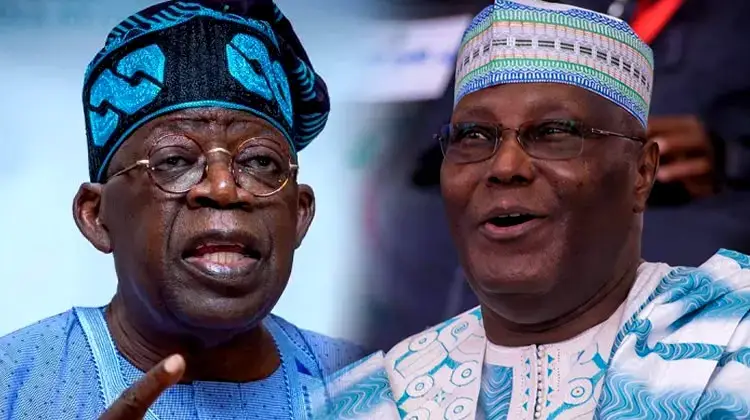
The Presidency has pushed back against claims surrounding the ongoing US court battle over records concerning President Bola Tinubu, saying the decision on whether the documents will be made public rests solely with the United States District Court for the District of Columbia.
The Presidency specifically rejected suggestions that former Vice President Atiku Abubakar could determine the outcome of the case, describing the proceedings as a civil dispute concerning the disclosure of government records under the Freedom of Information Act (FOIA).
It stressed that the case is not a criminal prosecution of Tinubu and that no US court has found the Nigerian president guilty of criminal wrongdoing.
“The release or withholding of records under FOIA does not, by itself, establish criminal liability,” the Presidency said in a statement on Thursday.
“The case concerns access to government records and the proper application of statutory exemptions.
“The Nigerian media should note that this case is exclusively within the control of Judge Beryl A. Howell of the United States District Court.
“She will determine its outcome, based on the evidence, applicable law, and the parties’ arguments, not the wishful preference of Alhaji Atiku Abubakar or his agent, Mr Von Batten.”
The statement comes amid renewed comments by Atiku Abubakar, the African Democratic Congress (ADC) candidate for the 2027 presidential election, and lobbyist Ikemefuna Okeke Von Batten.
Both have continued to push claims that US authorities possess criminal records relating to Tinubu.
There have also been calls on American authorities to release an FBI report concerning alleged drug-trafficking records linked to Tinubu.
Supporters of the disclosure demand argue that keeping the records from the public could increase suspicion and strengthen allegations of a possible cover-up.
Atiku, in his communication with the FBI, argued that “danger to lives” was not sufficient justification for withholding potentially disclosable records relating to Tinubu.
He maintained that ordinary Nigerians were already paying with their lives as a result of the President’s economic policies.
FBI asks court to consider confidential explanation
The FBI has meanwhile asked the US District Court to allow it to submit ex parte in camera declarations explaining why some of its investigative records concerning allegations of drug trafficking involving Tinubu remain withheld.
In its August 20 application, the FBI argued that it could not publicly disclose all the reasons for withholding certain information and therefore needed to provide some of its explanations privately to the court.
Presidency traces case to 2022 FOIA request
According to a statement by Bayo Onanuga, Special Adviser to the President on Information and Strategy, the current proceedings have their roots in events dating back more than two decades.
The Presidency said the case “comes 23 years after the American Consulate in Lagos, in a letter dated February 4, 2003, informed the then Inspector General of Police, Mr Tafa Balogun, that an FBI records check found no criminal arrest records, wants, or warrants for then Governor (of Lagos State) Bola Tinubu.”
It further explained that Aaron Greenspan submitted FOIA requests in 2022 to several US government agencies seeking records concerning Tinubu.
The Presidency said Greenspan was “known to work with Nigerian opposition figures.”
After the agencies either withheld some records or declined to confirm or deny whether certain records existed, Greenspan initiated Civil Action No. 23-1816 before the US District Court for the District of Columbia in 2023.
Tinubu was later allowed to join the proceedings as an intervenor.
The Presidency said the government agencies subsequently relied on what is known as the “Glomar defence”.
According to the statement, the defence means that a government agency is “not in a position to deny or admit” whether an investigation exists.
It said the legal position is used to protect government personnel, investigative sources and techniques employed in criminal investigations and prosecutions.
The court subsequently granted summary judgment to the CIA, EOUSA, Department of State, Department of the Treasury and IRS, effectively removing them from the case.
The remaining issues involving the FBI and DEA were left for further consideration.
The FBI and DEA later produced 399 pages of records, although sections were redacted under exemptions recognised by US law.
The plaintiff challenged the redactions, while the FBI and DEA, acting through the US Department of Justice, opposed the demand for the release of the documents in full.
Why some records remain sealed
The Presidency outlined five major reasons given by the FBI and DEA for refusing to release the documents without redactions.
The first involves records protected by law, including Grand Jury proceedings, whose transcripts are exempt from public disclosure. The Pen Register Act also protects information concerning certain court orders authorising or approving the installation and use of pen registers or trap-and-trace devices. These protections fall under FOIA Exemption 3.
The second category covers documents protected by attorney-client and attorney-work product privileges. The Presidency said some records show instances where FBI and DEA agents sought or received legal advice from US Department of Justice attorneys, bringing them under FOIA Exemption 5.
The third concerns documents prepared for law enforcement purposes, also covered by FOIA Exemption 5.
The fourth involves information that could result in an unwarranted invasion of personal privacy if disclosed. Such material is protected under FOIA Exemptions 6 and 7(C).
The fifth concerns information that could identify confidential sources or expose investigative methods used by law enforcement agencies. The Presidency said such material is protected under FOIA Exemptions 7(D) and 7(E).
President Tinubu has also, through his lawyers, asserted his rights under FOIA Exemption 7(C).
The case remains before the US District Court for the District of Columbia, with Judge Beryl A. Howell expected to determine the next outcome based on the evidence, applicable law and arguments presented by the parties.
The plaintiff has until September 11, 2026, to file opposition and reply to the processes of the defendants and intervenor.
The FBI, DEA and the intervenor have until September 18, 2026, to respond to any processes filed by the plaintiff.
Africans Angle News




















You must be logged in to post a comment Login