
Africa
Tinubu Sleeps Well, Fine, What Of The Rest of Us?, by Isaac Asabor

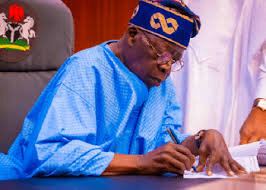
The Leader of the Senate, Senator Opeyemi Bamidele, recently claimed that President Bola Ahmed Tinubu sleeps well at night, assured by the leadership of Senate President Godswill Akpabio. Speaking during Akpabio’s 62nd birthday celebration, Bamidele emphasized Tinubu’s confidence in Akpabio’s ability to provide good leadership. While these statements were intended as a celebration of camaraderie within Nigeria’s political elite, they inadvertently highlight a glaring disparity. Tinubu and his inner circle may sleep soundly, but can the same be said for millions of Nigerians facing unprecedented economic hardships?
The rising cost of living, economic instability, and dwindling public services have left many Nigerians tossing and turning in frustration. If President Tinubu and the Senate leadership truly wish to lead a nation where everyone sleeps well, their focus must shift toward actionable policies that directly alleviate the struggles of the people.
Since the removal of fuel subsidies, Nigeria’s economic landscape has become a nightmare for many. Transportation costs have more than doubled, food prices have soared, and inflation has pushed even basic necessities beyond the reach of many households. Small businesses, the backbone of Nigeria’s economy, are collapsing under the weight of these economic pressures.
For most Nigerians, the removal of the fuel subsidy was not just an economic adjustment; it was a seismic shift that disrupted daily life. While the government touts the potential long-term benefits of this policy, the immediate consequences have left a nation on edge. Families are skipping meals, children are dropping out of school, and people are losing jobs. The daily struggle to make ends meet has robbed millions of their peace of mind.
If Nigeria’s leaders are genuinely interested in fostering a nation where everyone can sleep well, they must focus on policies that prioritize the welfare of the people.
Against the foregoing backdrop, it is expedient to opine that areas that demand immediate attention cut across economic stabilization, transparent use of palliatives, Job Creation and Youth Empowerment, Affordable Healthcare, Education for All and Security and Safety. Another area that demands immediate attention is inclusive governance.
In fact, the soaring cost of living is one of the greatest challenges Nigerians face today. Leaders must implement robust economic policies to stabilize inflation and reduce the burden of daily expenses. This includes, subsidized public transportation, to ease the pressure of high fuel prices on commuters. Also is price controls on essential goods so as to ensure that basic necessities remain affordable for all. Also is the need for support for small businesses, including tax reliefs and grants, to help them survive and thrive in the current economic climate.
Again, the government should ensure there is always transparent use of palliatives. This is as the government has at different periods announced palliatives to cushion the effects of subsidy removal, but these efforts have been marred by concerns over transparency and equitable distribution. Therefore, leaders must ensure that these palliatives reach those who need them most. This can be achieved by establishing an independent body to oversee the distribution of palliatives.
The foregoing can be achieved by using technology to track and verify recipients, ensuring the process is transparent and inclusive as well as providing regular updates to the public on the progress and impact of these measures.
In fact, unemployment remains a significant challenge, especially among Nigeria’s youth. Leaders must focus on creating jobs through policies that encourage investment in sectors like agriculture, technology, and manufacturing. Additionally, vocational training and entrepreneurship programs can empower young people to become self-reliant.
Without a doubt, access to quality healthcare is a fundamental right, yet many Nigerians cannot afford even basic medical services. The government must invest in healthcare infrastructure and introduce policies that make healthcare affordable and accessible. This includes expanding the National Health Insurance Scheme and ensuring rural communities have access to medical facilities.
Also, it should not be forgotten that education is the key to breaking the cycle of poverty, yet many children are out of school due to rising costs. Leaders must prioritize education by providing free or heavily subsidized education at the primary and secondary levels, offering scholarships and financial aid for tertiary education. Also is investing in school infrastructure and teacher training to improve the quality of education.
In a similar vein, no one can sleep well in a nation plagued by insecurity. From banditry to kidnapping, the lack of safety remains a significant concern for Nigerians. The government must strengthen security agencies, improve intelligence gathering, and foster community policing to ensure every Nigerian feels safe in their home.
In fact, leadership must be inclusive and responsive to the needs of all Nigerians, regardless of their socioeconomic status. Leaders should actively engage with the public through town halls, community visits, and open dialogues to understand their challenges and craft policies that address them.
Above all, for Nigerian leaders to create a nation where everyone sleeps well, they must embrace a new era of governance that prioritizes the people. This requires empathy. Leaders must understand the struggles of ordinary Nigerians and ensure their policies reflect this understanding.
Also is for leaders to be exhibiting a high sense of accountability. This is as transparency in governance is essential to rebuild trust between the government and the people. Therefore, Leaders must be held accountable for their actions and promises.
Similar to the foregoing, leadership must be driven by a clear vision for a prosperous Nigeria, with long-term strategies that address the root causes of the nation’s challenges.
President Tinubu may sleep well, but true leadership is about ensuring that everyone else does too. The challenges Nigeria faces today are daunting, but they are not insurmountable. With the right policies, actions, and mindset, Nigerian leaders can foster a nation where peace of mind is not a privilege for the few but a right for all.
The question remains: “Will Nigerian leaders rise to the occasion?” “Will they work toward a future where the struggles of the masses are eased, where opportunities abound, and where every Nigerian, regardless of their status, can sleep well at night?” Until these questions are answered with action, the divide between the leadership and the people will persist, and the dream of a peaceful, prosperous Nigeria will remain just that, a dream.


















You must be logged in to post a comment Login