Africa
Trump’s Threat: Inadvisability Of Playing The Politics Of Denial, By Isaac Asabor
Nigeria’s crisis is not merely a security problem; it is moral, political, and economic. Denial empowers perpetrators, silences victims, and strengthens chaos. The word genocide may not yet be universally accepted, but the practice is visible. Naming it matters. Denying it, and ignoring its consequences, is complicity.


I once confronted a young boy in Mowe, Ogun State, asking if he smoked or drank alcohol having observed his social behavior, which I understand to be unpalatable. He quickly denied it, yet in his denial, he reeked of alcohol and the unmistakable smell of cigarette smoke clung to his clothes. That moment struck me, not because of a boy’s falsehood, but because it was a perfect illustration of a truth, everyone can see but few are willing to admit. Nigeria, in much the same way, denies a reality that is undeniable: genocide is unfolding in her lands, yet debates rage over the semantics, while people die daily.
Genocide is defined not by individual acts of violence but by the systematic targeting of groups. In Nigeria, the pattern is painfully clear. In the Middle Belt and North-West, Christian farming communities are attacked, displaced, women raped, children murdered, and farmlands abandoned. Amnesty International reports over 10,000 deaths between May 2023 and May 2025 across multiple states, highlighting the scale of the crisis.
From northwest bandit raids to jihadist attacks in the northeast, and herder-farmer conflicts in the Middle Belt, the violence is structural, not episodic. Ezekwesili, in her November 10, 2025 statement, condemned this reality: “Stop the Bloodshed in this Land. Period…What are all these silly debates about, really? Of what use are governments that cannot protect their own people? Of what use are ‘leaders’ who do not value the lives of their people?” Her words emphasize the moral urgency that continues to go unheeded.
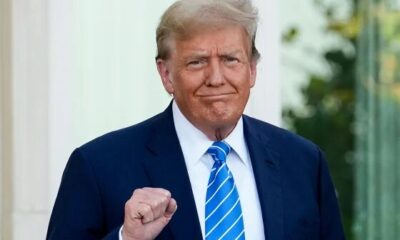
In late October 2025, Donald Trump redesignated Nigeria as a “Country of Particular Concern (CPC)” under the International Religious Freedom Act, citing alleged mass killings of Christians. He warned that Christianity was under existential threat and that radical Islamist groups were committing “mass slaughter.” Trump even directed U.S. military preparations for possible action unless Nigeria halted the killings, declaring, “If we attack, it will be fast, vicious, and sweet, just like the terrorist thugs attack our cherished Christians!”
For victims, this international recognition was a welcome validation. Yet, as Ezekwesili pointed out, “It did not have to take the insults and threat from Trump to wake up our Government to the Duty of Care it owes EVERY CITIZEN of Nigeria.” The CPC designation may have sparked global attention, but the moral imperative predates foreign pressure.
The Nigerian government responded swiftly. Foreign Minister Yusuf Tuggar emphasized constitutional guarantees of religious freedom, while Information Minister Mohammed Idris dismissed claims of selective inaction as “based on misinformation or faulty data.” Officials stressed that violence affects Christians, Muslims, and traditional worshippers alike, insisting that there is no government-sanctioned genocide.
Yet, denial is part of the problem. A state that refuses to confront killings implicating its security apparatus, or simply fails to protect its citizens, is complicit. Ezekwesili frames this bluntly: “Of what use are ‘leaders’ and governments that cannot protect their own people?” Denial functions as a shield, allowing impunity to persist, much like the boy in Mowe whose denial masked the truth that everyone could smell.
Calling this crisis “genocide” is crucial, and denying it is morally corrosive. Recognition triggers obligations: investigation, justice, and protection. By refusing to acknowledge the scale and identity-based nature of the violence, Nigeria avoids these responsibilities, leaving victims voiceless and perpetrators free.
Media narratives compound the issue. Describing massacres as “clashes” or “farmer-herder conflicts” implies symmetry where none exists. Farmers armed with hoes cannot realistically confront attackers with assault rifles. Ezekwesili decries the “death and dearth of empathy” underlying the definitional debates, reminding Nigerians “hundreds of our fellow citizens are killed daily with impunity.”
The failure to act decisively has historical precedents. In 2014, the Chibok girls were abducted; the government’s slow response drew global criticism. “In 2015, they came for our Chibok daughters… Nigerians sat around debating ‘Politics’ while the parents of the girls cried in anguish pleading to ‘even be believed,’” Ezekwesili recalls. Only in 2018 did a similar episode occur with the Dapchi schoolgirls. The escalation of kidnappings and killings has morphed into an industry of terror, disproportionately affecting Christians, as in the cases of Leah Sharibu and most Chibok girls.
What is clear is the pattern: failure to hold perpetrators accountable emboldens organized criminal and extremist groups. The same failures seen in the abductions of schoolgirls now manifest in widespread massacres of communities across the Middle Belt, Northwest, and Northeast.
Nigeria’s security forces have repeatedly shown selective intervention. Police or military respond aggressively to minor incidents but fail when entire villages are massacred. Commissions of inquiry rarely lead to prosecutions. Killers roam free, sometimes rebranded as “repentant terrorists.” Denial of genocide reinforced by the CPC controversy deepens the culture of impunity.
Historical parallels are haunting. The pogroms of 1966 and the Nigerian Civil War of 1967–1970 were instances of ethnic and religious targeting. Today, similar fault lines persist, but the scale is nationwide. Ezekwesili frames the moral urgency bluntly: “Stop the silly debates. Stop defending the indefensible. Stop the irresponsible deflecting. Stop the heartless indifference to the sufferings and injustices done to others.”
Trump’s CPC designation exposes the stakes of global recognition. U.S. threats of sanctions and military intervention highlight that Nigeria’s violence is not merely domestic. Yet the framing of “Christian genocide” is contested: Muslims and traditional worshippers are also victims. International framing risks politicization, but silence or denial does not reduce the real human toll.
Nigeria insists that international support must respect sovereignty. While the CPC tag draws attention to atrocities, it also exposes tensions between moral accountability and political defensiveness. As Ezekwesili warns, “One more Nigerian does not deserve to be killed while our governments do nothing. Period. Be human beings for a change and stop ‘majoring in the minors.’”
On the way forward, it is not out of place to suggest in this context that independent investigation that would pave the way for transparent inquiries into killings, abductions, and displacement should be established.
In a similar vein, violence must be recognized for what it is, either being of a large-scale, targeted, and identity-driven dimension, and in the same vein be accurately named.
Not only that, there should henceforth be Justice for victims through prosecutions, memorials, and reparations as they are essential.
Again, communities should be protected, as economic development cannot proceed where farms are empty and towns are ghosted.
In a similar vein, there should be responsible international engagement, urging global partners to press for facts without undermining sovereignty.
At this juncture, it is expedient to recall that Ezekwesili’s admonition captures the moral imperative: “Be Human Beings for Once. STOP the Bloodshed in OUR Land. Period.” This is as recognition, accountability, and empathy are not optional; they are the minimum duty owed to citizens.
When Trump accuses and Nigeria denies, the battlefield extends beyond villages into the realm of accountability and history. Truth becomes the casualty, and when truth dies, so does hope.
Nigeria’s crisis is not merely a security problem; it is moral, political, and economic. Denial empowers perpetrators, silences victims, and strengthens chaos. The word genocide may not yet be universally accepted, but the practice is visible. Naming it matters. Denying it, and ignoring its consequences, is complicity.