
Africa
Twelve Petitions Ignored, One Charge Filed: The Tinubu Government’s Selective Blindness -By John Egbeazien Oshodi
There is still time to ensure this does not become a lasting stain on our justice system. There is time to allow the law to breathe evenly across all names—both the accused and the accuser. Twelve petitions deserve a fair hearing. One charge deserves due process. But above all, the nation deserves to see that its institutions are not tilted toward only the most powerful voices.


When a Government Hears Power, Not Pain
Nigeria’s democracy is quietly undergoing a test—one that is not playing out through constitutional amendments or high-profile legislation, but through the lived experience of one woman: Senator Natasha Akpoti-Uduaghan. Between March and May 2025, she submitted twelve formal petitions to relevant authorities. These were not casual remarks or politically motivated gestures. They were direct, documented appeals for help, citing cyberstalking, death threats, defamation, the sudden removal of her police security, and even an alleged assassination attempt.
The petitions included names not unfamiliar to Nigerians—Senate President Godswill Akpabio, former Kogi Governor Yahaya Bello, Senator Nwebonyi, and political figure Dr. Sandra Duru. These names carry political weight, and perhaps, it is that very weight that left her appeals suspended in silence.
The Response Came—But Not for Her
Despite the volume and gravity of these petitions, there was no investigation. No follow-up. No reply. What did receive swift response, however, was a televised comment—one line repeated publicly by Senator Akpoti-Uduaghan expressing concern about discussions allegedly held between Akpabio and Bello regarding her elimination. Days later, the Federal Government filed a criminal defamation charge. Twelve ignored pleas. One expedited prosecution.
To many observers, the contrast is troubling. It suggests that in today’s Nigeria, a woman may speak into the void with official petitions, but the moment she utters a sentence that unsettles the powerful, the legal system awakens—not to listen, but to confront her.
A Vague Invitation After Months of Silence
In a recent interview with journalist Adeola Fayehun, Senator Akpoti-Uduaghan revealed that shortly after her legal counsel went public with the inaction on her petitions, she received a letter of invitation from the police. This letter arrived not after careful deliberation—but after public exposure. Even then, it included no date, no time—just an undefined call to appear
This form of reactive administration undermines trust. It suggests that state processes are not being led by principle, but by pressure. The timing, the vagueness, the optics—all leave questions in the minds of those watching.
Returning from London with Caution, Not Confidence
The senator is returning to Nigeria from London, where she had been attending to personal matters. She will appear in court this Tuesday, June 3, 2025, to respond to the defamation charge brought against her. In the same interview, she invited Nigerians to be present in court—not to protest, but to observe, to bear witness.
She spoke with composure, but with visible unease. She acknowledged the risks, referencing incidents in Nigerian courts where defendants have faced unexpected violence. She did not sound like a politician strategizing—she sounded like a citizen preparing herself. She admitted she may be granted bail—or she may be remanded in custody. She is not certain what Tuesday will bring. But she is showing up.
That, in itself, is something the nation should pause to consider.
The Larger Pattern Beneath the Moment
From a psychological and institutional view, this situation fits into a troubling pattern. A woman asks for protection and is ignored. A woman speaks publicly and is charged. A woman returns from abroad to defend herself and fears the very courtroom she’s been summoned to. This is not an isolated event—it’s part of a deeper discomfort within our system that many Nigerians, especially women, understand too well.
When justice responds to power faster than to danger, it becomes difficult to convince citizens that our institutions serve them equally. It becomes harder for young people—especially young women—to believe that reporting harassment or intimidation leads anywhere other than deeper exposure.
To the Attorney-General: There’s Still Room for Balance
Mr. Lateef Fagbemi, SAN, you occupy a position not only of law but of perception. This case, now public and international, places your office in a delicate light. Twelve petitions were submitted. Their silence contrasts sharply with the urgency of the defamation charge. Many Nigerians are not asking for outcomes—they are simply asking for equal attention. Your legacy will not be shaped by what laws were technically followed, but by whether the average citizen felt the law was equally available to them.
To President Tinubu: The Nation Looks Higher Than the Ministries
President Bola Ahmed Tinubu, respectfully, it is now clear that this matter is larger than any one agency. The public is not focusing on the IGP. The weight of this moment has moved beyond the AGF. It now rests with you.
You may not have known all the details. In a system this complex, that’s understandable. But now you do. And the question becomes not what your officials did before, but what your leadership will choose to do next.
No one is asking you to interfere with the courts. But people are watching to see whether justice in Nigeria still flows from a place of impartiality, or from proximity to political power. When a senator returns from abroad in fear, and publicly calls on citizens to attend her hearing—when she doesn’t know whether she’ll go home or be detained—this becomes more than law. It becomes a mirror for how the country handles accountability, fear, and truth.
Justice Delayed, Yes—but Cannot Be Forever Denied
There is still time to ensure this does not become a lasting stain on our justice system. There is time to allow the law to breathe evenly across all names—both the accused and the accuser. Twelve petitions deserve a fair hearing. One charge deserves due process. But above all, the nation deserves to see that its institutions are not tilted toward only the most powerful voices.
If justice bends to power, it fractures. But if justice stands straight—even when uncomfortable—then perhaps this democracy still has hope. Twelve petitions. One woman. A courtroom soon to be filled. And a presidency quietly watched.
Let it all proceed. But let it proceed with conscience.
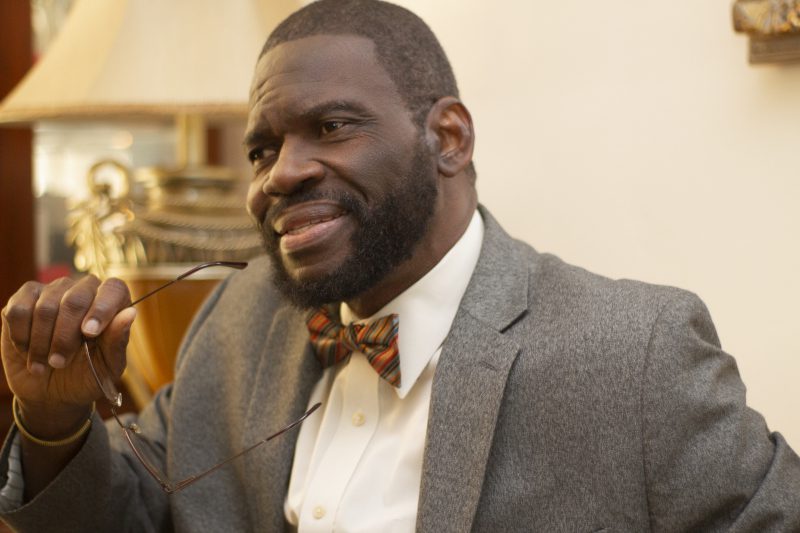
Psychologist John Egbeazien Oshodi
Professor John Egbeazien Oshodi is an American psychologist, educator, and author specializing in forensic, legal, and clinical psychology, cross-cultural psychology, police and prison sciences, and community justice. Born in Uromi, Edo State, Nigeria, he is the son of a 37-year veteran of the Nigeria Police Force—an experience that shaped his enduring commitment to justice, security, and psychological reform.
A pioneer in the field, he introduced state-of-the-art forensic psychology to Nigeria in 2011 through the National Universities Commission and Nasarawa State University, where he served as Associate Professor in the Department of Psychology. His contributions extend beyond academia through the Oshodi Foundation and the Center for Psychological and Forensic Services, advancing mental health, behavioral reform, and institutional transformation.
Professor Oshodi has held faculty positions at Florida Memorial University, Florida International University, Broward College, where he also served as Assistant Professor and Interim Associate Dean, Nova Southeastern University, and Lynn University. He is currently a contributing faculty member at Walden University and a virtual professor with Weldios University and ISCOM University.
In the United States, he serves as a government consultant in forensic-clinical psychology, offering expertise in mental health, behavioral analysis, and institutional evaluation. He is also the founder of Psychoafricalysis, a theoretical framework that integrates African sociocultural dynamics into modern psychology.
A proud Black Republican, Professor Oshodi advocates for individual empowerment, ethical leadership, and institutional integrity. His work focuses on promoting functional governance and sustainable development across Africa.



























You must be logged in to post a comment Login