
Health and Lifestyle
Two Eras, One Pattern: Balewa’s Shadow in Shettima’s Steps -By Sani Danaudi Mohammed
Northern Nigeria, I plead with you: do not let him walk alone. Pray for him. Defend him. Correct him when he errs, but never forsake him. Because if we lose this chance, history will ask us why we cut down our own Golden Voice twice.

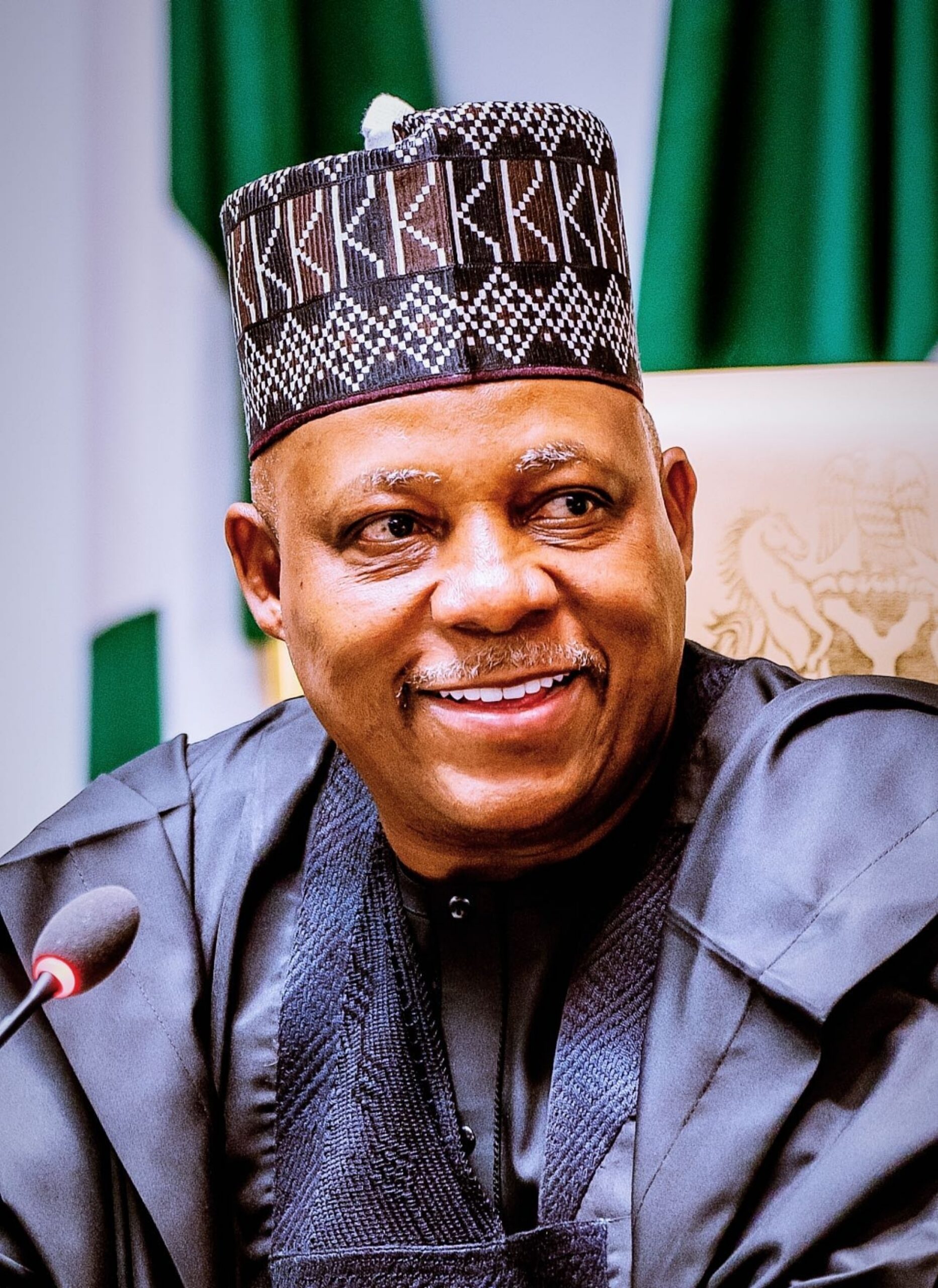
I begin with the late Sir Abubakar Tafawa Balewa, the Golden Voice of Africa. From the floor of parliament to the podiums of the United Nations, Balewa spoke with a calm authority that made Nigeria heard and respected. His English was measured, his cadence dignified, and his message always rooted in unity. When he was cut down in January 1966, the North and indeed Nigeria lost more than a Prime Minister.
We lost an oratorical standard. For decades after, that vacuum lingered. Political speeches became louder but rarely deeper, until recently when Senator Kashim Shettima began to fill it. A banker by training, former Governor of Borno State, former Senator representing Borno Central, and now Vice President of the Federal Republic of Nigeria, Shettima brought back that blend of wit, clarity, and intellectual weight. In him, the North found its voice again, 66 years after Balewa.
Both men rose without the cushion of entrenched dynasties. Balewa was a schoolteacher’s son from Bauchi who earned his place through brilliance and character. Shettima, born in Maiduguri, built his reputation in banking before stepping into the brutal arena of Borno politics at the height of insurgency. Neither was handed power on a platter. They came, they saw, and they conquered their moments.
Balewa steadied a young, fractious federation. Shettima governed a state under siege and kept it from collapse. Their families were not the powerful kingmakers of their day, yet both men grew into influential figures whose words moved policy and whose presence calmed tensions. That is the first pattern: destiny calling ordinary men to extraordinary service.
Call them children of great destiny and you would not be wrong. Balewa’s path from village school to Prime Minister reads like providence. Shettima’s own journey carries the same mark. When he was nominated as Vice President, the political temperature spiked. Critics questioned the ticket. Old fears were weaponized.
The same shadows that trailed Balewa’s emergence, regional suspicion, elite resistance, and religious anxiety, reappeared in new forms. Yet like Balewa before him, Shettima weathered the storm. The nomination held. He was sworn in. And the pattern continued: scrutiny, doubt, and eventual acceptance as he settled into the work of office. Destiny, it seems, does not ask for permission.
Many felt he was not the right person for Vice President. The arguments were loud across media and political circles. But to Almighty Allah, Shettima was the best bet for that moment, leaving his political enemies in suspense. The attacks did not stop at nomination. After swearing in, every speech was parsed, every move debated. Still, the man kept doing what brought him this far: engaging, explaining, and governing. Balewa faced the Action Group crisis, census controversies, and the gathering storm of 1966 with stoic resolve. Shettima faces economic headwinds, security questions, and the daily test of proving the North’s stake in a renewed Nigeria. Different era, same crucible.
I first began to love Kashim Shettima after watching some of his trending hashtags on social media and his joking sessions with Fulanis as Governor of Borno. Clips would surface of him stopping his convoy to give helpless Fulani women a ride, or handing elder Fulani men pairs of clothes. No script, no camera orchestration, just instinctive compassion. In those moments you saw Balewa’s humility reflected: leadership that bends low to lift others. The oratory is there, yes. But so is the human touch. For a region often defined by conflict headlines, Shettima reminded us that empathy is also a form of power.
Historically, neither the Fulani nor the Kanuri can be classified as the absolute leaders of the other. We were the two dominant, independent superpowers of Northern Nigeria. The Kanuri built the Kanem-Bornu Empire, one of Africa’s longest lasting civilizations, centered around Lake Chad. They were established, educated, and had embraced Islam for centuries before the 19th century. The Fulani, under Shehu Usman dan Fodio, launched the Jihad of the early 1800s and established the Sokoto Caliphate.
When that expansion met Borno, it met a stalemate. The Kanuri fiercely defended their territory and proved they needed no reform, having been devout Muslims for generations. So we coexisted as sovereign equals. Today the Sultan of Sokoto and the Shehu of Borno stand as the highest traditional stools in the North. Between us remains that old joking relationship, the playful rivalry of two proud, elite, and sophisticated peoples.
So as a Fulani myself, I do not see Kashim Shettima through the lens of subordination, but through the lens of shared heritage and mutual respect. I see him as one of my sons from the Kanem-Bornu Empire, a product of that other great civilization that stood unconquered beside ours. Watching him rise from banker to governor to Vice President, I beat my chest with the pride of a kinsman, not a ruler.
Balewa made us believe a teacher could lead a nation. Shettima makes our children believe that excellence, courage, and humor can carry a son of the Kanuri to the second highest office in the land. Two eras. One pattern. Balewa’s shadow is indeed in Shettima’s steps, and the North walks taller because its two historic superpowers still raise men of destiny.
What Senator Kashim Shettima needs from the entire Northern Nigeria right now is not praise, not silence, but loud, unshakable support across every state, every emirate, and every home. He carries our collective name into the highest corridors of power as Vice President. If we abandon him to the wolves of suspicion and regional blackmail, we betray not just him, but the sacrifices of our fathers who fought to keep this region relevant at the center.
Shettima did not fight through insurgency in Borno and political fire in Abuja just to become a champion of Kanuri or a defender of one faith. He went to Aso Rock to prove, with his life if he must, that the Villa is sacred ground where the hard, painful business of governing Nigeria is done for every tribe and tongue. The North must rise and hold his arms up like Aaron held Moses. Anything less is self-sabotage.
Look at his heart, then judge him. He took an Igbo son and made him Chief Security Officer. He took a Christian brother from the hills of Southern Kaduna and made him his Aide-de-Camp, the officer who stands closest to him in danger. In a Nigeria that still counts bloodlines before it counts merit, that is not politics. That is courage.
That is a man telling the whole country, “I trust you with my life, so trust me with this nation.” He refuses to be caged by the lazy labels of ethnic warlord or religious zealot. He is a Nigerian first, a Northerner second, and he is begging us with his actions to believe in something bigger than our fears.
That is why the spirit of Sir Abubakar Tafawa Balewa is alive in him. Balewa, a devout Muslim, made Christians and Southerners believe in One Nigeria because he lived it. Today, Shettima is doing the same, and the echo is deafening. When he honors an Igbo and a Southern Kaduna Christian in his inner circle, he is rebuilding the bridge Balewa laid before it was bombed in 1966.
Senator Kashim Shettima was blackmailed and called names without him being distracted, not during the brutal campaign season and not after being sworn in. They threw labels at him like stones, hoping he would stumble. He never flinched. He kept his eyes on the mandate and his hands on the work. That is the first proof of the man: uncommon focus under fire. In the noise of politics, he chose silence over pettiness, duty over drama. That restraint is not weakness. It is discipline forged in Borno, where a governor learns that every word can heal or burn a wounded land.
This is a courageous man that needs our collective support. His core values are clear in how he lives and leads. He believes in competence over creed, evident when he entrusted his personal security to men outside his faith and region. He values loyalty, but never demands it at the price of justice. He carries empathy as a policy, seen in those roadside stops for helpless women, and he wields humor as a bridge between peoples long divided by fear. Shettima is not perfect, but he is principled. He understands that Aso Rock is a workshop, not a throne. And for that clarity, for that courage, the North owes him more than applause. We owe him our strength.
Northern Nigeria, I plead with you: do not let him walk alone. Pray for him. Defend him. Correct him when he errs, but never forsake him. Because if we lose this chance, history will ask us why we cut down our own Golden Voice twice.
Danaudi, Writes From Bauchi Via danaudicomrade@gmail.com
























You must be logged in to post a comment Login