
Health and Lifestyle
Mycoplasma Conjunctivae: An Overlooked Threat To Global Small-Ruminant Health -By Dr. Moris Umoru, DVM
Although M. conjunctivae is not currently recognized as an established human zoonosis, its control remains relevant to veterinary public health because animal health is closely connected to food security, economic wellbeing and sustainable livestock production.

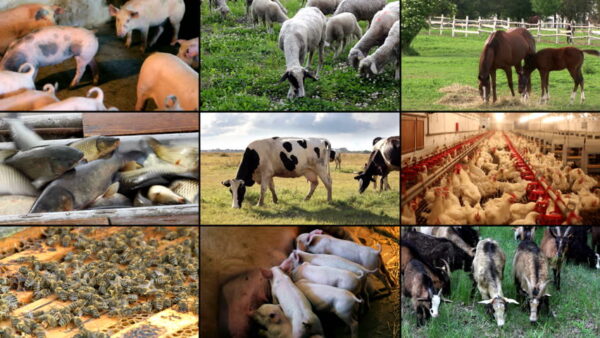
What may initially look like a simple watery or reddened eye in a sheep or goat can sometimes signal a much wider problem within a flock. When several animals develop swollen eyelids, excessive tearing, ocular discharge and difficulty seeing, the condition can rapidly become a significant animal-health and welfare concern. One important organism associated with such outbreaks is Mycoplasma conjunctivae, a recognized cause of infectious keratoconjunctivitis, popularly known as “pink eye.”
The disease occurs in different livestock-producing regions and has been reported in both domestic and wild ruminants. Beyond the immediate eye infection, severe cases can cause considerable pain, impaired vision and blindness, while outbreaks may reduce animal productivity and impose additional financial burdens on livestock owners.
Background and Context
Small ruminants play an essential role in global agriculture. Sheep and goats provide meat, milk, breeding stock and income for millions of households. They are particularly valuable to small-scale farmers and pastoral communities because of their adaptability to different environmental and production systems.
Consequently, diseases affecting these animals should not be viewed only from the perspective of individual animal treatment. A disease that reduces livestock productivity can also affect household income, food availability and the economic stability of communities.
M. conjunctivae has been identified in several regions worldwide and is closely associated with infectious keratoconjunctivitis in sheep and goats. Its detection in different geographical locations, as well as in certain wild ruminant populations, demonstrates that it represents a broader livestock-health concern rather than a disease confined to a particular country or production system.
Main Discussion
Infectious keratoconjunctivitis may initially present with relatively mild ocular abnormalities. Affected animals can develop watery eyes, conjunctival redness, increased blinking, eyelid spasms and sensitivity to light. Without appropriate management, the inflammatory process may extend to the cornea.
As the disease becomes more severe, corneal cloudiness, ulceration and significant discomfort may develop. In serious cases, permanent damage to the eye and loss of vision can occur. These complications can have substantial consequences for animal welfare because affected animals may struggle to eat, drink, move around safely or respond appropriately to their surroundings.
Transmission within a flock can also make the disease difficult to manage. Close contact during grazing, housing, transportation and livestock trading creates opportunities for infection to move from one animal to another. The presence of animals carrying the organism without obvious clinical signs can make detection and eradication even more challenging.
Causes and Contributing Factors
The occurrence and spread of M. conjunctivae-associated disease are influenced by several factors. Direct contact between infected and susceptible animals remains an important component of transmission, particularly where animals are kept together for prolonged periods.
Livestock movement is another significant consideration. Animals are routinely transported between farms, communities, markets and regions. An apparently healthy animal carrying the organism may therefore introduce infection into a previously unaffected flock.
Environmental conditions can further influence disease occurrence. Dust, poor ventilation, overcrowding and other forms of ocular irritation may aggravate eye disease. Inadequate hygiene during animal handling may also facilitate the transfer of infectious material.
Interactions between domestic livestock and wild ruminants may add another epidemiological dimension in areas where both populations share grazing environments. These factors emphasize that successful disease control requires more than treating animals that are already showing symptoms.
Public-Health and Human Implications
The public-health significance of M. conjunctivae needs to be communicated carefully. At present, the organism is not established as an important zoonotic pathogen of humans. Therefore, it should not be presented as a human pandemic or confirmed zoonotic disease.
Nevertheless, the disease has broader relevance to veterinary public health through the principles of One Health. Animal diseases can influence human wellbeing indirectly by affecting food production, household income, animal welfare and the economic resilience of livestock-dependent communities.
For a farmer whose livelihood depends heavily on sheep or goats, an outbreak can mean additional treatment expenses, reduced market value, lower productivity and possible losses from severely affected animals. In communities where small ruminants contribute significantly to household nutrition and income, these effects can become socially and economically important.
There is also an occupational-health dimension. Farmers, pastoralists, livestock handlers and veterinary professionals have frequent contact with animals. Although M. conjunctivae itself is not recognized as a zoonotic threat, proper hygiene should always be maintained because animals may simultaneously be exposed to other infectious organisms that can affect humans.
Antimicrobial Use: A Wider One Health Concern
The management of ocular disease also raises an important issue concerning antimicrobial use.
When livestock develop eye infections, some farmers may administer antibiotics without professional diagnosis. This can lead to inappropriate drug selection, incorrect dosing or unnecessary treatment. Such practices can contribute to the development and spread of antimicrobial resistance.
Antimicrobial resistance is not merely an animal-health problem. It affects humans, animals and the environment, making it a central One Health concern.
Veterinary practitioners therefore have an important responsibility to promote rational antimicrobial use. Treatment should be based on appropriate clinical assessment and, where necessary, laboratory diagnosis. Farmers should also be educated about correct dosage, treatment duration and applicable withdrawal periods.
Prevention and Control
Effective control begins with early recognition. Farmers and animal-health workers should be able to identify warning signs such as excessive tearing, conjunctival redness, eyelid swelling, ocular discharge and changes in vision.
Animals suspected of infection should be separated from healthy animals and assessed by a veterinarian. Newly purchased sheep and goats should undergo an appropriate quarantine period before being introduced into an established flock.
Improved farm hygiene and biosecurity can also reduce disease transmission. Farmers should avoid unnecessary mixing of animals from different sources, reduce overcrowding and maintain clean, well-ventilated housing conditions.
Livestock markets should also form part of disease-control strategies. Veterinary inspection and awareness among traders can help reduce the movement of animals displaying obvious signs of disease.
When an outbreak occurs, veterinary professionals should investigate its extent, identify potential sources and risk factors, perform appropriate diagnostic testing and establish suitable treatment and control measures.
The Veterinary Public-Health Perspective
The management of M. conjunctivae illustrates the broader responsibility of the veterinary profession.
Veterinarians are not only responsible for treating sick animals. They also contribute to disease surveillance, outbreak investigation, animal-welfare protection, farmer education, antimicrobial stewardship and community health.
Veterinary public-health practitioners can help livestock owners recognize disease at an early stage and understand why isolation and professional diagnosis are important. They can also work with researchers and government authorities to strengthen surveillance and improve knowledge about disease distribution.
A coordinated One Health approach brings together veterinarians, farmers, researchers, livestock traders, wildlife specialists and relevant public-health institutions. Such collaboration becomes increasingly important as livestock movement, international trade and changing environmental conditions influence disease patterns.
Solutions and Way Forward
A sustainable response requires greater emphasis on prevention rather than waiting until outbreaks become severe.
Veterinary authorities should strengthen disease surveillance, improve diagnostic capacity and ensure that livestock owners have access to professional veterinary services. Farmer education should focus on biosecurity, quarantine, early reporting, animal welfare and responsible antimicrobial use.
Research should continue to investigate the distribution of M. conjunctivae, its transmission patterns, carrier animals, strain variation and interactions between domestic and wild ruminants.
Equally important is responsible public communication. Veterinary professionals should distinguish between confirmed zoonotic diseases and animal diseases that have indirect public-health consequences. Scientific accuracy prevents unnecessary fear while allowing genuine health threats to receive the attention they deserve.
Conclusion
M. conjunctivae-associated infectious keratoconjunctivitis may begin with a seemingly insignificant change in an animal’s eye, yet its consequences can extend to animal welfare, livestock productivity and the livelihoods of the people who depend on these animals.
Although M. conjunctivae is not currently recognized as an established human zoonosis, its control remains relevant to veterinary public health because animal health is closely connected to food security, economic wellbeing and sustainable livestock production.
The challenge is therefore larger than treating an infected eye. It is about improving surveillance, strengthening prevention, protecting animal welfare, using antimicrobials responsibly and empowering livestock owners with reliable information.
When we protect the health of livestock, we are also protecting the livelihoods, food systems and communities that depend on them.
DR UMORU MORIS (DVM).




























You must be logged in to post a comment Login