
Breaking News
Ebola Scare: FG Tracks 53 Contacts, Offers N100,000 Weekly to Those in Quarantine
Nigeria tracks 53 contacts linked to its confirmed Ebola case as the FG approves weekly support and states intensify surveillance.


ABUJA — The Federal Government has increased the number of contacts being monitored following Nigeria’s confirmed Ebola case from 44 to 53 and approved weekly payments of N100,000 for individuals placed in isolation or quarantine.
The measures are part of efforts to contain the Ebola Bundibugyo virus disease case confirmed in the Federal Capital Territory (FCT) on October 20, 2026, and prevent further transmission.
The Director-General of the Nigeria Centre for Disease Control and Prevention (NCDC), Dr. Jide Idris, announced the latest figures and financial support package during a briefing in Abuja yesterday.
The development comes as Lagos State steps up surveillance at the Murtala Muhammed International Airport, while Zamfara State has begun screening travellers at Gusau airport and major motor parks after a passenger arriving from Saudi Arabia recorded a temperature of 38 degrees Celsius.
Contact Tracing Continues in Abuja
Idris said the 53 identified contacts included healthcare workers, the confirmed patient’s spouse, domestic staff and other people who might have been exposed to the virus.
He explained that the individuals had been identified, categorised and placed under monitoring, while contact tracing continued.
The NCDC chief noted that the number of contacts could change as health authorities obtained more information during their investigations.
He maintained that Nigeria had recorded only one confirmed Ebola case. Two additional suspected cases had also been reported, with a suspected case in Rivers State testing negative and investigations into another case in the FCT ongoing.
Idris said no identified contact had tested positive and that the FCT remained the only state with a confirmed case.
“As of today, we have two suspected cases again. One in FCT, one in Rivers State. But we’ve tested the Rivers case; it’s negative.
“So there’s no red line. We have that confirmed case, that’s the patient in the hospital. Contacts with symptoms, none. Contacts positive, none. States affected, only FCT now. Now, that’s the summary,” he said.
He disclosed that the national incident management system had been activated at the highest level, bringing together the Federal Ministry of Health and Social Welfare, FCT health authorities, other government agencies and technical partners to coordinate the response.
Idris cautioned against equating contact identification with infection, explaining that monitoring was a precautionary public health measure.
“Being identified as a contact does not mean that you have Ebola. It means that public health teams need to assess and monitor your health so that any possible infection can be identified early,” he said.
He appealed to people contacted by public health teams to cooperate fully and provide accurate details about their movements, contacts and any symptoms.
Government Approves Weekly Financial Assistance
As part of measures to support people under monitoring, the Federal Government has approved N100,000 per person weekly for individuals placed in isolation or quarantine.
Idris said the government was also providing accommodation and feeding for affected contacts, while the financial assistance would help them cater for their families during the monitoring period.
“Just to douse the tension, we decided we would do this. We provide N100,000 per person per week just to maintain their comfort and feeding because they were complaining,” he said.
The NCDC director-general added that the confirmed patient was receiving treatment at an isolation facility, with arrangements in place to accommodate additional cases if required.
He said facilities had also been established for contacts requiring closer monitoring.
Laboratory Tests and Airport Screening Strengthened
Idris said samples collected from the confirmed patient on three occasions had remained positive, while a sample taken from her husband tested negative.
He added that two laboratory facilities had completed genetic sequencing to establish the genetic characteristics of the virus, with the findings being used to facilitate information-sharing with Ugandan health authorities.
According to him, between nine and 12 public and private laboratories across Nigeria had been equipped to conduct Ebola testing.
He said testing for the confirmed case was being carried out at the National Reference Laboratory (NRL), while additional reagents and supplies had been distributed across the laboratory network.
The government has also strengthened screening at international airports, with aviation authorities, immigration, customs and other relevant agencies collaborating on preparedness.
Idris said health declaration forms were now required for passengers travelling into Nigeria from all countries as part of expanded screening measures.
He urged healthcare facilities to reinforce infection prevention and control procedures, including patient screening, triage, hand hygiene, environmental cleaning, safe injection practices and proper medical waste management.
He also advised health workers to take appropriate precautions when attending to patients with symptoms consistent with Ebola, particularly those with relevant exposure histories.
“Healthcare workers should not wait for laboratory confirmation before taking appropriate precautions. Protecting healthcare workers is essential to protecting the communities we serve,” he said.
Idris further advised Nigerians to maintain good hand hygiene, avoid direct contact with the bodily fluids of suspected cases and report possible exposure promptly.
Anyone who develops symptoms after possible exposure, he said, should contact public health officials and follow their instructions before visiting a healthcare facility.
He urged Nigerians to remain calm, cooperate with health authorities and avoid circulating unverified information.
Lagos Steps Up Surveillance, Reports No Suspected Case
The Lagos State Government has intensified Ebola surveillance at the Murtala Muhammed International Airport and strengthened its public health preparedness following the confirmed imported case in Abuja.
The state assured residents that no suspected case had been reported in Lagos and urged them to remain vigilant without panicking.
The Commissioner for Health, Prof. Akin Abayomi, disclosed the measures in a statement issued by the Lagos State Ministry of Health.
According to him, the state is strengthening surveillance, public awareness and coordination with relevant agencies to ensure that any potential case is detected early and addressed promptly.
The ministry, through its Directorate of Epidemiology, Biosecurity and Global Health, conducted an assessment and strategic engagement at the Murtala Muhammed International Airport with airport management, Port Health Services and other aviation and public health stakeholders.
The discussions focused on passenger screening, information-sharing, infection prevention and control, and coordination of emergency response measures.
The statement said: “Lagos State is ready to prevent, detect and respond to potential public health threats.”
It added that public enlightenment on Ebola symptoms, transmission and prevention was being intensified, while residents were advised to rely on verified information.
“Ebola Virus Disease is a severe illness that can be fatal. It spreads primarily through direct contact with the blood and other body fluids of an infected person showing symptoms, contaminated materials, or the bodies of people who have died from the disease. Infection may also occur through contact with infected animals.”
The ministry listed fever, severe weakness, headache, muscle pain, sore throat, vomiting, diarrhoea and abdominal pain among the symptoms. Unexplained bleeding or bruising may also occur.
It warned that symptoms could appear between two and 21 days after exposure and might initially resemble malaria or other common illnesses.
Abayomi advised residents with fever to undergo a malaria rapid diagnostic test before taking antimalarial medication, in line with the state’s fever-management policy. If the test is negative, a healthcare professional should investigate other possible causes and recommend appropriate treatment.
Travellers arriving from areas reporting Ebola transmission were urged to cooperate with Port Health Services, provide accurate travel and health information when requested, and follow public health guidance.
Anyone developing symptoms during travel or after arrival should notify the appropriate health personnel and seek guidance before visiting a healthcare facility.
Residents were advised to report suspected cases and exposure concerns through emergency numbers 112 or 767, or contact the Directorate of Epidemiology, Biosecurity and Global Health on 0802 316 9485.
The state government said it would continue monitoring the situation and provide verified updates, stressing that early detection and prompt reporting were essential to preventing transmission.
Zamfara Screens Travellers After Passenger Records High Temperature
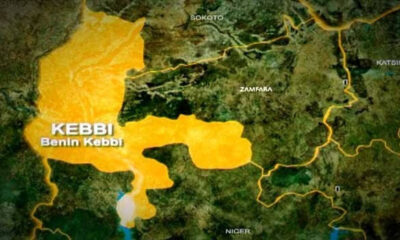
Meanwhile, the Zamfara State Government has activated Ebola surveillance at Gusau airport and major motor parks following the detection of a passenger with a body temperature of 38 degrees Celsius after arriving from Saudi Arabia.
The state Commissioner for Health, Nafisa Maradun, disclosed this over the weekend while leading a medical team to launch passenger screening at the airport.
She said the passenger, who is an indigene of Zamfara State, was identified during screening and referred for further medical assessment.
The state has deployed medical personnel to the airport, motor parks and other entry points to screen travellers and facilitate the early identification of suspected cases.
Maradun said the measures were intended to prevent the virus from spreading to Zamfara, urging residents to remain calm and cooperate with health officials.
The state Ministry of Health has directed public and private health facilities, disease surveillance officers and local government health authorities to strengthen preparedness, improve screening and report suspected cases without delay.
The government is also collaborating with the Nigeria Customs Service (NCS), Nigeria Immigration Service (NIS) and other relevant agencies to strengthen surveillance at entry points.
Transport workers are expected to assist by identifying and reporting passengers who may require medical assessment.
Africans Angle News























You must be logged in to post a comment Login