
Breaking News
Dr Zo Raises Alarm Over Hospital Equipment Shortages, Says Some Nigerians Are ‘Buried Alive’
Dr Zo alleges that 95% of government-owned hospitals lack defibrillators, heart monitors and ECG machines, urging Nigerians to demand accountability.

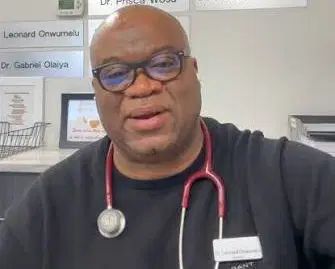
Arinze Onwumelu, a Nigerian medical doctor based in Canada and popularly known as Dr Zo, has criticised the state of emergency healthcare in Nigeria, warning that shortages of life-saving equipment could cost patients their lives.
In a video shared on his Instagram account, @official_doctor_zo, Onwumelu alleged that many government-owned hospitals lacked essential equipment needed to diagnose and treat patients experiencing sudden medical emergencies.
He called on Nigerians to demand accountability from government authorities over what he described as gaps in the country’s healthcare infrastructure.
“In my opinion, some Nigerians are buried alive in Nigeria. Ninety-five (95) per cent of government-owned hospitals don’t have defibrillators, AEDs, heart monitors or ECG machines,” the doctor said.
He expressed concern that medical personnel could struggle to establish why a patient had suddenly collapsed or determine whether the condition could be reversed without access to appropriate diagnostic tools.
“How on earth can you tell if someone slumped due to a heart attack or other forms of reversible arrhythmia?” he asked.
Onwumelu said his concerns were informed partly by his previous experience working in emergency departments at the Federal Medical Centre in Umuahia and the University of Nigeria Teaching Hospital (UNTH), before moving to Canada.
He claimed that during his work at the facilities in the late 1990s and early 2000s, he did not encounter automated external defibrillators or heart monitors in the emergency departments where he served.
He argued that a lack of essential equipment could limit healthcare workers’ ability to identify critical conditions and provide timely treatment.
“If they bring somebody like Toluwanisings to the hospital, how are you going to know what is wrong? How do you determine whether the person can still be revived?” he asked.
The doctor also recalled a particularly distressing incident involving a 12-year-old boy who died at the Federal Medical Centre in Umuahia. He alleged that oxygen and a nebuliser, among other essential equipment, were unavailable.
Remembering the boy’s mother and her grief, Onwumelu said the experience had remained with him.
“The silent cry of that woman is something I will never forget,” he said.
He stressed that the availability of emergency equipment, alongside properly trained personnel and prompt medical intervention, could improve survival chances in certain life-threatening situations.
Defibrillators, he noted, are particularly important in treating some dangerous heart rhythm abnormalities, where rapid recognition and intervention can make a critical difference.
Onwumelu also challenged calls for him to personally purchase and donate equipment to hospitals, insisting that governments should take primary responsibility for ensuring public healthcare facilities are properly equipped.
“You people should hold your government accountable,” he said.
He questioned the apparent contrast between spending on political campaigns and the alleged lack of essential medical equipment in government hospitals.
The doctor urged Nigerians to press elected officials for better healthcare delivery and stronger accountability, maintaining that Nigeria had the resources to improve its health system.
He also referenced progress in other African countries as examples of the healthcare improvements he believes Nigeria should work towards.
Africans Angle News


















You must be logged in to post a comment Login