
Breaking News
Moscow Summit: Russia Seeks Stronger African Alliances Amid Western Sanctions
The Russia-Africa summit opens in Moscow with Putin pledging expanded agricultural exports, medicine production and technology cooperation.


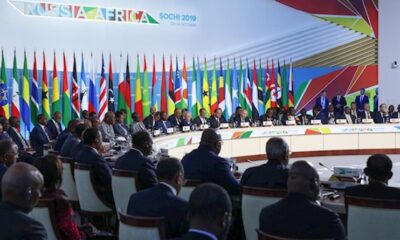
Russia has intensified its diplomatic outreach to Africa, hosting nearly two dozen African leaders in Moscow for a summit focused on expanding economic, political and technological cooperation amid continuing tensions with Western countries over the war in Ukraine.
The two-day Russia-Africa summit, which began on Wednesday, is the third of its kind since 2019. The Kremlin has described African countries as “natural allies” in Moscow’s ambition to establish a multipolar international order that reduces Western influence.
“We are natural allies in building a multipolar world order,” Kremlin aide Yuri Ushakov said ahead of discussions.
Russia has cultivated relationships across Africa since the Soviet era and continues to regard the continent as a strategic partner in countering what it sees as Western dominance in global affairs.
Opening a Russia-Africa economic forum ahead of the leaders’ summit, President Vladimir Putin declared that the transition towards a multipolar world was gaining momentum and could not be reversed.
“The era when the fate of entire continents was determined by a narrow bloc of states is irrevocably gone,” he said.
The economic forum brought together thousands of Russian and African business representatives, while delegations from 48 African countries attended the wider gathering, including 22 countries represented by their leaders.
Russia promises expanded trade and technology cooperation
Putin used the meeting to outline Moscow’s plans to increase agricultural exports to Africa, pledging that Russia was “prepared to further expand the geographical reach of our agricultural product shipments”.
The commitment comes against the backdrop of continuing disruptions to grain exports from Russia and Ukraine caused by attacks in the Black Sea linked to the ongoing conflict.
The Russian president also announced plans to establish local production of Russian medicines and vaccines on the continent.
Moscow intended to “localise” the production of “effective Russian medicines and vaccines”, he said.
Putin further highlighted growing educational links, noting that the number of African students in Russia had risen by 50 per cent since 2020.
On digital development, he said Russia was “open to sharing our modern competencies and high-tech digital know-how with our African friends”.
The pledges form part of Moscow’s broader effort to strengthen its partnerships with African governments as Western sanctions continue to weigh on Russia over its military campaign in Ukraine.
Sahel countries strengthen ties with Moscow
Russia’s opposition to what Putin calls Western “neocolonialism” has gained traction among some African governments, particularly in the Sahel.
Mali, Niger and Burkina Faso have moved away from their former colonial power, France, and developed closer relationships with Moscow.
As part of his diplomatic programme, Putin was scheduled to hold approximately 20 bilateral meetings with African leaders, including Malian leader Assimi Goita.
Mali’s government has relied on Russian paramilitary personnel in its campaign against jihadist groups.
Congo-Rwanda dispute adds regional dimension
The Moscow gathering also provides an opportunity for discussions amid renewed tensions between the Democratic Republic of Congo and Rwanda.
Putin was due to meet DRC President Felix Tshisekedi, as violence continued in eastern Congo.
The Rwandan-backed M23 movement has taken control of extensive areas in eastern DRC since resuming its armed campaign in 2021. Fighting has continued despite a US-brokered ceasefire reached in December of the previous year.
Rwanda’s delegation was to be led by Prime Minister Justin Nsengiyumva.
The summit was expected to end on Thursday with a final declaration on strengthening cooperation between Russia and African nations, as well as a separate statement covering artificial intelligence.
The Kremlin said 33 documents were expected to be signed, particularly on economic cooperation. Russia also intends to expand its diplomatic network by opening an embassy in Liberia, which would become its 49th on the continent.
Recruitment concerns cast a shadow over relations
Russia’s efforts to deepen its African partnerships have been complicated by reports that African nationals were forcibly or deceptively recruited to fight on the front lines in Ukraine.
Nigeria, Kenya and South Africa are among the countries that have publicly raised concerns about citizens recruited by Moscow.
Amnesty International, in an open letter published on Tuesday to African heads of state and other summit participants, expressed “deep concern regarding Russia’s forced and deceptive recruitment” of African nationals.
The rights organisation called on African officials to demand that Moscow “cease any ongoing and future recruitment of people from Africa and other foreign nationals into its military forces”.
The concerns highlight a sensitive issue for African governments as they seek economic, security and diplomatic partnerships with Russia while responding to questions about the treatment and safety of their citizens abroad.
Africans Angle News












You must be logged in to post a comment Login