Politics
Two Parties, One Face: The Shameless Politicians and Nigeria’s Hollow Politics and the Vanishing Line Between APC and PDP -By Daniel Nduka Okonkwo
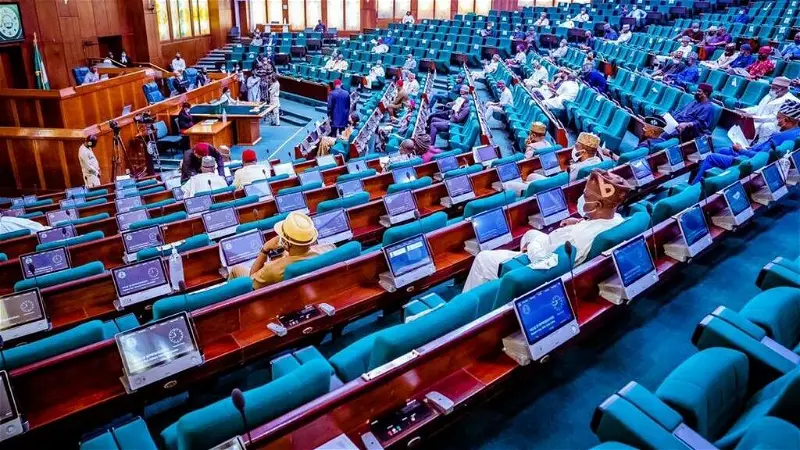
In theory, Nigeria’s legislature is expected to serve as a check on executive authority. However, when the majority of lawmakers belong to the same political party as the executive, the risk increases that legislative oversight may weaken. The National Assembly could gradually become less independent, potentially transforming into an institution that merely endorses executive decisions rather than rigorously scrutinizing them.


Nigerian political parties have become little more than empty shells, lacking coherent ideology or a consistent vision. Instead of serving as vehicles for policy or principle, they often function as opportunistic platforms for personal ambition and ethnic bargaining. The rampant culture of defection, where politicians abandon their party at the slightest promise of power or material benefit, reflects this ideological barrenness. Such moves are not driven by conviction or loyalty to the people but by self-interest and short-term advantage. When politicians treat parties as disposable ladders to climb, they erode trust in the democratic process and reduce politics to a transactional game of “what can I get” rather than “what can I give.”
Rather than articulating clear policy directions or competing visions for governance, political parties often operate as instruments for personal advancement and ethnic bargaining. The rampant culture of defection, where politicians move from one party to another at the slightest promise of power, protection, or material benefit, exposes the depth of this ideological vacuum.
In mature democracies, parties typically distinguish themselves through defined ideological positions, whether conservative, liberal, socialist, or otherwise. In Nigeria, however, the dominant parties, the All Progressives Congress (APC) and the Peoples Democratic Party (PDP), have increasingly become revolving doors for political elites seeking strategic advantage rather than platforms for transformative policy.
Political defections have become a defining feature of Nigeria’s democratic experience. Governors, legislators, and party leaders frequently abandon the platforms that brought them to office, often without providing a clear ideological justification to the electorate.
These moves are rarely driven by conviction or loyalty to the public mandate. Instead, they are widely perceived as tactical maneuvers designed to secure political survival, influence, or access to state resources.
The result is a political culture where the central question shifts from “What can I contribute to governance?” to “What can I gain from power?” Such transactional politics weakens democratic accountability and reduces elections to contests between personalities rather than ideas.
The APC and PDP have become largely indistinguishable in practice. Both parties share deeply intermingled memberships, with politicians frequently crossing between them depending on political circumstances.
This constant cross-carpeting has blurred whatever distinctions may once have existed between the two. In effect, the primary difference often lies in branding and in which set of political actors happens to control the party machinery at a given time.
The absence of ideological clarity has turned both parties into elite-driven coalitions whose central objective is the capture and retention of state power. Policy direction, long-term reform, and institutional development often become secondary considerations.
Some politicians justify their defections by citing dissatisfaction within their former parties or the pursuit of better opportunities elsewhere. Yet these explanations rarely address deeper questions of principle or policy alignment. Instead, they reinforce the perception that Nigerian party politics is driven primarily by tactical maneuvering.
Nigeria’s politics has intensified these concerns. By early 2026, the APC had significantly expanded its influence across the federation following a wave of defections from opposition parties, particularly the PDP.
As of late February 2026, reports indicate that the ruling party controls between 30 and 31 of Nigeria’s 36 states, representing more than 80 percent of the federation. This level of dominance is unprecedented in Nigeria’s Fourth Republic and has dramatically reduced the political space occupied by opposition parties.
This consolidation has raised fears among critics that Nigeria could drift toward a de facto one-party system. While opposition parties technically remain in existence, their diminished presence at both state and federal levels raises serious questions about the balance of power within the country’s democratic structure.
The concentration of political power within a single party has significant implications for governance and institutional accountability. With overwhelming control of state governments and strong influence within the National Assembly, the ruling party faces limited resistance from organized opposition forces.
In theory, Nigeria’s legislature is expected to serve as a check on executive authority. However, when the majority of lawmakers belong to the same political party as the executive, the risk increases that legislative oversight may weaken. The National Assembly could gradually become less independent, potentially transforming into an institution that merely endorses executive decisions rather than rigorously scrutinizing them.
Such a scenario undermines one of the fundamental pillars of democratic governance, the separation of powers.
The growing consolidation of APC-controlled states is part of a broader strategy to strengthen the party’s position ahead of the 2027 general elections. With a commanding presence across the federation, the ruling party may be seeking to create a political environment favorable to securing a second term for President Bola Ahmed Tinubu.
While this strategy may be effective in terms of political arithmetic, it also raises concerns about the health of Nigeria’s democracy. Robust democracies rely on vibrant opposition parties capable of presenting alternative policies and holding governments accountable.
Without such competition, elections risk becoming predictable exercises rather than genuine contests of ideas and leadership.
The deeper question confronting Nigeria is whether political parties will evolve into institutions grounded in principle, policy, and accountability, or remain platforms for elite negotiation and power consolidation.
When politicians move freely between parties without ideological explanation, citizens are left wondering whether meaningful differences truly exist between the platforms competing for their votes.
If parties remain interchangeable vehicles for personal ambition, democratic participation may gradually lose its significance in the eyes of the public.
Nigeria’s democracy has endured many challenges since the return to civilian rule in 1999. Yet its long-term strength will depend not merely on holding elections, but on building political institutions capable of representing clear ideas, sustaining competition, and maintaining public trust.
Without ideological clarity and genuine opposition, the risk is that the country’s political system could drift toward uniformity, where the labels change but the underlying structure of power remains the same.
Daniel Nduka Okonkwo is a Nigerian investigative journalist, publisher of Profiles International Human Rights Advocate, and policy analyst whose work focuses on governance, institutional accountability, and political power. He is also a human rights activist, human rights advocate, and human rights journalist. His reporting and analysis have appeared in Sahara Reporters, African Defence Forum, Daily Intel Newspapers, Opinion Nigeria, African Angle, and other international media platforms. He writes from Nigeria and can be reached at dan.okonkwo.73@gmail.com.