Africa
Umo Eno’s Choice For First Lady’s Office: Why Critics Should Rethink Their Stance, by Isaac Asabor


Governor Umo Eno’s recent decision to appoint his first daughter to head the Office of the First Lady in Akwa Ibom State has been met with mixed reactions, with critics quick to label the move as nepotistic. However, this response appears to overlook key factors surrounding the role and the context of the appointment. While it is understandable that some may view the move with skepticism, it is essential to examine the purpose of the office, its historical function, and its funding model before rushing to judgment.
Contrary to popular belief, the Office of the First Lady is not a constitutional or statutory role in Nigeria. In fact, it exists more in an advisory or ceremonial capacity, with no direct involvement in government decision-making or state governance. Essentially, it functions more like an NGO or a philanthropic organization dedicated to social causes such as women’s empowerment, child welfare, and healthcare. In this sense, the office is primarily a vehicle for positive societal impact, often driving initiatives aimed at alleviating the struggles of the less privileged.
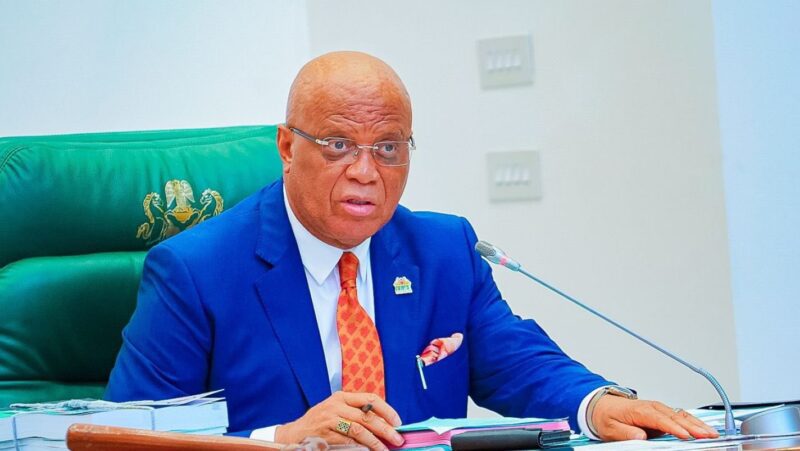
Governor Umo Eno’s appointment of his daughter, therefore, should be viewed within this framework. The choice of who occupies the office is not tied to formal governance responsibilities but rather to the personal initiative of the sitting governor and the first family. Historically, the office has served as a platform for first ladies and their teams to undertake charitable and humanitarian projects in their capacity as influential members of society, rather than as government officials. The office’s activities range from launching health campaigns to providing educational opportunities for disadvantaged children, often funded by donations, partnerships with private organizations, and independent sponsorships.
To understand why Governor Eno’s appointment of his daughter is not inherently problematic, it is crucial to examine the role that the Office of the First Lady has played across Nigeria’s political landscape. From its earliest incarnation, the office has always been one associated with social work and advocacy. It has existed as a platform for promoting social welfare programs rather than wielding political power.
In Nigeria, first ladies like Maryam Babangida and Stella Obasanjo, both of blessed memory, among others, have been instrumental in launching highly successful initiatives that have improved the lives of many. Maryam Babangida, for instance, is well known for her “Better Life for Rural Women” program, which transformed the lives of women in rural areas by providing them with educational opportunities, healthcare services, and skills acquisition programs. These initiatives were not state-funded but received financial support from private donors and international partners.
Similarly, Stella Obasanjo’s “Child Care Trust” focused on providing care for children with special needs. This initiative also operated like an NGO, funded by well-wishers and partners rather than government funds. Even today, offices of first ladies across the country focus on areas such as fighting gender-based violence, supporting mental health awareness, and promoting girl-child education.

Given this history, the choice of who leads such an office has always been at the discretion of the governor or first family. This role is not governed by political appointments or public office regulations. Therefore, critics of Governor Eno’s decision to appoint his daughter may be missing the point that this is a personal decision tied to philanthropic work, not state governance.
The term “nepotism” often implies the appointment of unqualified individuals to positions of power, typically to wield influence in government affairs or to benefit financially. However, this is not the case with the Office of the First Lady. The office does not confer any political or financial power on the person holding it, nor does it involve decision-making within the state’s executive functions. Instead, it exists to facilitate programs aimed at improving societal well-being, which often involves mobilizing resources from non-governmental sources.
Critics who argue that Governor Eno’s appointment of his daughter is an example of nepotism fail to distinguish between governance roles and charitable positions. The office functions outside the formal structures of government, and therefore, it should not be held to the same scrutiny applied to public offices that require transparency and merit-based appointments.
In addition, it is essential to consider that Governor Eno’s daughter may possess the qualities needed to excel in the role. As a member of the first family, she may have a deeper understanding of the vision and objectives her father holds for social welfare in Akwa Ibom. Furthermore, her upbringing and close association with the Governor may equip her with the compassion, dedication, and commitment needed to drive meaningful programs through the office. Provided that she is passionate about service and willing to contribute to the betterment of society, there is no reason why her appointment should be met with such intense criticism.
In fact, when the governor made the disclosure when Nigeria’s First Lady, Oluremi Tinubu, paid him a condolence visit in Uyo, he said his daughter would work closely with the state’s deputy governor to ensure the Office of the First Lady continues its duties.
“To maintain the Office of the First Lady and carry forward my late wife’s work, I present our daughter, Helen, to continue the duties of the office.
“She will work closely with the Deputy Governor and the Commissioner for Women’s Affairs and Social Welfare,” the governor said.
Eno expressed his confidence in his daughter’s ability to deliver in the new assignment and sustain her mother’s legacies.
One of the primary concerns raised by critics is whether the office will be funded by state resources, potentially diverting public funds to support the governor’s daughter. However, it is important to clarify that the Office of the First Lady is traditionally funded through independent donations and partnerships, rather than directly from the government treasury.
While critics may worry about the financial implications of such an appointment, there is ample evidence to suggest that the activities of the office can be run without placing any strain on state finances. If Governor Eno maintains transparency in the operations of the office and ensures that all initiatives are funded through legitimate and independent sources, there should be no grounds for concern. The success of the office, as seen in the examples of previous first ladies, lies in its ability to mobilize external funding and use it for the common good.
It is essential for critics to reassess their stance on Governor Eno’s appointment of his daughter to the Office of the First Lady. The role is one of service, not governance, and there is no constitutional framework dictating who can or cannot occupy it. Provided that the office is run independently of state finances and that Governor Eno’s daughter is qualified to lead initiatives aimed at improving the welfare of Akwa Ibom residents, the appointment should be judged on its merits rather than on the basis of who occupies the role.
In fact, critics should give the Governor and his daughter an opportunity to prove their commitment to the people of Akwa Ibom. If the office can deliver on its promises to uplift vulnerable communities and drive meaningful social change, it will be difficult to argue against the appointment based solely on familial ties. What matters most is the positive impact that the office can have on the lives of the people it is designed to serve.
In summary, while the decision to appoint a governor’s daughter to the Office of the First Lady may spark controversy, it is crucial to recognize the unique nature of the role. The office is not a constitutional one, nor is it a government position that wields power over state affairs. Rather, it is a charitable platform aimed at alleviating the challenges faced by the vulnerable in society. Provided that the office operates with transparency and does not rely on state funds, Governor Umo Eno’s decision should be seen as a personal choice rooted in the desire for effective social impact, not nepotism.
Instead of focusing on the familial aspect of the appointment, it would be more productive to assess how well the office fulfills its mandate. If Governor Eno’s daughter can lead the office with dedication and integrity, delivering programs that benefit the people of Akwa Ibom, then the critics will have no grounds for further opposition. At the end of the day, the measure of success for the Office of the First Lady lies not in who occupies the seat but in the difference it makes in the lives of the people it aims to serve.