Africa
Urging FG To Create A Welfare System That Truly Serves All Citizens, by Isaac Asabor


Since May 29, 2023, workers in both public and private sectors have been suffering from economic hardships, particularly over rising food prices. Amidst the hardships, the government’s support for public service workers has raised questions about equity and inclusivity.
In fact, the Nigerian government’s commitment to supporting public service employees is commendable. However, it begs the question: Are non-government workers not Nigerians too? While civil servants receive regular salaries and benefits, many private-sector workers, artisans, and informal laborers struggle to make ends meet. Is this disparity fair?
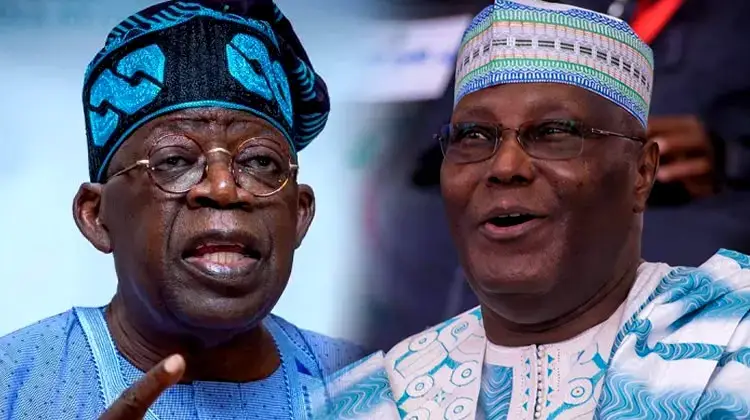
Against the foregoing backdrop, it is apt to confess at this juncture that the inspiration to express this view came while reading the full text of President Bola Ahmed Tinubu’s speech on #EndBadGovernance Protests. Without any scintilla of hyperbole, I was jolted when I got to paragraph 26 of the speech where the president stated, “I signed the National Minimum Wage into law last week, and the lowest-earning workers will now earn at least N70, 000 a month”. At that point, I subconsciously asked myself, “Does Mr. President think that all employers in the private sector would implement the minimum wage for him to have said in his speech, ‘The lowest-earning workers will now earn at least N70, 000 a month?” The reason for asking the foregoing question cannot be farfetched as not a few private organizations in both the service and manufacturing sector lack the financial capacity to pay the newly approved minimum wage. For instance, in the sector where this writer works, most workers’ basic salaries and allowances put together fall below the minimum wage benchmark of N70, 000.00. Not only that, a huge number of employers in the sector are owing their workers in arrears, and they cannot be blamed because the business environment in which they thrive has for decades remained unfriendly.
Without a doubt, the foregoing stark reality is the reason why this writer is worried that the President, from the perspective of him signing the minimum wage, which he seemingly flaunted in his speech leaves much to be desired, particularly as a wide spectrum of Nigeria’s working population is in the private sector.
In a nation as diverse and dynamic as Nigeria, ensuring equity and inclusivity in welfare policies is not just a matter of social justice; it is a fundamental requirement for sustainable development. As the federal government grapples with the challenges posed by economic hardships, it must prioritize fairness and transparency to bridge the gap between the working population and government workers.
While equality aims for equal resources for all, equity recognizes that individuals face different obstacles. It acknowledges disparities and tailors support accordingly. In the context of welfare, equity means addressing the unique needs of various groups, ensuring that no one is left behind.
In a similar vein, inclusion refers to intentional efforts to allow diverse people with different identities to fully participate in all aspects of an organization. In our case, it means involving both government workers and the broader working population in policy decisions and resource allocation.
Again, government workers often receive priority when it comes to salary adjustments. While this is essential for their well-being, it should not overshadow the struggles faced by the working class. A fair approach would involve regular reviews of minimum wage and benefits for all, regardless of sector.
Also, the recent sale of a bag of rice at a relatively affordable price to government workers raises concerns. In times of hunger as all Nigerians are now, equitable distribution of relief materials is crucial. The working population, too, deserves access to affordable essentials.
Unfortunately, the federal government has concluded plans to sell a 50kg bag of rice at N40, 000 to public servants with a view to alleviating the food crisis in the nation and its effects on Nigerians.
This was disclosed in a letter from the Federal Ministry of Special Duties and Inter-governmental Affairs, which was signed by the Director of Human Resources of the Ministry, JaiyesimiAbimbola.
The letter said all interested staff members were to complete a Google form on the OHCSF website and submit it to the director of human resources for endorsement, and noted that payment for and the distribution of the rice would be coordinated by designated offices while the chairman, Joint Union Council of the ministry, would serve as an observer for transparency reasons in the course of the exercise. The question at this juncture is, “Why are workers in the private sector and informal sector of the economy not captured in the distribution of the rice which is half the price of the going price of rice across consumer markets?
Given the fact that workers in the private sector and those in the informal sector of the economy are unarguably excluded from the seeming largesse, it is expedient for the government to make the process a Needs-Based Approach. In fact, it is expedient for the government to make the welfare policies meet the specific needs of different groups. For instance, regarding the working population, there is need to focus on job creation, affordable healthcare, and education. In a similar vein, as regard that of government workers, the government should address their unique challenges while ensuring fairness.
Still in a similar vein is there is need to involve civil society organizations, labor unions, and grassroots representatives in policy discussions as their insights can lead to more effective solutions.
For the sake of clarity, equity and inclusivity are not mere buzzwords; they are the bedrock of a prosperous Nigeria. By prioritizing fairness, transparency, and collaboration, the federal government can bridge the divide and create a welfare system that truly serves all its citizens.