
Africa
Illogicality Of Arguing That A Leader Inherited The Hardships Facing The People, by Isaac Asabor

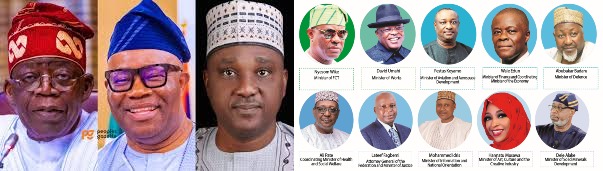
If there is any defense which not a few aides to Nigerian political leaders often tout in defense of any of their underperforming principals, it is the one that is in the similitude of“…these challenges have been with us for many years, my principal inherited the challenges”. The defense is usually touted to absolve their principals from the blame of being accused of worsening the state of the socio-economic situation. Given the foregoing backdrop, one is tempted to ask: “What were the promises made by any political leader who often passes the buck to his or her predecessors?
In fact, in the complex tapestry of governance, leaders often find themselves grappling with inherited problems. Whether it is a struggling economy, social unrest, or infrastructure deficiencies, the argument that a leader merely “inherited” these challenges is both intellectually lazy and an admission of failure.
The reason for the foregoing view cannot be farfetched as there is no denying the fact that when citizens elect a leader, they do so with the expectation that this individual possesses the vision, competence, and determination to address their pressing issues. In fact, the very act of choosing a leader implies a belief that they can steer the ship toward calmer waters. Given the foregoing viewpoint, it is not a misnomer to opine that leaders are not passive recipients of problems, but are active agents of change.
Therefore, to argue that a leader inherited challenges is to sidestep accountability. It is akin to a surgeon blaming the patient for having a difficult-to-remove tumor. The leader’s role is not to passively accept the status quo but to actively dismantle obstacles and pave the way for progress.
Bluntly put, leadership is not a ceremonial position. It is a weighty responsibility. When citizens cast their votes, they invest trust in the leader’s ability to transform their lives. Therefore, to claim that challenges were inherited from any given predecessor, say president, governor or minister, is to undermine this trust. After all, leaders are not chosen to be passive bystanders; they are entrusted with the power to effect change.
In fact, effective leaders do not dwell on the past; they focus on solutions. Rather than lamenting the challenges they have inherited, they roll up their sleeves and tackle them head-on. They seek innovative strategies, engage experts, and rally their constituents toward progress.
At this juncture, it is expedient to urge our leaders and their followers coupled with their aides who are always on the defensive, and often argue that their principals inherited the challenges which Nigerians are facing to refrain from making such self-justifying argument as it is unarguably puerile and illogical.
Without intention of calumniating anyone in this context, it would be pragmatic for such childish argument to be discarded as it is unarguably a fallacy that leaders merely inherit problems. Instead, let us demand proactive leadership that transcends the past. Our societies deserve leaders who rise above excuses and embrace the mantle of change. Therefore, the next time you hear such argument, either from a political leader or his aides or followers, pooh-pooh it by saying that leadership is about forging solutions, not dwelling on problems. Remind them that leaders are not heirs, that they are architects of our collective destiny.
In fact, in the annals of history, leaders are etched into the collective memory, not merely for their titles or positions, but for the impact they leave behind. This is as challenges are the crucible in which leadership is tested, and it is during these trying times that true leaders emerge. Whether navigating economic crises, political upheavals, or social transformations, leaders must rise above personal interests and prioritize the welfare of their people. Their decisions echo through time, shaping the destiny of nations. Therefore, to secure a place in the pages of posterity, leaders must lead with integrity, empathy, and a vision that transcends their tenure. Only then can they inscribe their names in the enduring narrative of progress.
At this juncture, it is expedient to remind Nigerian political leaders that throughout Africa’s history that several remarkable leaders have left indelible marks on the continent.
For instance, Dr. Nelson Mandela, affectionately known as “Madiba,” fought against apartheid in South Africa and became the country’s first black president. His commitment to reconciliation and peace earned him the Nobel Peace Prize.
In a similar vein, Haile Selassie, the Ethiopian ruler and emperor from 1930 to 1974, championed education, social justice, and security. His legacy endures as one of Africa’s greatest sons.
Still in a similar vein, Dr. Kwame Nkrumah, as Ghana’s first prime minister, and later president, played a pivotal role in liberating Ghana from colonial rule in 1957. He also organized the first conference of independent African states, leaving an indelible mark on the continent.
In Nigeria, General Murtala Muhammed, who briefly held the position of Nigeria’s head of state from 1975 to 1976, is fondly remembered as a remarkable leader.
His courage, determination, and fearlessness, coupled with a deep sense of humility and discipline, endeared him to the nation. Murtala’s name graces significant Nigerian infrastructure, including the international airport in Lagos, a testament to his visionary leadership. In the corridors of time, he remains a beacon, a leader whose impact transcends the brevity of his rule.
In a similar vein, Umaru Musa Yar’Adua, who served as Nigeria’s president from 2007 to 2010, is fondly remembered as a good leader. Yar’Adua hailed from an elite Fulani family and was known for his humility, integrity, and humanity. As a state governor, he prioritized socioeconomic development, particularly in education and health sectors. His financial prudence led to paying off inherited state debt and accumulating a $50 million surplus in the treasury. Despite his short tenure, Yar’Adua left a lasting legacy of leadership and vision. In the heart’s quiet chambers, he resides, a beacon of wisdom and steadfastness, guiding souls with pure essence.
Without a doubt, these visionary leaders exemplify courage, resilience, and a commitment to progress, etching their names in the annals of African history.
Against the backdrop of the foregoing view, it is not a misnomer to opine that a leader inherited the hardships facing the people is unarguably illogical.

























You must be logged in to post a comment Login