Forgotten Dairies
VeryDarkMan, SAN: If Law Is About Advocacy, What Exactly Is the NBA Afraid Of? -By Vitus Ozoke, PhD
Law cannot simultaneously proclaim itself an instrument of social justice and then recoil from the rough voices that emerge from society’s conflicts. Sometimes justice arrives in a wig. Sometimes it arrives in jeans and a T-shirt. Sometimes it speaks impeccable courtroom English. Sometimes it speaks Pidgin into a smartphone. Sometimes it files a fundamental-rights enforcement action. Sometimes it turns on a camera when someone with institutional power would desperately prefer it remain off.

A few days ago, my good friend and President of the Nigerian Bar Association, Chief Afam Osigwe, SAN, posted a famous line on Facebook: “I disapprove of what you say, but I will defend to the death your right to say it.” He correctly attributed the line to Evelyn Beatrice Hall, who wrote under the pseudonym Stephen G. Tallentyre.
I responded almost instinctively: “I’ll not defend to death your ‘right’ to defamatory or hate speech. I’ll not defend to death your ‘right’ to incite violence. I won’t, because you don’t have the ‘right’ to do those things. In fact, you have a duty not to.”
I stand by every word of that response. Freedom of expression is fundamental, but it is not a mystical incantation that turns every utterance into protected speech. Defamation does not become virtuous simply because someone calls it “free speech”. Incitement does not become liberty because it comes from a microphone. Threats, unlawful intimidation, and other legally proscribed expressions do not gain constitutional sanctity simply because someone invokes freedom. Rights exist within a legal order. So do duties.
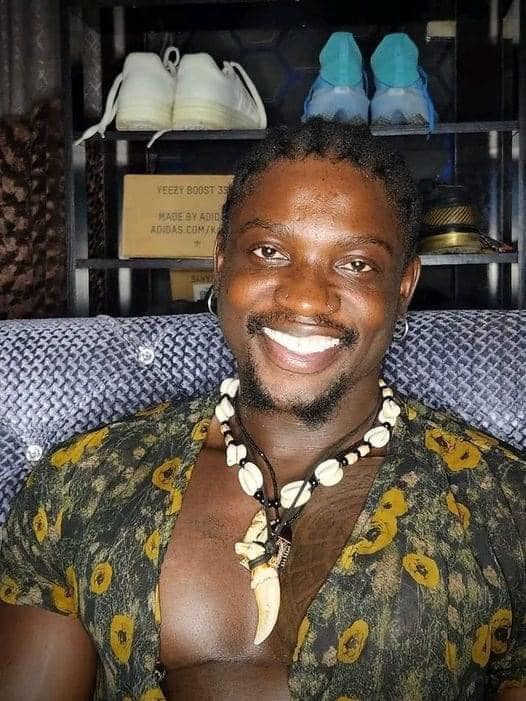
But I later discovered the context of Chief Osigwe’s post, and it changed the conversation. The NBA President was apparently responding to the controversy sparked by the decision to invite Martins Vincent Otse — popularly known as VeryDarkMan, or VDM — to speak at the 66th Annual General Conference of the Nigerian Bar Association in Port Harcourt.
Suddenly, I found myself firmly on Afam Osigwe’s side. Not because VDM has a right to speak at an NBA conference. Nobody has such a right. But because the NBA has every right — and, I would argue, every intellectual reason — to hear him.
Indeed, I will go even further. If the Nigerian Bar Association has room on its conference platforms for politicians, governors, ministers, businesspeople, traditional rulers, and other members of Nigeria’s governing establishment, then it certainly has room for VeryDarkMan.
And perhaps the controversy tells us less about VDM than about how narrowly some lawyers have come to understand the law. What is the “Advocate” in Senior Advocate of Nigeria? There is something deliciously ironic about lawyers objecting that an advocate was invited to address them because he is not a lawyer.
The highest professional distinction a Nigerian legal practitioner on the advocacy side can aspire to is that of Senior Advocate of Nigeria. Not Senior Memorizer of Nigerian Law. Not Senior Custodian of Judicial Precedents. Not Senior Wearer of Wig and Gown. Senior Advocate. There is a word sitting there in plain sight that perhaps deserves considerably more attention: Advocate.
What exactly is advocacy? At its deepest level, advocacy is the disciplined act of giving voice to a cause, a grievance, an injustice, a person, or a community whose interests require articulation before power.
The courtroom is one theater of advocacy. It is not the only one. A lawyer standing before a judge and arguing that the police unlawfully detained his client is practicing advocacy. But so is the citizen who investigates police extortion, identifies the victim, brings public attention to the abuse, and forces the authorities to respond.
One speaks through pleadings. The other speaks through a camera. One cites the ratio decidendi. The other presents the human being upon whose bruised back the ratio may eventually have to operate. Both can serve justice. This does not make them professionally identical. It makes their purposes compatible.
The mistake is to confuse the professional practice of law, which properly requires training, qualification, and regulation, with the much broader human enterprise of advocacy for justice. Lawyers have no monopoly on the latter.
Law that never leaves the books is merely literature. Law is not ultimately about accumulating statutes, precedents, principles, and theories. Those things matter enormously. Legal education matters. Professional competence matters. Procedure matters. Evidentiary rules matter. But they are means. Justice is the end.
The magnificent achievement of law is not that a lawyer can recite constitutional provisions from memory. It is that constitutional principles can restrain the policeman holding a rifle over a frightened citizen. The triumph of human-rights law is not that professors can write elegant articles about human dignity. It is that the poor woman in a forgotten village possesses dignity the state is compelled to respect.
Law becomes socially meaningful when doctrine becomes protection; when principle becomes practice; when rights become realities; when injustice carries consequences. A Constitution beautifully bound and magnificently interpreted in seminars but routinely violated in police stations is not an achievement of civilization. It is decoration.
This is why the lawyer must sometimes leave the library. This is why the Bar must sometimes listen to voices beyond the Bar. And this is why inviting VDM to discuss insecurity was not an intellectual desecration of the NBA conference. It was potentially an encounter between law as an institution and injustice as lived experience.
VDM himself apparently understood the distinction better than some of his lawyer-critics. He did not arrive in Port Harcourt pretending to be a constitutional scholar. He reportedly told the audience, in substance, that he had not come to teach lawyers law; he had come to share his experience. Precisely. What serious intellectual community fears experience?
Moses did not hold an LL.B. If advocacy required a law degree, much of the Bible would need to be rewritten. Moses did not attend law school before entering Pharaoh’s palace and demanding the liberation of an oppressed people. “Let my people go” remains one of history’s most powerful statements of political advocacy.
Nathan did not first obtain professional certification before confronting King David about his abuse of power and the death of Uriah. He walked before the king, told him the parable of the rich man who stole the poor man’s only lamb, allowed David to condemn the injustice — and then delivered one of the most devastating indictments of political power ever spoken: “You are the man.” That was advocacy.
Elijah did not seek accreditation before confronting Ahab over Naboth’s vineyard. A powerful king wanted a poor man’s land. Naboth refused. Jezebel engineered his destruction. Elijah confronted the throne. That was human rights advocacy thousands of years before anyone coined the term “human rights.”
Amos was no establishment intellectual. He famously identified himself as neither a prophet nor a prophet’s son, but as a herdsman and dresser of sycamore trees. Yet he became one of Scripture’s fiercest voices against exploitation, corruption, and injustice. “Let justice roll down like waters” did not come from a Senior Advocate. It came from a herdsman.
Micah denounced rulers who corrupted justice. Isaiah thundered against oppression and demanded justice for the vulnerable. Jeremiah confronted kings, priests, and the entire political establishment, even though silence would have been considerably safer. John the Baptist confronted Herod. It cost him his head.
And then there was Jesus. No LL.B. No BL. No wig. No gown. No chambers. No SAN. Yet consider the architecture of his public ministry: challenging entrenched power, defending society’s outcasts, exposing religious hypocrisy, confronting exploitative institutions, insisting on human dignity, and speaking for people whom respectable society preferred not to see.
When an adulterous woman was dragged before a crowd eager to weaponize the law against her, Jesus transformed the proceedings into an interrogation of the accusers themselves. When commercial interests overtook the Temple’s sacred purpose, he confronted them. When legalism became an instrument for crushing people, he reminded its custodians that institutions exist for humanity — humanity does not exist for institutions.
Whatever else Christianity teaches about Jesus, no one can seriously read the Gospels without encountering an extraordinary advocate for the marginalized. Advocacy predates the legal profession. Justice is older than the NBA. Even the Common Law was not born in a law school.
There is another historical irony here. Some of the people who behave as though legal wisdom begins with possession of a university law degree might want to examine the history of the common-law tradition Nigeria inherited.
For centuries, English lawyers were not primarily trained by university law faculties. They were trained through the Inns of Court, apprenticeship, observation, reading, moots, and immersion in actual legal practice.
Students watched proceedings in Westminster Hall. They participated in elaborate moots. They listened to readings. They studied under experienced practitioners. The Inns became so central to English legal education that they were sometimes called England’s “Third University.”
University instruction in English common law arrived remarkably late. William Blackstone’s famous Oxford lectures in the eighteenth century marked an important stage in the introduction of systematic English common-law instruction into the university.
Think about that.
The common law had judges, barristers, legal scholars, precedents, and sophisticated jurisprudence long before the modern university law degree became the professional badge we now take for granted.
Sir Thomas Littleton, one of the foundational figures of English property law, received his legal training through the Inns of Court tradition. His Tenures became one of the great texts of English law.
Sir Edward Coke — Attorney General, Chief Justice, and one of the towering figures in common-law history — attended Cambridge but left without earning a degree. His legal training came through Clifford’s Inn and the Inner Temple.
Sir Matthew Hale, another giant of English jurisprudence and later Lord Chief Justice, attended Oxford but left without a degree before entering Lincoln’s Inn and immersing himself in the study and practice of law.
Sir John Fortescue, Chief Justice of the King’s Bench and author of one of the important early works on English law, belonged to a world in which professional formation through the Inns and prolonged practical study mattered more than possession of anything resembling today’s LL.B.
None of this means education is unnecessary. It means we should understand what education actually is. A university degree is one way to certify knowledge, not the metaphysical source of knowledge itself.
The United States provides an even more startling example. There is no constitutional requirement that a Justice of the United States Supreme Court hold a law degree. There is no constitutional requirement that a Justice have attended law school. Indeed, the Constitution specifies no educational qualification for the office at all.
The President nominates; the Senate confirms. Political convention and institutional prudence have naturally ensured that nominees have formidable legal backgrounds. But that is convention and practice, not a constitutional degree requirement.
American legal history includes Supreme Court Justices who learned law through the older method of “reading law” under experienced practitioners rather than graduating from a modern law school. James F. Byrnes, appointed to the Supreme Court in 1941, did not graduate from high school, let alone law school. He educated himself in law and was admitted to the Bar. Consider the institutional irony. Under the United States Constitution, a person without an LL.B. or JD is not legally disqualified from serving on the highest court in the country.
Yet some Nigerian lawyers apparently consider it intellectually scandalous for a citizen activist without a law degree to sit on a conference panel and tell lawyers what he has witnessed in communities ravaged by insecurity.
Come on. The NBA invited VDM to discuss insecurity — not the rule against perpetuities. That point is particularly important. VDM was reportedly invited to participate in a panel titled “Known Gunmen or Unknown Gunmen.” He was discussing insecurity. He has traveled to affected communities and has spoken publicly about killings, kidnapping, police conduct, and failures of state institutions. Whether one agrees with his methods or not, these are the issues around which he has built substantial public advocacy.
So, what precisely was the problem? Was he invited to lecture Senior Advocates on appellate procedure? No. Was he asked to explain the jurisprudence of locus standi? No. Was he delivering a masterclass on constitutional interpretation? No. VDM was invited to a conversation about a social crisis with which he has directly engaged. That is precisely what serious conferences do.
A medical conference on domestic violence may invite a survivor. A criminology conference may invite a former prisoner. A conference on war may invite a refugee. A conference on policing may invite someone repeatedly subjected to police abuse. Their lack of professional credentials does not diminish the conversation. Their experience enriches it. Expertise is not always academic. Sometimes expertise bears scars.
This brings me to the hypocrisy at the center of this controversy. VeryDarkMan is controversial. Certainly. He is abrasive. Obviously. His methods can be confrontational, and his language can be coarse. He has faced legal controversies and accusations of his own. Nobody is required to approve of everything he says, every allegation he makes, or every method he employs. Neither am I. But disagreement is not disqualification, and controversy is certainly not corruption.
I am unaware of any credible evidence that VDM has stolen public funds or looted the Nigerian treasury. What he has indisputably become known for is something quite different: confronting institutions, public officials, celebrities, and powerful interests; publicizing allegations of wrongdoing; mobilizing public attention around grievances; and repeatedly inserting himself into controversies involving accountability.
One may criticize his style. One may challenge his facts. One may sue him for defamation. One may condemn him when he crosses legitimate legal or ethical boundaries. That is how a society governed by law functions.
But here is the question the Nigerian Bar must answer: Has the NBA ever given its platforms to politicians carrying infinitely heavier moral baggage? Has the Bar never hosted members of a political establishment associated with corruption allegations? Has no politician under investigation ever walked into an NBA event? Have public officials whose administrations have been accused of spectacular corruption and abuses never been welcomed, applauded, introduced with elaborate honorifics, and seated in the front row? If such people are sufficiently respectable for the Nigerian Bar, then spare me the outrage over VeryDarkMan.
We cannot develop a morality in which a politician arrives with a convoy, agbada, and protocol officers and suddenly becomes respectable, while the troublesome citizen shouting about the consequences of governance is deemed too uncouth for the room. That is not professional ethics. That is class prejudice wearing a wig.
Now, let me deliberately provoke my learned friends. Perhaps Afam Osigwe did not go far enough. Perhaps the NBA should have awarded VeryDarkMan an honorary SAN (Senior Advocate of Nigeria). VDM, SAN. I can already hear chairs falling over. Relax, learned colleagues.
Under the current legal framework, the rank of Senior Advocate of Nigeria is a professional privilege administered by the Legal Practitioners’ Privileges Committee. It is not an honorary decoration the NBA President can pin on a non-lawyer. I know. That is precisely why I use the proposition provocatively.
Perhaps Nigeria should someday create an honorary category recognizing exceptional lifetime advocacy for justice, accountability, civil liberties, and social reform — clearly distinguished from the professional rank that confers the privileges of the Inner Bar. There is something intellectually revealing about a legal profession that understands “advocacy” almost exclusively as what happens when a person in a wig says, “May it please My Lord.”
Some of the most consequential advocates in human history never appeared before a judge. Martin Luther King Jr. was not a lawyer. Nelson Mandela was, but much of the advocacy that made him Mandela occurred far beyond conventional legal practice. Frederick Douglass was not a lawyer. Rosa Parks was not a lawyer. Mahatma Gandhi was a lawyer, but history remembers him not for the elegance of his pleadings but for transforming advocacy into mass moral action. The legal profession should celebrate those who expand the constituency of justice, not merely those who master its vocabulary.
So yes, let the phrase disturb us: VeryDarkMan, SAN. Not because VDM is equivalent to a Senior Advocate under existing Nigerian law. He plainly is not. But because the absurdity we initially hear in the phrase may reveal an absurdity within ourselves. We have allowed the professionalization of advocacy to obscure its moral meaning.
And so I return to where this essay began.
Chief Afam Osigwe wrote: “I disapprove of what you say, but I will defend to the death your right to say it.” My response remains: No, I will not defend your nonexistent “right” to defame another person. I will not defend a supposed “right” to incite violence. I will not defend threats masquerading as opinion. Freedom of expression does not abolish responsibility for expression. Now that I understand the context in which Afam Osigwe deployed Evelyn Beatrice Hall’s famous formulation, I understand his larger point — and on that point, I stand with him.
The Nigerian Bar Association need not agree with VeryDarkMan to hear him. It need not endorse him to invite him. It need not certify every utterance to acknowledge the social significance of his advocacy. Indeed, the real test of intellectual openness rarely lies in whether we provide microphones to people who already speak our language, wear our clothes, possess our credentials, and share our manners. The test comes when the person at the microphone makes respectable people uncomfortable.
Law cannot simultaneously proclaim itself an instrument of social justice and then recoil from the rough voices that emerge from society’s conflicts. Sometimes justice arrives in a wig. Sometimes it arrives in jeans and a T-shirt. Sometimes it speaks impeccable courtroom English. Sometimes it speaks Pidgin into a smartphone. Sometimes it files a fundamental-rights enforcement action. Sometimes it turns on a camera when someone with institutional power would desperately prefer it remain off.
The question for the legal profession should not always be: “Where is your law degree?” Sometimes the more important questions are: What injustice did you expose? Whose voice did you amplify? What power did you challenge? Whose rights did you defend when defending them was inconvenient?
Before there were lawyers, there were advocates. Before there were law schools, there was justice. Before there were Senior Advocates of Nigeria, there were people courageous enough to stand before kings and say: “You are the man.”
And perhaps that is the part of “advocacy” the Nigerian Bar must never become too learned to grasp.
Dr. Vitus Ozoke is a lawyer, human rights activist, and public affairs analyst based in the United States. He writes on politics, governance, and the moral costs of leadership failure in Africa.