Africa
What a “Live History” Textbook That Excludes Igbos Says About Nigeria -By Jeff Okoroafor
An op-ed on Nigeria’s “Live History” textbook controversy and what the exclusion of Igbos from educational content reveals about systemic bias and national unity.

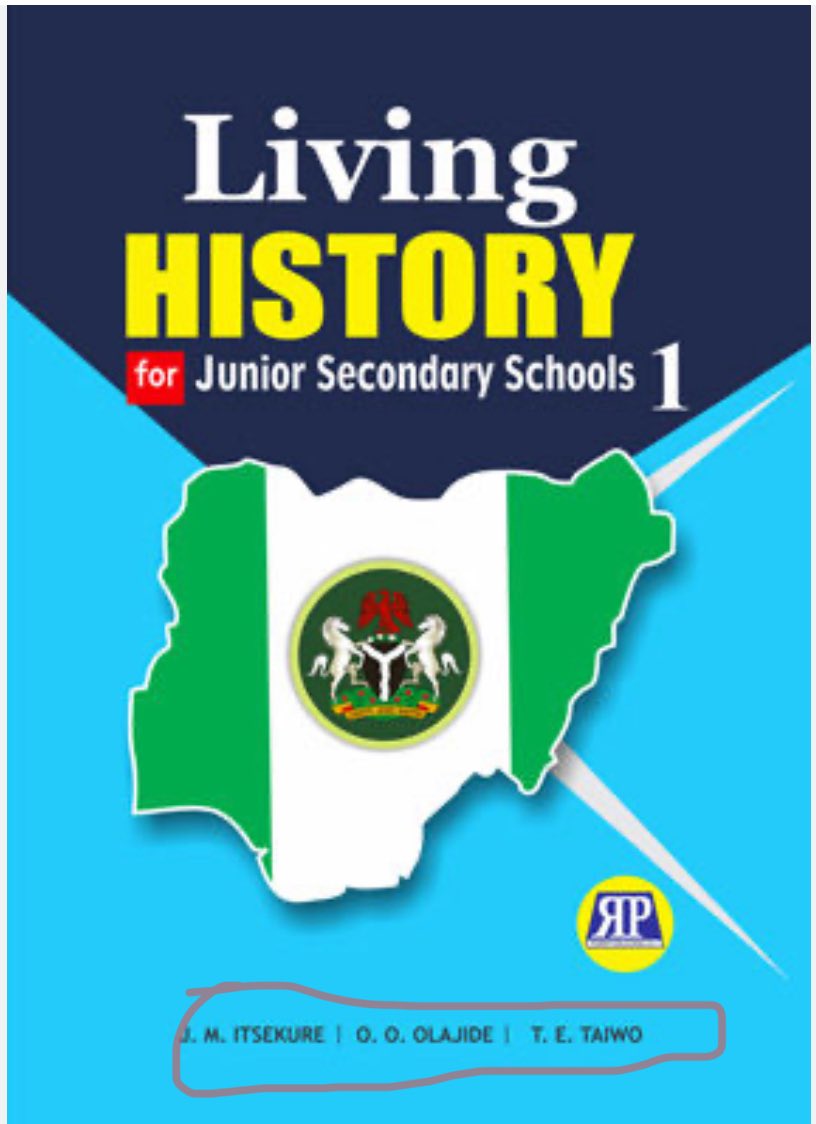
The recent controversy over a school textbook promoting falsehoods and biased narratives should alarm every Nigerian who values education, fairness, and national unity. Instead of investigating which schools are using this material and enforcing appropriate sanctions—including possible bans on the book and accountability for the author and publisher—the Federal Government issued a superficial press release that barely scratches the surface of the problem.
Books do not fall from the sky. They are written, approved, published, and distributed within identifiable systems. This raises urgent questions: Who authored this textbook? Who approved it for classroom use? Which institutions are teaching it? And why are the authors and publishers shielded from accountability despite promoting dishonesty and narratives that divide the nation? In serious academic systems around the world, intellectual dishonesty is a grave offence. In Nigeria, however, such behavior appears largely unchecked, creating fertile ground for misinformation to flourish in schools.
This issue is more than a question of academic integrity; it exemplifies a broader, longstanding pattern of marginalization against the Igbo people of the South-East and South-South. Historically, Igbos have faced social, economic, and political exclusion in Nigeria. From deliberate underrepresentation in federal appointments and security agencies to the persistent political marginalization that effectively bars Igbos from the presidency, the evidence is clear: structural mechanisms exist that consistently sideline one of Nigeria’s largest and most industrious ethnic groups.
Consider political exclusion: Since the end of the Biafran War, no Igbo has occupied the presidency. Public discourse, in some quarters, suggests that Igbos “should not” aspire to the nation’s highest office. This unspoken rule undermines Nigeria’s constitutional principle of equality and denies a major ethnic group its rightful place in governance. Even in key ministerial and civil service appointments, the Igbo presence is often tokenistic rather than substantive.
The textbook controversy fits within this broader context. When educational materials propagate biased narratives that distort history, demean a particular ethnic group, or glorify others at the expense of the Igbos, the government is not simply failing to educate students accurately—it is actively reinforcing structural prejudice. Such materials influence young minds at formative stages, shaping perceptions that can perpetuate ethnic stereotyping and bias for generations.
This is not an isolated incident. Nigerian history and contemporary society are replete with examples of systemic marginalization of the Igbos. After the Biafran War (1967–1970), Igbos were excluded from many economic opportunities, their businesses were targeted during the “Nigerianization” policies of the 1970s, and political representation at both federal and state levels has often been limited. In the decades since, government policies have repeatedly sidelined Igbo voices in national decision-making processes, while media and educational narratives frequently underrepresent their contributions to Nigeria’s development.
The government’s inaction on the current textbook controversy is especially troubling given that schools are supposed to be spaces of critical thinking, truth, and inclusion. Education should promote national cohesion, not amplify historical distortions or ethnic bias. Yet by issuing a symbolic press release that avoids naming the book, the author, the publisher, or the schools involved, the government signals that such issues can be ignored without consequence. This passive approach only emboldens those who wish to spread divisive narratives.
Moreover, the apparent tolerance of materials hostile to the Igbo identity undermines Nigeria’s broader goals of national unity and social justice. Ethnic bias—whether subtle or overt—cannot be normalized in schools, media, or governance. When institutions fail to correct these biases, they send a dangerous message: some groups’ dignity is expendable, while others’ narratives dominate unquestioned.
This extends beyond education. The exclusion of Igbos from key national positions—whether the presidency, senior civil service roles, or top security appointments—reinforces a culture of selective marginalization. Coupled with biased narratives in textbooks and media, these structural inequities perpetuate stereotypes and encourage societal indifference to discrimination. It is no exaggeration to say that such policies and practices threaten the very idea of equality upon which Nigeria is supposed to be founded.
It is therefore imperative that the Nigerian government take decisive action. Authorities must:
- Investigate which schools are using this textbook, hold authors and publishers accountable, and implement sanctions where necessary.
- Ban materials that promote dishonesty, hate, or ethnic bias, ensuring that curricula reflect historical accuracy, inclusivity, and fairness.
- Reassess policies on educational approval, ensuring that every material adopted for schools undergoes rigorous review to prevent misinformation and bias.
- Promote systemic inclusion of historically marginalized groups, particularly the Igbos, in governance, public service, and educational leadership.
Nigeria cannot claim unity while tolerating selective outrage or institutional indifference to hate-driven narratives. Silence, deflection, and half-measures in the face of ethnic bias are not neutrality—they are complicity. The state must recognize that education shapes the future of the nation, and allowing distorted narratives to proliferate undermines both the integrity of the educational system and the possibility of a cohesive society.
Protecting our children, safeguarding education, and affirming the rights of historically marginalized groups—especially the Igbos—is not optional. It is a national imperative. Anything less risks deepening resentment, perpetuating inequality, and eroding the foundation of Nigeria as a united country.
If Nigeria is serious about nation-building, it must act decisively: enforce accountability, ensure fairness in education, and confront systemic bias wherever it exists. Only then can all Nigerians, regardless of ethnicity, feel secure, valued, and equally represented in the nation’s story.

Jeff Okoroafor
Jeff Okoroafor is a social accountability advocate and a political commentator focused on governance, accountability, and social justice in West Africa.