Africa
When Power Strikes Back: How Nigeria’s Elite Weaponize Media Against Women -By Jeff Okoroafor
The time for silence is over. The time for justice is now. Nigeria must decide whether it will remain a society where powerful men can prey on women with impunity, or whether we will finally say: enough.

A 2023 study by the Centre for Democracy and Development (CDD) found that Nigerian female politicians endure three times more online abuse than men, with attacks orchestrated by troll networks tied to political actors. The smear campaigns follow a predictable script: sexualized slander like doctored images of female lawmakers, fake scandals such as the fabricated corruption claims against Senator Biodun Olujimi in 2020, and religious incitement as seen in the lynching of Deborah Yakubu after social media vilification.
These aren’t isolated incidents—they’re tactics. UN Women reports that 73% of Nigerian women in politics face character assassination, with media outlets serving as megaphones for elite agendas.
Investigations by Premium Times and Reuters Institute reveal that many Nigerian media houses are directly or covertly owned by politicians. The Nigerian Observer, linked to Rotimi Amaechi, has been accused of spiking critical reporting. Meanwhile, blogs like Opera News run algorithmically amplified hit pieces, monetizing misogyny.
A Stanford Internet Observatory report exposed Nigerian troll farms paid to trend hashtags like #AishaYesufuHustler—a coordinated effort to discredit the activist. Mainstream outlets often “both-sides” issues like gender-based violence, granting legitimacy to abusers.
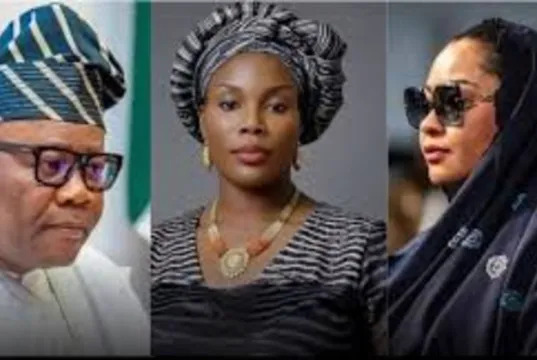
The moment Senator Natasha Akpoti-Uduaghan made her sexual harassment allegations against Senate President Godswill Akpabio, Nigeria witnessed not just another scandal, but the full machinery of political oppression spring into action. What has unfolded since is a damning exposé of how Nigeria’s ruling class protects its own – through institutional complicity, media manipulation, and outright character assassination.
At the heart of this scandal lies an uncomfortable truth: when a Nigerian woman accuses a powerful man of sexual misconduct, she isn’t just fighting her accuser. She’s battling an entire system designed to protect predators and destroy victims. The coordinated attack on Akpoti-Uduaghan proves this beyond doubt.
The facts are clear and damning. Natasha Akpoti-Uduaghan provided a detailed account of Akpabio’s alleged sexual advances. Rather than triggering an investigation, her courage was met with the standard Nigerian elite’s playbook for handling such allegations. First came Akpabio’s arrogant dismissal, labeling serious sexual misconduct claims as “frivolous.” Then followed the institutional betrayal – a Senate that can spend months probing minor infractions but suddenly develops collective amnesia when its own President stands accused.
But the most disgusting chapter in this sordid affair has been the media hit job orchestrated through Sandra Duru and executed by compromised journalists like Maazi Obinna Oparaku Akuwudike. The emergence of Duru’s counter-allegations wasn’t just suspicious – it bore all the hallmarks of a paid smear campaign. Here was a previously unknown individual with no digital footprint, no professional history, and no corroborating witnesses suddenly making fantastical claims against Akpoti-Uduaghan.
Investigative findings now confirm what many suspected: journalist Maazi Obinna Oparaku Akuwudike was financially induced to amplify Duru’s fabrications. This wasn’t journalism – it was political prostitution. Akuwudike, who parades as a media activist, betrayed the most basic ethics of his profession for blood money. The timing, the lack of evidence, and the financial trail all point to a coordinated effort to destroy Senator Natasha Akpoti-Uduaghan’s credibility.
Why does this machinery keep running? The answer lies in profit and power. Clickbait smears drive revenue—Linda Ikeji’s blog once monetized rumors about a female CEO’s divorce. Fear also works: women like Moji Rhodes, who exposed Lagos land grabs, face tabloid doxxing to deter others.
While the Nigeria Union of Journalists (NUJ) dismisses “a few bad actors,” Reporters Without Borders ranks Nigeria 120th in press freedom, noting editors are pressured to spike stories.
This case represents Nigeria’s #MeToo moment. We must choose between two paths: either we accept the lie that “both sides” are equally culpable, ignore the documented media conspiracy, and confirm that any woman challenging power will be destroyed; or we treat this as the watershed moment to break Nigeria’s cycle of protecting sexual predator, especially one who’s highly placed.
The path to justice is clear. An independent panel must investigate Akpabio – not the National Assembly’s usual whitewashing exercises. The Nigerian Union of Journalists must sanction Akuwudike and others who took bribes to spread lies. Akpoti-Uduaghan should sue Duru and her sponsors for defamation. Most importantly, the National Assembly must pass the long-stalled Sexual Harassment Bill with real enforcement mechanisms.
This case has exposed Nigeria’s rotten core: a Senate President facing serious allegations, institutions that enable impunity, and journalists who auction their integrity. Akpoti-Uduaghan isn’t just fighting for herself—she’s fighting for every Nigerian woman who fears harassment tomorrow. If investigation into these allegations is not adequately conducted or it’s sabotaged by influence or indifference, if victims are silenced while enablers look away, if evidence is ignored and victims are smeared, then we’re all complicit in a system that protects the powerful.
The time for silence is over. The time for justice is now. Nigeria must decide whether it will remain a society where powerful men can prey on women with impunity, or whether we will finally say: enough.

Jeff Okoroafor
Jeff Okoroafor is a social accountability advocate and a political commentator focused on governance, accountability, and social justice in West Africa.