Africa
When Yeye Pride Blocks Progress: A Psychologist’s Reflection on Nigeria’s CPC Crisis -By Psychologist John Egbeazien Oshodi
The world is not asking Nigeria to be flawless, only to be fair. Emotional maturity must now guide both domestic leadership and foreign engagement. The voices of Bayo Onanuga, Daniel Bwala, Senator Ted Cruz, Representative Riley Moore, and President Bola Ahmed Tinubu will remain part of this cautionary chapter in Nigeria’s political psychology. It is a living lesson on how arrogance can wound a nation—and how humility can heal it.

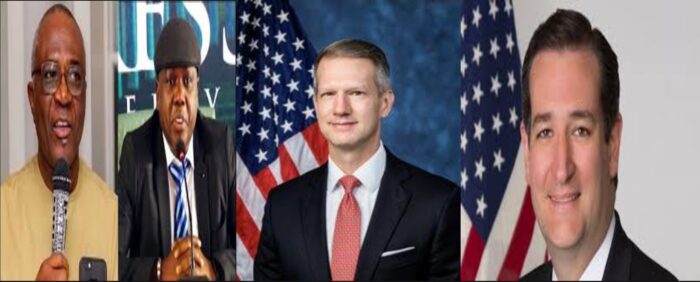
A Nation That Mistook Yeye Pride for Strength
Nigeria’s recent diplomatic embarrassment — its designation by the United States as a “Country of Particular Concern” (CPC) for violations of religious freedom — is not just a political setback. It is a mirror reflecting how yeye pride has replaced sober reflection in our public life. When the world raised concerns about faith-based killings, our leaders heard accusation instead of opportunity. Instead of introspection, we offered yeye talk — loud, defensive, and hollow. In psychology, this is called defensive pride — when ego speaks louder than reason and emotion replaces reflection.
Under President Bola Ahmed Tinubu, two senior media advisers — Mr Bayo Onanuga, Special Adviser on Information and Strategy, and Dr Daniel Bwala, Special Adviser on Policy Communication — became the loudest voices in this emotional storm. Their sharp rebuttals, though perhaps driven by loyalty, turned a chance for diplomacy into an argument of irritation. From the outside, the tone from Abuja did not sound confident; it sounded nervous, as though truth had become an enemy.
This yeye pride has become our national reflex — mistaking volume for vision and anger for authority. The CPC verdict did not begin in Washington; it began in our refusal to listen without shouting. True national strength lies in calm engagement, not noisy defense. When pride overshadows empathy, even truth loses its persuasive power. If Nigeria is to grow beyond this crisis, it must learn to replace yeye pride with emotional intelligence and humility.
The Anatomy of Pride in Power
National pride can be noble when it inspires integrity, but dangerous when it becomes resistance to truth. In psychology, this transition from healthy confidence to rigid defensiveness often follows a predictable path: conviction hardens into denial, and denial slides into projection. The mind protects itself not by accepting reality, but by blaming those who point it out.
This was the pattern Nigeria displayed as U.S. Senator Ted Cruz of Texas sponsored the Nigeria Religious Freedom Accountability Act of 2025 and Representative Riley Moore of West Virginia voiced similar concerns about rising religious tensions. The proper response would have been calm engagement — an invitation to dialogue based on shared democratic values. Instead, the replies that followed from some Nigerian officials were emotionally charged. Senator Cruz was accused of spreading “contrived lies,” while others dismissed him as a man seeking attention. Such language may have comforted domestic audiences, but it alienated the international community that listens for balance and reason.
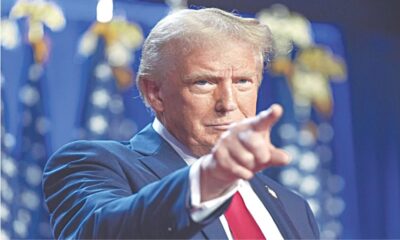
In truth, the criticism from Washington was not an attack; it was a signal — a call for Nigeria to show that it could match strength with reflection, and patriotism with transparency. The CPC designation, later confirmed by President Donald Trump, became not a punishment but a reflection of perception. It revealed how the tone of communication can shape the image of an entire country.
The Denial Reflex: A National Habit
Denial has quietly become one of Nigeria’s oldest political habits — a psychological defense that allows leaders to appear calm while reality burns beneath them. Each crisis is met with the familiar phrase: “We are on top of the situation.” Yet the situation, more often than not, remains painfully unresolved.
The 2022 killing of Deborah Samuel Yakubu, a 200-level Christian student at Shehu Shagari College of Education in Sokoto, stands as one of the clearest symbols of this denial. She was dragged from safety, stoned, and burned alive by her classmates over a blasphemy accusation. Witnesses recalled her final words before the mob descended: “What do you hope to achieve with this?” That question still echoes across a silent nation.
The suspects faced only minor charges — “criminal conspiracy and incitement of public disturbance” — and were defended by 34 lawyers before being acquitted for lack of prosecution. Justice was replaced by excuses, and a human life became an afterthought.
Nigeria’s healing must begin here. The Deborah Samuel case must be reopened — not for foreign approval, but for the country’s moral recovery. Justice delayed has become national trauma. The CPC designation was not born in Washington; it was born in Sokoto, where the state failed to defend a young woman whose only request was fairness. Until that wound is confronted, Nigeria’s diplomatic wounds will not close.
Emotional Insecurity in High Office
Leaders with emotional maturity interpret criticism as a mirror; those ruled by insecurity see it as an attack. This difference defines the distance between humility and hostility in governance.
When senior presidential aides responded to U.S. congressional voices, their tone resembled a campaign argument rather than a diplomatic dialogue. Instead of using facts and empathy to build understanding, the response came in the language of rivalry. As U.S. lawmakers gathered verifiable records of violence, Nigerian officials gathered emotional rebuttals. The contrast spoke louder than words.
Diplomacy is built on tone as much as content. Calmness projects control; noise exposes anxiety. The world heard Nigeria’s anger but missed its empathy. What should have been a measured explanation of context became a defensive outburst that revealed exhaustion at the top. A nation’s tone is the echo of its psychology, and in that echo, Nigeria sounded weary and unsure of itself.
The Cost of Pride: From Isolation to Sanction
Pride, when misplaced, eventually exacts a price. It alienates partners, diminishes sympathy, and invites response. While Abuja’s spokespersons continued their verbal sparring, the U.S. Congress proceeded quietly. On October 31, 2025, former U.S. President Donald J. Trump announced Nigeria’s designation as a “Country of Particular Concern,” publicly commending Senator Ted Cruz for his persistence in addressing religious persecution.
That declaration marked the turning point. What Nigerian officials dismissed as “foreign exaggeration” became institutional reality. The result was not symbolic; it carried weight — the threat of sanctions, limits on arms sales, visa restrictions, and a decline in investor confidence.
Psychologically, this is the reckoning stage of denial — the moment when unacknowledged truth returns with consequences. What could have been a dialogue of equals has become a lesson in humility. Yet even now, Nigeria’s redemption lies not in defending its pride, but in restoring its conscience.
The Abuja Habit That Doesn’t Travel
In Nigeria, when public officials face criticism, the reflex is simple and rehearsed: arrest the activist, silence the journalist, and summon the judge for a quick injunction. The police handle dissent, the courts handle delay, and the media handle distraction. It is the familiar triangle of control — a system where power responds to pressure not with reflection but with repression.
But that routine collapses once you leave Abuja. Washington is not Wuse Zone 2, and Capitol Hill is not a Federal High Court. You cannot detain a U.S. Senator for “defamation,” nor can you instruct the American press to “tone down the story.” You cannot call for a restraining order against a congressional committee.
So when the presidential advisers, Bayo Onanuga and Daniel Bwala, lashed out at Senator Ted Cruz and Representative Riley Moore with their homegrown aggression, they forgot they were not on Nigerian soil. Cruz and Moore did not even reply — not a word of anger, not a hint of irritation. They simply let the system work. While Abuja’s spokesmen were performing outrage for television, Washington was preparing the paperwork for sanctions.
It is a study in contrasts: Abuja uses intimidation to end conversations; Washington uses documentation to end denial.
Healing Through Emotional Intelligence
If arrogance opened the wound, humility must begin the healing. Emotional intelligence in governance means listening before reacting, acknowledging before denying, and empathizing before defending. Nigeria can still repair its diplomatic relationships, but only through honesty and restraint.
Advisers like Onanuga and Bwala should undergo structured retraining in crisis communication and diplomatic etiquette. Government statements must project composure and empathy rather than anger. The tone of leadership should reassure, not provoke. A nation earns credibility when it demonstrates emotional control and moral consistency.
If Nigeria is to grow from this diplomatic and moral mess, these spokespersons—and all others who communicate on behalf of power—must gain from deep, restraint-based counseling. They need guided therapy on impulse control, tone management, and self-regulation under provocation. They must learn that public service requires psychological discipline, not emotional outbursts. Words can wound a nation’s image more deeply than weapons ever could.
Therapeutic Roadmap for Governance
Nigeria now stands at a crossroads that requires therapeutic governance—leadership that heals rather than hides. Three steps are essential.
First, return foreign communication to professionals. Let the Minister of Foreign Affairs speak for the country, not political aides accustomed to campaign combat.
Second, acknowledge past missteps publicly. A government that can admit error earns global respect faster than one that blames the world.
Third, embed empathy into every policy statement. Compassion, not confrontation, is the foundation of credible diplomacy. These lessons remind us that emotional intelligence belongs in governance as much as in therapy.
I do not call for the firing of any official. That is not my place as a psychologist. But one thing is certain: when the U.S. Congress begins to implement sanctions and targeted measures, there will be consequences for bad actors within the system. I cannot predict who those individuals will be, but accountability has a way of finding those who provoke it.
The Ultimate Lesson: Power Without Humility Becomes Madness
History repeatedly shows that arrogance precedes decline. Governments that elevate pride above truth eventually lose both dignity and influence. Nigeria’s CPC humiliation is not merely diplomatic—it is psychological. It exposes what happens when leaders treat criticism as insult and accountability as betrayal.
The world is not asking Nigeria to be flawless, only to be fair. Emotional maturity must now guide both domestic leadership and foreign engagement. The voices of Bayo Onanuga, Daniel Bwala, Senator Ted Cruz, Representative Riley Moore, and President Bola Ahmed Tinubu will remain part of this cautionary chapter in Nigeria’s political psychology. It is a living lesson on how arrogance can wound a nation—and how humility can heal it.
In the end, true national strength is not found in shouting down critics but in calmly correcting one’s course. Arrogance created this crisis; humility can end it.
About the Author
Prof. John Egbeazien Oshodi is an American psychologist and educator specializing in forensic, legal, clinical, cross-cultural psychology, public ethical policy, police, and prison science.
Born in Uromi, Edo State, Nigeria, and the son of a 37-year veteran of the Nigeria Police Force, he has devoted his career to linking psychology with justice, education, and governance. In 2011, he pioneered the introduction of advanced forensic psychology in Nigeria through the National Universities Commission and Nasarawa State University, where he served as Associate Professor of Psychology.
He currently serves as contributing faculty in the Doctorate in Clinical and School Psychology at Nova Southeastern University; teaches in the Doctorate Clinical Psychology, BS Psychology, and BS Tempo Criminal Justice programs at Walden University; and is a virtual professor of Management and Leadership Studies at Weldios University and ISCOM University. He is President and Chief Psychologist at the Oshodi Foundation, Center for Psychological and Forensic Services, United States.
Prof. Oshodi is a Black Republican in the United States but belongs to no party in Nigeria—he stands only for justice. This writer knows no one on this issue but writes solely for the sake of justice, good governance, democracy, and African development. He is the founder of Psychoafricalysis (Psychoafricalytic Psychology)—a culturally grounded framework centering African sociocultural realities, historical consciousness, and future-oriented identity. A prolific scholar, he has authored more than 500 articles, several books, and numerous peer-reviewed works on Africentric psychology, higher education reform, forensic and correctional psychology, African democracy, and decolonized therapeutic models.