
Africa
When You Sit Before Rufai Oseni, Expect Fire, Not Flattery -By Isaac Asabor
Rufai Oseni is not the problem. The real problem is a political culture that still expects journalists to kneel before power. The sooner interviewees stop expecting soft, sentimental questions and start preparing for serious scrutiny, the healthier our democracy will become.

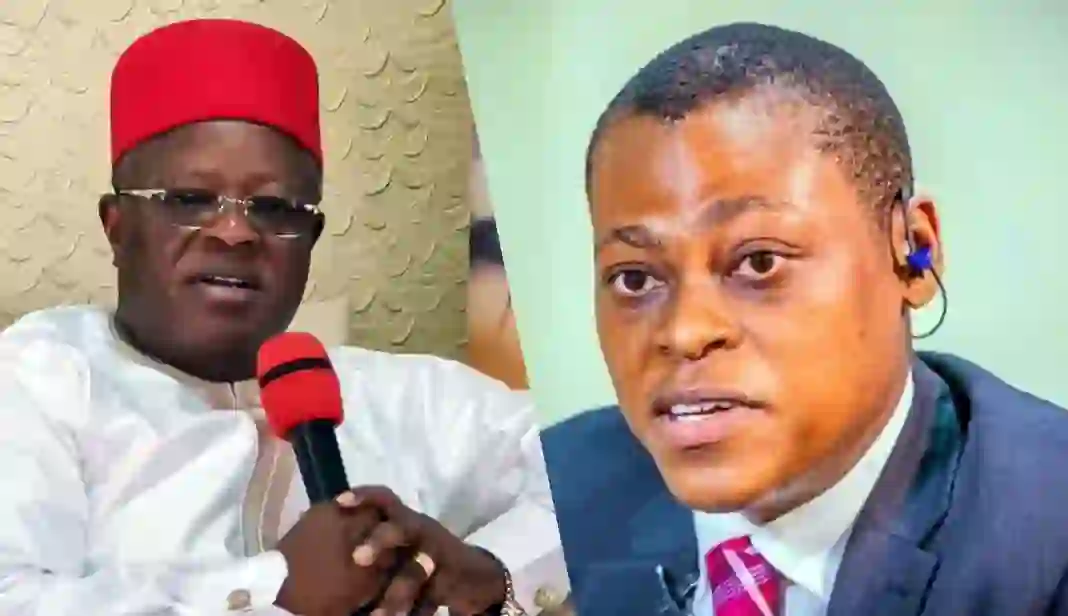
When Minister of Works, Engr. Dave Umahi, clashed with Arise TV’s Rufai Oseni during a live broadcast, many Nigerians were quick to label the encounter a “heated exchange.” But that description misses the real story. What happened was not a clash between arrogance and insolence; it was a collision between power and accountability. Umahi’s outburst was the predictable outcome of a mindset that treats tough journalism as an act of disrespect rather than a professional duty.
The drama unfolded during Arise TV’s Morning Show, where Oseni questioned the Minister about his earlier claim that he had been misrepresented on the Lagos–Calabar Coastal Highway project. Oseni referenced reports that Umahi allegedly complained to President Bola Tinubu about his criticisms. Umahi bristled and fired back: “You are too small for me to report to the President. Stop saying I reported you to the President, you are too small.”
The exchange escalated when Umahi, visibly irritated, flaunted his credentials, declaring himself a “Professor in this field” and dismissing Oseni’s understanding of engineering. “You don’t understand anything. You have no knowledge of what you ask,” the Minister said sharply. Oseni responded in kind: “Minister, it’s alright, keep dignifying yourself, and let the world know who you truly are.”
The video went viral, and once again, the court of public opinion split into two, those who saw Oseni as “disrespectful,” and those who hailed him as a journalist doing his job. But anyone who has followed Oseni’s work knows that he has built his reputation not on sycophancy but on scrutiny. He is not the kind of journalist who begins an interview by asking, “Sir, how are you today?” or “What did you eat for breakfast?” or “How are you coping with stress?”
Such questions may be polite, but they are useless in a country gasping for accountability. A journalist who greets politicians with syrupy sympathy instead of piercing scrutiny is not practicing journalism; he is practicing public relations.
At this juncture, permit this writer throw insight into Oseni’s brand of journalism. Given the foregoing, it is germane to opine that Rufai Oseni represents a rare breed of Nigerian journalist who refuses to sugar-coat questions. He probes, he interrupts when politicians evade, and he insists on direct answers. That makes many of his guests uncomfortable, but discomfort is the price of public accountability. A politician who fears tough questions is like a surgeon afraid of blood; both are in the wrong profession.
In Nigeria, too many interviewers have turned television studios into salons of sycophancy, asking the political class questions that sound more like lullabies than interrogations. When a public official sits before them, the questions come dripping with flattery: “Sir, how do you manage to do so much for the people?” or “You must be under a lot of pressure, how do you cope?”
That culture of praise-singing has done more harm to our democracy than most realize. It has allowed incompetence to go unchallenged and deceit to flourish unexposed. Nigerians are tired of journalists who smile through interviews while the country burns. Oseni, love him or hate him, is one of the few who disrupt that pattern.
With the benefit of hingsight, the Umahi clash was not an isolated case. Umahi is not the first to lose his cool on the Morning Show. In February 2025, presidential aide Daniel Bwala almost walked out of the same studio after Oseni fact-checked his statements about government performance. Before that, Jesutega Onokpasa, of blessed memory, a well-known APC supporter, shouted in frustration during a live debate: “Listen, Rufai! If you want to be a journalist, be a journalist!” That outburst alone said everything; the man was rattled because Oseni refused to play the usual Nigerian game of “smile and nod.”
In another segment, Lere Olayinka, a political aide, also clashed with Oseni and co-anchor Dr. Reuben Abati, accusing them of bias simply because they refused to let him spin propaganda unchecked. There have been several other occasions where politicians stormed out or insulted the host, each one confirming the same truth, Nigerian politicians are allergic to tough questions.
What Oseni does is not new in global journalism. Internationally respected anchors like Christiane Amanpour, Stephen Sackur of BBC’s Hardtalk, and CNN’s Jake Tapper are known for grilling world leaders, cutting through rhetoric, and demanding evidence. But in Nigeria, where political arrogance often thrives on unchallenged narratives, such firmness is often mistaken for hostility.
The real issue is not Oseni’s tone; it is the fragile ego of the Nigerian political elite. Many public officials in this country have not learned to separate personal pride from public responsibility. They come into interviews expecting journalists to worship them, not question them. They treat tough questions as insults instead of opportunities to clarify their positions.
Some even demand that journalists send questions in advance, a practice that undermines spontaneity and shields them from accountability. So, when they meet someone like Oseni, who refuses to play by those rules, they interpret professionalism as provocation.
But journalism, by its nature, is meant to discomfort the comfortable and comfort the afflicted. That is its moral duty. It is not about how warmly a question is phrased, but how truthfully it is pursued. If a public servant cannot handle inquiry, then perhaps they have no business serving the public.
Without a doubt, performance does not exempt accountability. Even Umahi’s defenders, who call him one of Tinubu’s “performing ministers,” must understand that performance does not confer immunity from questions. No one is above scrutiny, not even a so-called “round peg in a round hole.” When public money is being spent on projects like the Lagos–Calabar Coastal Road, the people have the right to ask for transparency, and journalists have the duty to demand it.
The moment a minister sits before the camera, the Nigerian people are metaphorically sitting there too. They want answers, not arrogance. They expect facts, not fury. They are not interested in who is “too small” or “too big”; they are interested in what is true.
As for this writer, the takeaway from this context is that journalists must probe, not pamper. If every interviewer in Nigeria adopted Rufai Oseni’s energy and courage, the political landscape would change dramatically. Public officials would think twice before making false claims. Policies would be debated on evidence, not ego. The public would see truth wrestled out in the open instead of hidden behind a curtain of politeness.
Nigeria does not need more “How are you today?” journalists. It needs more “Why did you do this?” journalists. It does not need another round of “Have you eaten?” interviews. It needs tough, evidence-driven interrogation.
That is what Rufai Oseni embodies; journalism that bites, not journalism that begs. And if that makes politicians uncomfortable, so be it. The truth was never meant to make the powerful comfortable.
Rufai Oseni is not the problem. The real problem is a political culture that still expects journalists to kneel before power. The sooner interviewees stop expecting soft, sentimental questions and start preparing for serious scrutiny, the healthier our democracy will become.
Until then, every time a politician sits before Oseni expecting flattery, they will continue to leave the studio bruised, not because he was rude, but because he did his job.

















You must be logged in to post a comment Login