
Africa
Where Are Jonathan’s Loudest Critics Now Amid Nigeria’s Security Collapse? -By Isaac Asabor
History will judge not only governments but also those who wield influence. The record will show which voices spoke truth consistently and which abandoned principles for convenience. For now, Nigerians are left asking the question that should resonate far beyond nostalgia or political point-scoring: “where are those who screamed the loudest under Jonathan’s tenure when insecurity worsened?” And, more importantly, what are they doing to ensure history does not repeat itself?

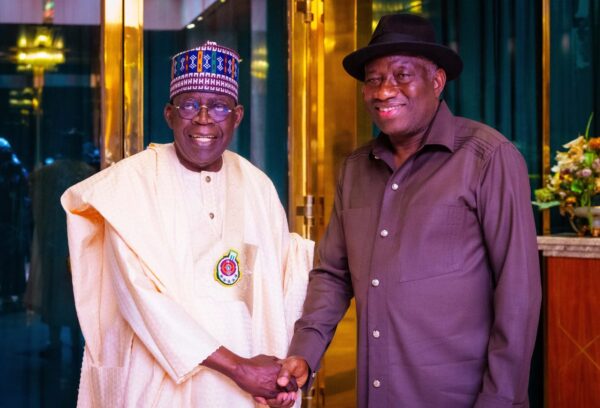
Nigeria is once again under siege. From the North to the South, from bustling cities to remote villages, insecurity has become the defining reality of everyday life. Kidnappings, banditry, terrorist attacks, armed robbery, and violent communal clashes dominate the headlines, creating an atmosphere of fear and helplessness for millions of Nigerians. And yet, amid this chaos, one question stands glaringly obvious: “Where are the loudest critics of former President Goodluck Jonathan now?”
During Jonathan’s tenure, certain political actors, commentators, and civil society voices, and even some notable clergymen in the Christendom, were quick to paint the nation as “ungovernable” under his watch. They screamed into media microphones, wrote scathing opinion pieces, and leveraged every available platform to highlight alleged failings in security and governance. It was a season of relentless critique, often veering into hyperbole, sometimes even bordering on cynicism. “Nigeria is crumbling,” they unanimously warned. “The government is asleep at the wheel.” At the time, these voices were heard, amplified, and even celebrated by segments of the populace eager to blame the administration for every social ill.
Fast forward to today, and the scene is different, but disturbingly familiar. Security challenges are no longer the exception; they are the rule. Kidnapping syndicates operate with audacity, terrorist cells strike with impunity, and communities live in fear of leaving their homes. Yet, a striking silence accompanies this upheaval.
The same individuals who once held up Jonathan’s government as the epitome of incompetence and failure are now largely absent from public discourse on insecurity. Some have retreated to safe political corners; others have aligned themselves with the current government, choosing loyalty, or convenience, over accountability.
This disappearance raises uncomfortable truths about Nigeria’s political culture. For many critics of Jonathan, criticism was never principled; it was performative. It was easier to lambast a government that was not theirs, to assign blame to others, and to score political points without offering constructive solutions. The moment they became stakeholders, or perceived allies of those in power, their outrage evaporated. This pattern of selective engagement is not new in Nigeria; it is part of a broader problem where governance, security, and public welfare become pawns in a game of political expediency.
Consider the metrics. Under Jonathan, Nigeria faced security challenges, yes, but these were largely localized or sectoral, with specific government responses and countermeasures attempted. Today, under successive administrations, insecurity has morphed into a multidimensional crisis affecting every region. Banditry in the Northwest, terrorism in the Northeast, kidnappings in the South, and violent clashes in the Middle Belt are not isolated incidents, they are part of a nationwide breakdown of security architecture. Yet, public debate on these crises remains subdued in certain circles. The irony is stark: those who warned most fiercely about the dangers of insecurity when Jonathan was president are now the quietest witnesses to a much deeper malaise.
The implications are significant. Nigeria’s citizens are left without the critical voices they once relied upon to hold government accountable. Civil society, media commentators, and politicians who wield influence have an ethical obligation to interrogate the state of affairs and demand solutions. When these voices go silent, governance suffers, and the social contract between state and citizen weakens further. It is not enough to critique selectively as national interest demands consistent advocacy, regardless of political, ethnic or religious alignment.
Moreover, this selective outrage undermines public trust. Citizens notice the discrepancy. They see a former critic who once demanded immediate action now offering timid commentary, or worse, remaining silent, as insecurity spirals. This erosion of trust extends beyond individuals to institutions and the political system at large. Nigerians rightly ask: if those who once claimed to “know better” cannot call out current failures, which will? Who will champion accountability when it is inconvenient or politically risky?
It is tempting to dismiss the silence as opportunism. Indeed, for some, aligning with current leadership brings access, security, and influence. Speaking out could jeopardize these benefits. Others may rationalize their quietude by framing the situation as complex or intractable. But complexity is no excuse for muteness. Security is not an abstract concept; it is the lifeline of citizens’ safety, economic activity, and social stability. In any functioning democracy, accountability is non-negotiable, even when the circumstances are challenging.
The absence of these once-vocal critics also exposes a broader flaw in Nigerian political discourse: a culture of “reactionary politics” rather than principled advocacy. Public outrage is often tied to who is in office rather than what is happening on the ground. When a government changes, the narrative shifts, not necessarily because circumstances improve, but because critics recalibrate their positions for relevance or survival. This pattern is corrosive. It creates cycles of blame and inaction, where citizens remain caught between political rhetoric and lived insecurity.
It is worth noting that not all former critics have gone silent. Some continue to provide insightful commentary, calling attention to systemic failures, proposing reforms, and insisting on government accountability. These voices, though fewer, serve as a reminder that principled engagement is possible, even in a climate of fear and political compromise. Their work underscores the importance of consistency: criticism should be rooted in concern for the public good, not merely political theater.
So, where does this leave Nigeria? The country cannot afford selective silence. The louder lesson is that “security is not a partisan issue”; it is a national imperative. The people demand vigilance, courage, and honesty from their leaders, commentators, and influencers alike. They require the same intensity of critique, whether the administration in power is one they support or oppose. Without it, the cycle of insecurity continues, and citizens pay the price.
Ultimately, the question of “where are they now?” is not simply rhetorical. It challenges Nigerians to confront the realities of political opportunism and the fragility of accountability. The loudest critics of yesterday are a mirror reflecting a broader societal issue: the tendency to politicize crises, the ease of selective outrage, and the high cost of silence when it matters most. If Nigeria is to overcome its security challenges, these dynamics must change. Public discourse must move beyond partisanship to embrace genuine concern for citizens’ welfare.
History will judge not only governments but also those who wield influence. The record will show which voices spoke truth consistently and which abandoned principles for convenience. For now, Nigerians are left asking the question that should resonate far beyond nostalgia or political point-scoring: “where are those who screamed the loudest under Jonathan’s tenure when insecurity worsened?” And, more importantly, what are they doing to ensure history does not repeat itself?
The answer, or continued silence, may define the trajectory of Nigeria’s security and governance for years to come.

























You must be logged in to post a comment Login