Africa
Who Is To Blame For Nigeria’s Economic Woes? Akpabio Says It Is Not Tinubu, So Who Caused It?, by Isaac Asabor

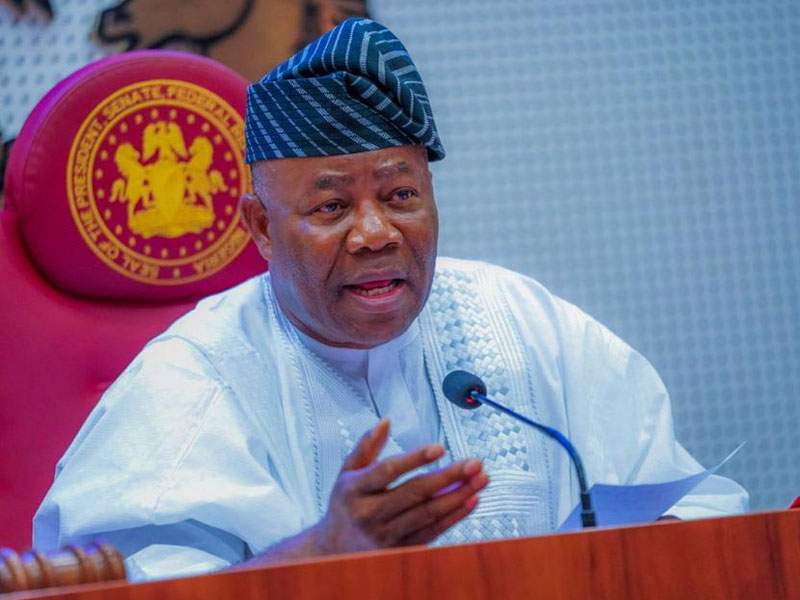
At a recent reunion of the University of Calabar (UNICAL) Law Class of 1987, Nigeria’s Senate President, Godswill Akpabio, made a bold claim: the current economic hardship in the nation cannot be blamed on the administration of President Bola Ahmed Tinubu. According to Akpabio, the challenges Nigerians face today are the cumulative result of years of maladministration, not a consequence of the present government’s policies.
He reassured his audience that under Tinubu’s leadership, there is hope for a better tomorrow and promised that his administration would leave lasting legacies for future generations. Akpabio’s remarks raise a critical question: if Tinubu’s administration is not responsible for the severe economic difficulties Nigerians are facing, then who is?
Nigeria’s economy has been in a perpetual state of flux, marked by periods of growth and periods of deep recession. In recent years, the economy has faced significant hurdles, including rising inflation, unemployment, a weakened naira, and increasing fuel and food prices. While it’s true that some of these challenges were exacerbated by global events such as the COVID-19 pandemic and the Ukraine war, many Nigerians believe that poor governance and economic mismanagement have deepened the country’s woes.
Despite Akpabio’s assertions, the economic hardship being experienced today seems to have worsened since Tinubu took office in May 2023. His administration’s decision to remove fuel subsidies, float the naira, and implement tax reforms have all come under heavy criticism. These policies, aimed at achieving long-term stability, have led to short-term pain that many Nigerians are struggling to endure.
Akpabio’s argument that the Tinubu administration is not to blame for the current hardship is not entirely new. Politicians often argue that they are merely cleaning up the mess left by their predecessors. According to Akpabio, the economic challenges result from years of inadequate planning and failure to invest in critical infrastructure, which have left the country vulnerable to global economic downturns.
He pointed to a lack of “backbone infrastructure” as a key factor in Nigeria’s inability to weather economic storms. This, he argues, is a problem Tinubu is working to address. Akpabio believes that while things are tough now, the reforms being implemented are meant to create a better future.
However, many Nigerians are finding it difficult to embrace this optimistic outlook. With skyrocketing prices for basic goods, high transportation costs due to fuel price hikes, and an increase in the cost of living, the everyday struggles of the average citizen are far from abstract.
If Akpabio’s defense of Tinubu holds water, then who should Nigerians blame for their suffering? In fact, one argument is that previous administrations, particularly under former Presidents Goodluck Jonathan and Muhammadu Buhari, failed to capitalize on periods of oil boom to diversify the economy or strengthen critical infrastructure. Instead, revenues were used to fund costly subsidies and short-term political programs. Buhari’s administration, for instance, heavily subsidized fuel prices, which many economists argue created an unsustainable economic burden that Tinubu’s administration is now trying to correct.
Additionally, under Buhari’s leadership, Nigeria faced a series of economic recessions, and the nation’s debt skyrocketed. By the end of Buhari’s tenure, Nigeria’s external debt stood at $41.69 billion, a figure that had more than doubled since he came into office. Critics of Buhari’s government argue that while some of these funds were used for infrastructure projects, much of it was wasted on mismanaged or incomplete ventures.
However, blaming past administrations alone does not capture the full picture. Many Nigerians believe that while systemic issues have plagued the country for years, the current administration’s policies have exacerbated the situation rather than alleviating it. Tinubu’s decision to remove the fuel subsidy, for example, was done abruptly without a comprehensive social safety net in place to cushion the impact on the most vulnerable. This led to an immediate surge in transportation and food costs, further deepening the poverty experienced by many.
The crux of the matter lies in how Tinubu’s economic policies are perceived. Akpabio and other government officials argue that these reforms are necessary to set Nigeria on a path of sustainable growth and development. The removal of fuel subsidies, for instance, has long been touted by economists as a necessary evil. Fuel subsidies have been a major drain on government resources, and their removal should, in theory, free up funds for critical infrastructure development.
Similarly, the decision to float the naira, allowing it to be determined by market forces, was aimed at boosting foreign exchange reserves and reducing pressure on the Central Bank to artificially maintain a fixed exchange rate. However, this has led to a sharp devaluation of the naira, further increasing the cost of imported goods and services.
The problem, critics argue, is not with the policies themselves but with the manner of their implementation. They believe the government should have phased in these reforms more gradually and implemented measures to shield the poor from the worst effects. Instead, the sudden changes have left many Nigerians feeling abandoned by their government.
While politicians debate the causes of Nigeria’s economic challenges, the human toll is unmistakable. Millions of Nigerians are struggling to make ends meet, and for many, the future looks bleak. According to the National Bureau of Statistics, inflation surged to 27.7% in August 2024, the highest in nearly two decades. The cost of food, which is a significant portion of household expenditure, has seen an even more dramatic increase.
Many Nigerians feel they are caught in a cycle of hardship, with no immediate relief in sight. While Akpabio’s assurances that “there is light at the end of the tunnel” may be well-intentioned, they provide little comfort to those who are barely surviving.
Despite the grim outlook, there is some merit to Akpabio’s argument that long-term reforms are necessary to fix Nigeria’s structural economic problems. For too long, the country has relied on oil revenues and short-term solutions to paper over deeper issues such as corruption, mismanagement, and a lack of industrialization.
To truly turn things around, Tinubu’s government will need to focus on policies that create jobs, improve infrastructure, and foster economic diversification. But it must also ensure that ordinary Nigerians do not bear the brunt of these reforms. Implementing social safety nets, improving access to affordable food, and ensuring that critical services like healthcare and education are adequately funded will be key to mitigating the worst effects of these changes.
Akpabio’s claim that Tinubu’s administration is not to blame for Nigeria’s current economic woes may be partly true, but it does not absolve the current government of responsibility for how it handles the crisis. Nigerians need immediate relief, not just promises of a better future.
The question, then, is not simply about assigning blame but about finding solutions. Whether Tinubu’s government will rise to the challenge or be remembered for deepening the hardship remains to be seen.