
Africa
Who Should Really Be Questioned and In detention? Afe Babalola and the Subversion of Nigeria’s Legal System Against Dele Farotimi, by John Egbeazien Oshodi

Nigeria’s justice system, once a beacon of hope for democratic governance, is now viewed by its people as a broken institution. As of today, many Nigerians perceive the judiciary under civilian rule to be even worse than during the military era. The growing sentiment is that the police, judiciary, and powerful elites are colluding, weaponizing the law to serve personal agendas rather than justice. This troubling reality is epitomized in the case of Dele Farotimi, a human rights lawyer and author who has become the victim of a system turned against him.
Farotimi’s forced removal from Lagos—a jurisdiction where defamation is no longer a criminal offense—to Ekiti State, on the orders of Aare Afe Babalola, highlights this abuse of power. The Ekiti police commissioner, magistrates, and other state actors have enabled this travesty, turning what should be a civil matter into a criminal spectacle. The real question now is whether Nigeria’s leadership in law enforcement and the judiciary will act to right this wrong. Will they acknowledge that Farotimi is the victim and hold the true culprits accountable?

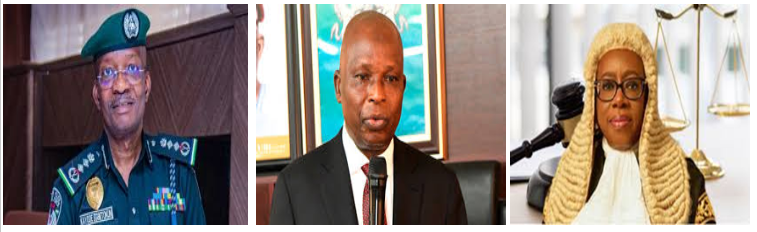
This brings us to the actions of the Ekiti Police Commissioner, Adeniran Akinwale, whose role in this miscarriage of justice cannot be ignored.
The Ekiti Police Commissioner: Why Immediate Arrest and Investigation Are Necessary
The Ekiti Police Commissioner, Adeniran Akinwale, has emerged as a central figure in this gross miscarriage of justice. By authorizing Ekiti police officers to leave their jurisdiction, enter Lagos, and abduct Dele Farotimi, the commissioner directly violated Nigeria’s constitutional and legal boundaries. This act was not law enforcement—it was a brazen display of loyalty to power, serving Aare Afe Babalola’s personal vendetta rather than the rule of law.
Under any legitimate legal system, such an action would warrant immediate suspension and arrest. The police commissioner should be made to answer critical questions: Who authorized the deployment of Ekiti police across state lines? On what legal grounds was Farotimi abducted in Lagos, a state where defamation is no longer a criminal offense? If justice is to mean anything in Nigeria, Adeniran Akinwale must face the consequences of his unlawful actions, including prosecution for abuse of power and breach of constitutional protocol.
The Ekiti Magistrate: Complicit in Judicial Misconduct
The actions of the Ekiti magistrate Abayomi Adeosun, who denied Farotimi bail are a direct affront to justice. Presented with a case entirely outside their jurisdiction, the magistrate chose to accept it, violating the basic principles of fair adjudication. Even worse, the magistrate refused bail to Farotimi, keeping him detained for a nonviolent matter that does not even constitute a crime under Lagos law. This decision was not rooted in legal reasoning but in complicity with the powerful.

The Chief Justice of Nigeria (CJN), Kudirat Kekere-Edun, must immediately summon this magistrate to explain their actions. This is not a matter of oversight—it is deliberate judicial malpractice. The magistrate must be investigated for their role in enabling this abuse of power and held accountable through appropriate disciplinary actions. Failing to address this will send a dangerous message: that Nigeria’s judiciary can be easily manipulated by the powerful to oppress the weak.
The Ekiti Police Officers: Enforcers of an Illegality
The individual officers who carried out Farotimi’s abduction are not exempt from blame. They acted as private enforcers for Aare Afe Babalola’s vendetta, violating their sworn duty to uphold the law. These officers crossed state lines without proper legal authority, forcibly removed a man from his home, and transported him hundreds of kilometers to Ekiti—all in service of an illegal operation.
In any functioning democracy, these officers would face immediate arrest, interrogation, and suspension. They must be held accountable for their role in this unlawful act. Their actions have not only harmed Farotimi but have also brought disgrace to the Nigerian Police Force, further eroding public trust in law enforcement. It is critical that the Inspector General of Police (IGP), Kayode Egbetokun, orders a full investigation into their actions and ensures that justice is served.
Aare Afe Babalola: The Architect of Abuse
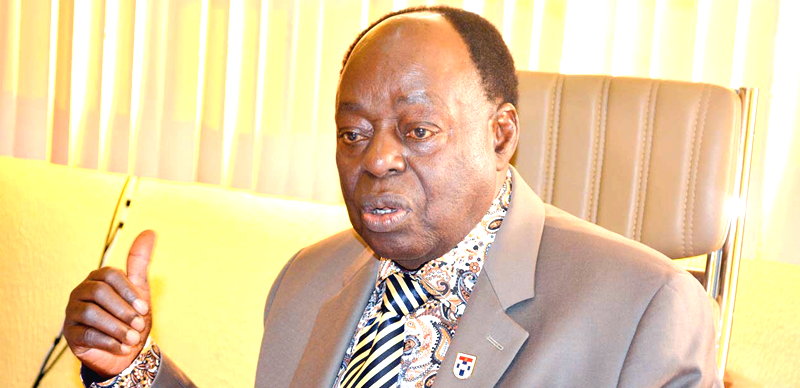
At 95 years old, Aare Afe Babalola has weaponized his influence and stature as a Senior Advocate of Nigeria (SAN) to orchestrate a blatant abuse of the justice system. His petition to the Ekiti Police Commissioner set the wheels of this travesty in motion, turning a civil matter into a criminal spectacle. Babalola’s actions demonstrate not just a misunderstanding of the law but a deliberate attempt to use the judiciary and police as tools of personal revenge.
Babalola’s misuse of power demands immediate action from the Nigerian Bar Association (NBA). The NBA must investigate and sanction him for ethical violations, including manipulating jurisdiction and using his influence to oppress a civil rights lawyer. His actions tarnish the reputation of the legal profession and set a dangerous precedent for how senior advocates wield their power. The question remains: Will the NBA show courage and hold Babalola accountable, or will it continue to enable such abuses?
The AGF’s Deafening Silence: A Betrayal of Justice
The Attorney General of the Federation (AGF) and Minister of Justice, Lateef Fagbemi, bears the ultimate responsibility for safeguarding the integrity of Nigeria’s legal system, yet his silence on the blatant abuses in Dele Farotimi’s case is both troubling and damning. As the nation’s chief legal officer, the AGF should have swiftly intervened to relocate the case to Lagos, where jurisdiction clearly lies and where defamation has been decriminalized for over a decade. He should have called for an immediate investigation into the Ekiti Police Commissioner’s illegal actions, including the abduction of Farotimi from Lagos. Additionally, the AGF should have held the Ekiti magistrate accountable for overstepping jurisdictional boundaries and denying bail in a matter that does not warrant detention. By failing to act, the AGF has enabled the manipulation of the justice system, allowing it to serve the interests of the powerful while trampling the rights of ordinary citizens. This silence is more than a lapse in judgment—it is a betrayal of the principles of fairness, justice, and accountability that his office is sworn to uphold.
Ekiti Law: A Chilling Symbol of Impunity
The term Ekiti Law has emerged as a stark representation of the abuse of power and judicial corruption that defines this case. It symbolizes a dystopian system where legal principles are discarded, personal interests dictate outcomes, and the boundaries of jurisdiction are ignored with impunity. Under Ekiti Law, the basic tenets of justice are perverted: magistrates deny bail without justification, police officers cross state lines to abduct citizens, and influential figures weaponize the judiciary to silence critics.
This is not the rule of law; it is tyranny cloaked in the guise of legal authority. The rise of Ekiti Law serves as a dire warning to every Nigerian: when those in power can manipulate the system to serve their whims, no one is safe. It exposes the fragility of Nigeria’s democratic institutions and highlights the urgent need for reform. The police, magistrates, and even senior advocates who enabled this travesty must be held accountable. Without systemic changes, Ekiti Law will remain a chilling precedent, eroding trust in the judiciary and accelerating the decay of Nigeria’s democracy.
International Silence: The Need for Global Accountability
Dele Farotimi’s detention is not just a national issue; it is a violation of international human rights. His case violates multiple agreements to which Nigeria is a signatory, including the Universal Declaration of Human Rights and the African Charter on Human and Peoples’ Rights. Yet, international bodies such as the United Nations, the African Union, and ECOWAS remain silent.
The United Nations should demand Farotimi’s immediate release and an independent investigation into the abuses that led to his detention. The African Union must condemn Nigeria’s handling of this case and press for reforms to protect human rights. ECOWAS should act to ensure that such abuses do not become normalized across the region. This is not just about Farotimi—it is about protecting the principles of justice and human dignity on a global scale.
A Systemic Failure: Why Nigeria’s Leaders Must Act
President bola Tinubu, the AGF, and the CJN bear collective responsibility for the state of Nigeria’s justice system. Their silence in the face of such blatant abuse is not just disappointing—it is a betrayal of the nation’s democratic ideals. By failing to act, they are enabling a system where power and influence override the rule of law. This is a pivotal moment for Nigeria. If its leaders do not address the injustices in this case, they risk setting a dangerous precedent that will further undermine public trust in the judiciary and governance.
Conclusion: Justice for Farotimi, Accountability for All
Dele Farotimi’s case stands as a defining moment for Nigeria’s justice system and its democratic principles. Farotimi, a relentless advocate for the oppressed, has always stood on the side of the people, exposing corruption, challenging bad leaders, and calling out systemic failures. His arrest and detention are not just attacks on him personally—they are an attack on every Nigerian who believes in justice, accountability, and the rule of law. The question now is whether those at the top, the very leaders Farotimi has fought to hold accountable, will act to prove him wrong and uphold the principles they claim to represent.
Accountability must begin with those directly responsible for this travesty. The Ekiti Police Commissioner, who authorized the unlawful abduction, must face investigation and prosecution for breaching constitutional boundaries. The magistrate who denied Farotimi bail in a case outside their jurisdiction must be summoned by the Chief Justice of Nigeria (CJN) and disciplined for judicial malpractice. The officers who executed this unlawful operation must also be held accountable for their complicity. At the center of it all, Afe Babalola, whose influence manipulated the entire system, must be sanctioned by the Nigerian Bar Association (NBA). His actions have not only undermined justice but have also discredited the integrity of Nigeria’s legal profession.
The Attorney General of the Federation (AGF) must immediately order the relocation of this case to Lagos, where jurisdiction clearly lies, and the Chief Justice of Nigeria must ensure systemic reforms to prevent such abuses from recurring. Their failure to act decisively will only confirm what many already fear: that justice in Nigeria is a privilege for the powerful, not a right for the people.
If Nigeria’s leaders will not rise to defend the principles of justice, then Nigerians themselves must act. Mass national and global protests are now necessary to demand Farotimi’s release and to hold accountable those who have weaponized the justice system against him. The world is watching, and silence is not an option. Farotimi has always fought for the people; now the people must fight for him.
Releasing Farotimi immediately is not just the right thing to do—it is a litmus test for Nigeria’s commitment to justice and democracy. If the nation’s leaders fail to act, history will remember their inaction as complicity in the erosion of Nigeria’s democratic values. This is not just about Farotimi—it is about reclaiming the soul of a nation and proving that no one is above the law. The time for reckoning is now, and the voices of Nigerians must rise louder than ever to demand justice.

Professor John Egbeazien Oshodi, born in Uromi, Edo State, Nigeria, is an American-based police and prison scientist, forensic/clinical psychologist, public policy psychologist, and legal psychologist. He’s a government advisor on forensic-clinical psychological services in the USA and the founder of the Dr. John Egbeazien Oshodi Foundation for Psychological Health. With a significant role in introducing forensic psychology to Nigeria through N.U.C. and Nasarawa State University, he’s also a former Secretary-General of the Nigeria Psychological Association. He’s taught at esteemed institutions like Florida Memorial University, Florida International University, Nova Southeastern University, and more, and is currently an online faculty member at ISCOM University, Weldios University and Walden University.























You must be logged in to post a comment Login