
Africa
Why is Yakubu Gowon Still Lying About the Aburi Accord? -By Jeff Okoroafor
The Aburi Accord remains one of the greatest “what if” moments in African history. Had Gowon kept his word, Nigeria could have evolved into a peaceful, prosperous confederation. Instead, his betrayal led to one of the bloodiest conflicts in post-colonial Africa.

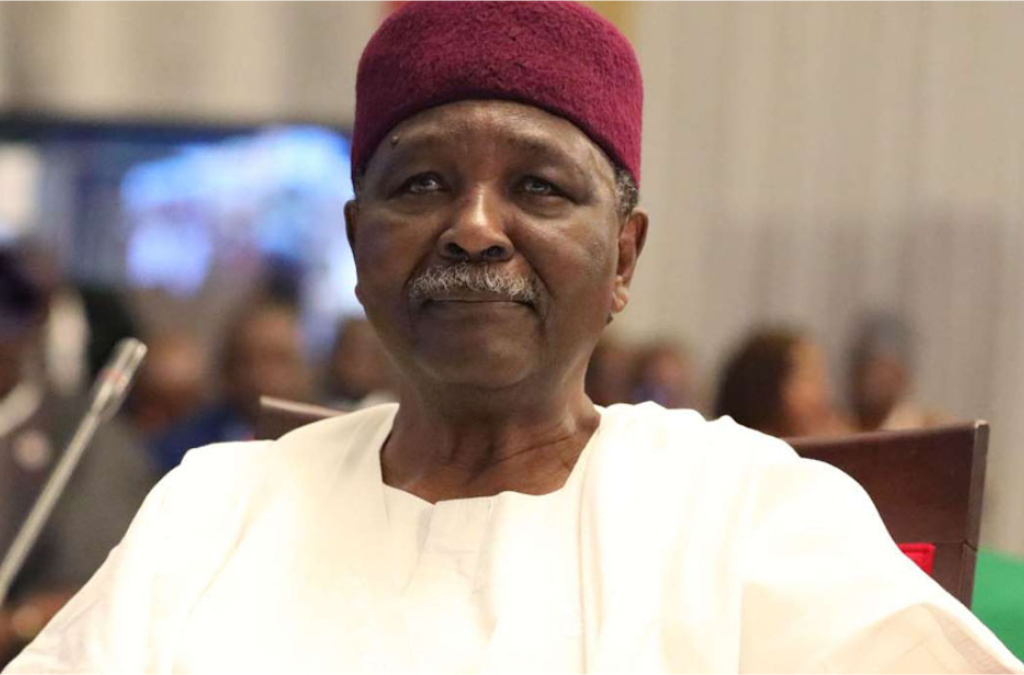
For over five decades, Nigeria’s history has been subjected to deliberate distortions, particularly concerning the events leading to the Civil War (1967–1970). One of the most persistent falsehoods is the claim by former Head of State, General Yakubu Gowon, that Colonel Chukwuemeka Ojukwu instigated the war by refusing to honor the Aburi Accord. This narrative is not only misleading but a blatant revision of history. Empirical evidence—from declassified documents, eyewitness accounts, and the Aburi transcripts themselves—proves that it was Gowon who reneged on the agreement, not Ojukwu.
In January 1967, Nigeria’s military leaders met in Aburi, Ghana, to negotiate a solution to the escalating political crisis following the counter-coup of July 1966 and the pogroms against Easterners. The Eastern Region, led by Ojukwu, demanded guarantees for their safety and autonomy. The Aburi discussions produced a landmark agreement that would have restructured Nigeria into a loose confederation, granting significant autonomy to the regions.
The key resolutions included decentralization of power, meaning the regions would control their finances, security, and governance, with a weak central government. There was also a clear agreement on non-interference in regional affairs, ensuring that the federal government could not unilaterally impose decisions on the regions. Additionally, the military was to be reorganized, with soldiers returning to their regions of origin to prevent further ethnic killings.
Ojukwu returned to the East and implemented the accord in good faith. Gowon, however, under pressure from hardline advisors like Obafemi Awolowo and British interests, unilaterally violated the agreement.
Within weeks of Aburi, Gowon issued Decree No. 8, which watered down the agreement, recentralizing power in Lagos. Worse still, he split Nigeria into 12 states in May 1967, dismantling the Eastern Region’s economic base—especially oil revenues—without consultation. He imposed an illegal blockade on the East, crippling its economy, and refused to stop the killings of Igbo civilians in the North, forcing the East to seek self-preservation.
These actions made secession inevitable. Ojukwu’s declaration of Biafra on May 30, 1967, was a defensive response, not an instigation of war.
Declassified documents from the UK Foreign Office in 1967 show that British officials knew Gowon had no intention of honoring Aburi. They preferred a unified Nigeria for economic (oil) and Cold War interests. A 1967 CIA memo stated that Nigeria’s federal government was determined to crush the East militarily long before Biafra’s declaration.
Gen. Philip Effiong, Biafra’s second-in-command, revealed in his memoirs that Ojukwu exhausted all peaceful options before secession. Anthony Enahoro, a key Gowon ally, later admitted that the federal government provoked the war by refusing to implement Aburi.
Gowon’s own contradictions further expose the deceit. In a 2007 interview, he claimed, “We never agreed to confederation at Aburi.” Yet, the official Aburi transcripts, published by the Nigerian government in 1967, prove otherwise. Even his wartime attorney general, Dr. Teslim Elias, later admitted that Decree No. 8 was a betrayal of the accord.
First, to justify the war crimes committed by Nigeria. The war led to over 3 million Biafran deaths, mostly from starvation—a deliberate strategy. Admitting that Aburi was sabotaged would mean acknowledging that the war was avoidable and that Nigeria committed genocide.
Second, to preserve the false “One Nigeria” narrative. The Nigerian state thrives on historical revisionism. If the truth about Aburi were widely known, it would validate the argument that Nigeria was never a consensual union and that the war was an act of imperialist suppression.
Third, for personal legacy protection. Gowon has spent decades portraying himself as a “unifier,” but the truth is that his government’s actions destroyed trust in Nigeria forever.
The Aburi Accord remains one of the greatest “what if” moments in African history. Had Gowon kept his word, Nigeria could have evolved into a peaceful, prosperous confederation. Instead, his betrayal led to one of the bloodiest conflicts in post-colonial Africa.
It is time to stop the lies. Ojukwu did not start the war—Gowon’s bad faith and British interference did. Until Nigeria confronts this truth, the ghosts of Biafra will never be laid to rest.
The world must know: The victors wrote the history, but the evidence tells the real story.

Jeff Okoroafor
Jeff Okoroafor is a social accountability advocate and a political commentator focused on governance, accountability, and social justice in West Africa.


























You must be logged in to post a comment Login