
Africa
Why Making Hausa the Sole Language of Instruction in Kano Schools is a Step Backward -By Jabir T. Usman
The decision by the Kano State House of Assembly to enforce Hausa as the exclusive language of instruction is a short-sighted policy that could cripple the intellectual and economic potential of future generations. Kano should champion education reforms that embrace both cultural heritage and global relevance. Only by maintaining English alongside indigenous languages can the state ensure that its students remain culturally grounded yet globally empowered.

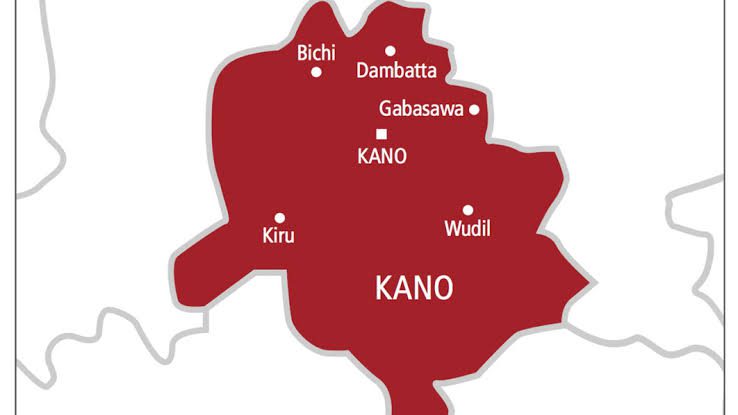
The recent decision by the Kano State House of Assembly to make the Hausa language the sole medium of instruction in primary and secondary schools has sparked widespread debate across Nigeria. While the intention may be to promote indigenous culture and identity, the policy is misguided and counterproductive in a globalized world where English serves as a key instrument of communication, education, and opportunity. This move reflects not confidence in cultural heritage, but a subtle expression of inferiority complex cloaked in cultural nationalism.
In the 21st century, where technological advancement and international cooperation define national progress, proficiency in English is not a luxury but a necessity. Ironically, while other nations strive to improve their citizens’ command of English to compete globally, Kano State appears to be turning away from the language that serves as the cornerstone of Nigeria’s unity and international relevance. English, as the official language of Nigeria, provides a neutral platform for communication among the country’s diverse ethnic groups and ensures equal access to national and international opportunities.
Contrary to the belief that English hinders students’ learning, the real problem lies in the outdated and poorly funded educational system. Many schools in Kano suffer from inadequate infrastructure, unqualified teachers, and a lack of modern teaching materials. Changing the language of instruction will not address these structural deficiencies; rather, it risks worsening the situation by confusing students and teachers who have been accustomed to English as the standard medium.
While promoting indigenous languages like Hausa is commendable, completely displacing English from the classroom is a misstep. A balanced bilingual approach would be far more effective, using Hausa to aid understanding in the early years of education while gradually introducing English to prepare students for national and international interactions. This approach would both preserve cultural identity and ensure global competitiveness.
Education is not only about cultural preservation; it is also about equipping students with the tools to navigate a complex and interconnected world. Most textbooks, research materials, and scientific documents are written in English. By isolating students from the language of science, technology, and international discourse, Kano risks producing a generation ill-prepared for modern challenges.
Moreover, English serves as a unifying force in Nigeria’s multilingual society. It allows people from different regions to communicate, collaborate, and coexist. Replacing it with Hausa as the teaching language in Kano could deepen regional divisions, marginalize non-Hausa speaking students, and create barriers for those who later relocate to other states or pursue higher education outside Kano.
The socio-economic implications of this policy are also alarming. Students from Kano may find it difficult to gain admission into universities across Nigeria or abroad, where English remains the primary language of instruction. Employers, too, may be reluctant to hire individuals who are unable to communicate effectively in English, thereby limiting their career prospects and economic mobility.
Rather than making reactionary policies, the Kano State government should focus on improving teacher training, investing in modern learning materials, and introducing technology driven methods of instruction. Encouraging students to be proficient in both Hausa and English would not only enhance cognitive development but also increase their competitiveness in a global economy driven by information and innovation.
Cultural pride must never come at the expense of progress. The world today rewards adaptability, communication, and knowledge qualities that thrive in a multilingual, not monolingual, environment. The choice is not between Hausa and English, but between isolation and inclusion, between regression and advancement.
The decision by the Kano State House of Assembly to enforce Hausa as the exclusive language of instruction is a short-sighted policy that could cripple the intellectual and economic potential of future generations. Kano should champion education reforms that embrace both cultural heritage and global relevance. Only by maintaining English alongside indigenous languages can the state ensure that its students remain culturally grounded yet globally empowered.
Jabir T. Usman writes from Sabon Gari Tudun Wada Kaduna jabson.usman@gmail.com


























You must be logged in to post a comment Login